Key Management Points During the Fruiting Period of King Oyster Mushroom: Temperature, Humidity, Light Regulation and Pest and Disease Control
The king oyster mushroom (Pleurotus eryngii) is a new type of mushroom developed in recent years, and as soon as it hit the market, it was widely favored. The key management techniques during the fruiting period of the king oyster mushroom:
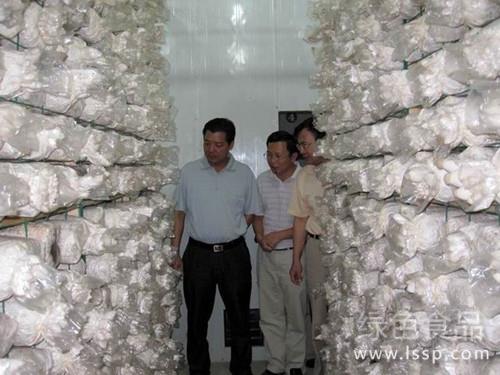
King Oyster Mushroom Management
① Temperature control:When the mushroom buds are the size of a grain of rice and light gray, the bags can be opened and fruiting management can begin. First stimulate primordium formation with low humidity (10-15°C), then control the temperature of the cultivation room at 10-18°C to allow the fruiting bodies to grow and develop. Avoid exceeding 22°C, to prevent the young king oyster mushroom buds from shrinking and dying. When the temperature is below 10°C, the primordia are difficult to form; and when the temperature rises to 18°C, unharvested fruiting bodies grow rapidly, quality declines; small mushroom buds stop growing and begin to shrink; primordia stop differentiating; when the temperature continues above 18°C, the original fruiting body stems and the tissue blocks on the surface of the substrate become soft and shrink, then rot. Therefore, throughout the entire management and cultivation process, the temperature of the mushroom house should be 10-18°C. When cultivating in a greenhouse, cooling treatment should be carried out at noon when the temperature is high and the light is strong, combined with watering and ventilation. When the temperature is relatively low in early spring or autumn and winter, appropriately close doors and windows, strengthen light at noon, and thicken the covering at night to increase the temperature inside the greenhouse. If conditions permit, geothermal heat or artificial heating can be used.
② Humidity regulation:During the stage of fruiting body formation and growth, the relative humidity of the mushroom house should initially be about 90%. During the fruiting body development period and near harvest, the humidity can be around 85%, which helps extend the shelf life of the fruiting bodies. At the same time, try not to spray water onto the mushroom bodies. Especially when the temperature rises, spraying water directly onto the mushroom bodies can easily cause the fruiting bodies to turn yellow, and in severe cases, the king oyster mushroom can also be infected by bacteria, causing rot.
③ Air regulation:With poor ventilation, the fruiting bodies are difficult to develop normally, and if high temperature and humidity are also present, the fruiting bodies are prone to rot. Therefore, the ventilation conditions of the mushroom house must be good.
④ Light source control:Both the formation and development stages of the king oyster mushroom fruiting bodies require light, with 500-1000 lux being suitable. When the temperature rises, do not let light shine directly on the mushroom bodies.
⑤ Pest and disease control:At low temperatures, pests and diseases are less likely to occur; when the temperature rises, the fruiting bodies are prone to pests and diseases, such as bacteria, Trichoderma (mainly Trichoderma viride) and mushroom flies. Strengthening ventilation and carrying out temperature regulation can prevent the occurrence of pests and diseases in king oyster mushrooms.