Key Points for Frost Protection of Dake Loquat to Ensure High Quality and High Yield
Loquat frost damage occurs from December to February of the following year. Dake loquat mainly ripens from December to February of the following year, so to ensure a good harvest, attention should be paid to cold and frost protection for loquat. Frost damage during the loquat fruit stage is mainly divided into four grades: mild frost damage: -2.5℃-- -1.0℃; moderate frost damage: -3.5℃ -- -2.5℃; severe frost damage: -4.5℃-- -3.5℃; very severe frost damage: -4.5℃ and above.
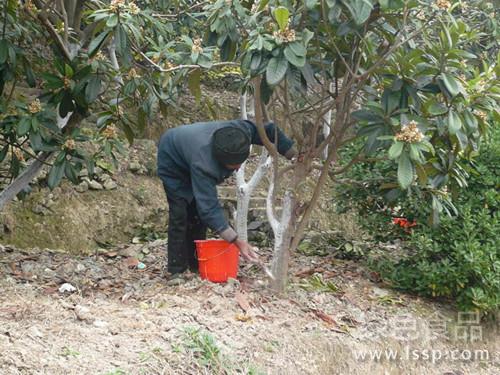
Loquat Frost Protection
Frost protection measures:
1. During the loquat ripening period, pay attention to the weather forecast. Before frosty weather occurs, promptly harvest eight-ripe loquat fruits and bring them home, and do a good job in frost protection.
2. If conditions permit, before frosty weather occurs, promptly irrigate the tree disk and cover it with film; after frost, promptly spray water to wash off the frost. Before sunrise, spray water to wash the frost off the canopy, raising temperature and humidity, which can prevent the frost from melting after sunrise, absorbing heat, and worsening frost damage;
3. In clear, windless weather with heavy frost, dig 5 ground stoves per mu of orchard, put in sufficient garbage, sawdust, leaves, and miscellaneous firewood, and smoke from midnight to before sunrise, which can raise the temperature by about 2℃;
4. Before frost arrives, build simple greenhouses, cover the orchard with high-density shade netting, or build a simple frame and cover the orchard with corn stalks. At the same time, tie the upper branches of adjacent loquat trees to each other to cover the lower fruits, so as to reduce frost damage to loquat;
5. Strengthen fertilizer and water management, and prevent and control pests and diseases. Before winter, apply sufficient farmyard manure, at least 3000 kg per mu, combined with 40 kg of urea, to raise ground temperature, strengthen tree vigor, and improve cold resistance.
Post-disaster remedial measures:
1. Prune reasonably. For frost-damaged loquat trees, after the temperature steadily rises, pick leaves for minor damage, prune branches for moderate damage, and saw off trunks for major damage.
2. Strengthen fertilizer and water management. After the temperature steadily rises, frost-damaged loquat orchards can be cultivated and loosened to promote root recovery. Before bud break, promptly apply spring bud-promoting fertilizer, mainly nitrogen fertilizer, with light fertilizer applied frequently, using the ring-shaped trench application method. For adult trees, apply 50 kg of clear manure water, or irrigate with an appropriate amount of 0.1%-0.2% urea water solution; for young trees, reduce the fertilization amount as appropriate, and spray a mixed solution of 0.2%-0.3% urea and 0.2%-0.3% monopotassium phosphate. Where frost damage is severe, stop applying pre-bud fertilizer, and apply fertilizer after new buds sprout and shoots emerge, mainly nitrogen fertilizer.
3. Promptly prevent and control pests and diseases. Before bud break, spray lime sulfur mixture throughout the orchard to prevent and control pests and diseases, preventing a major outbreak of pests and diseases caused by weakened loquat tree vigor.
4. Properly control the amount of flowers and fruits. For loquat trees with light frost damage, the fruiting amount can be controlled at one-half to two-thirds of that in a normal year.