Control methods for black rot of broccoli causing cotyledons to become water-soaked and rapidly die
Broccoli is a new variety introduced from abroad, and its unique flavor, nutrition and color are deeply favored by people. With the expansion of planting area, black rot occurs commonly and seriously, becoming an important disease in broccoli cultivation.
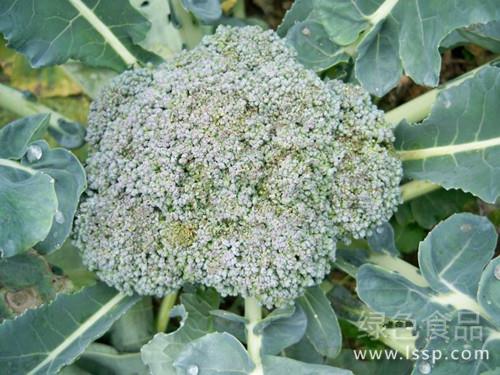
Broccoli black rot
I. Symptoms:
The disease can occur from the seedling stage to the adult plant stage. When seedlings are affected, the cotyledons appear water-soaked, then rapidly die or spread to the true leaves. When adult plants are affected, the leaves are mainly harmed, with the disease starting from the leaf margins and forming inward-extending “V”-shaped necrotic spots. The lesions are yellowish-brown with pale yellow edges. When the roots are affected, the vascular bundles turn black, with internal dry rot, until the whole broccoli plant wilts and dies.
II. Disease occurrence pattern:
Black rot is caused by infection by bacteria of the genus Xanthomonas. The pathogen overwinters in seeds, plants and diseased residues in the soil, and can also be spread by insects and farming operations. Infected seeds are the main source and can spread the disease over long distances. When infected seeds are sown, after the seedlings emerge, the pathogen invades through the water pores at the edges of the cotyledons, gradually spreads to the vascular bundles, and causes the whole plant to become diseased. The pathogen in the soil can be transmitted to the leaves through rain splash and irrigation water, invading through stomata and water pores to cause disease, first infecting a few parenchyma cells, then rapidly invading the vascular bundle tissue and causing systemic infection.
High temperature and high humidity favor disease occurrence. The disease can occur at temperatures from 5°C to 39°C, with the optimum temperature for disease occurrence being 25°C to 30°C and relative humidity above 95%, especially when leaves are covered with dew and the leaf margins exude water, which favors pathogen invasion. Early sowing, low-lying terrain, heavy clay soil, excessive watering, continuous cropping with cruciferous vegetables, application of undecomposed fertilizer, and plots with severe pest damage have more severe disease occurrence.
III. Integrated control measures:
Seed selection and seed treatment: select seed from disease-free plants; before sowing, soak in warm water at 50°C for 20 minutes; or soak in 1000-fold agricultural streptomycin solution for 2 hours. For direct sowing, seed can be dressed with 50% thiram at 0.4% of seed weight.
Strengthen field management: rotate crops in heavily diseased plots. Sow at the appropriate time, apply sufficient manure, drain promptly after rain, avoid excessive drought and waterlogging, and remove diseased leaves in time. At harvest, thoroughly remove diseased residues to reduce the primary infection sources in the field.
Chemical control: at the early stage of disease occurrence in broccoli, apply pesticides promptly, using agricultural streptomycin at 200 mg/kg; or new phytomycin at 100 mg/kg; or 60% Baijuntong wettable powder at 600-fold solution; or Bordeaux mixture at 1:1:200-240; or 77% Kocide wettable powder at 500-fold solution. The above pesticides should be used alternately in rotation for good control efficacy.