Control methods for yellow blotch disease in oyster mushrooms: what to do when the caps develop yellow spots, become sticky and fragile
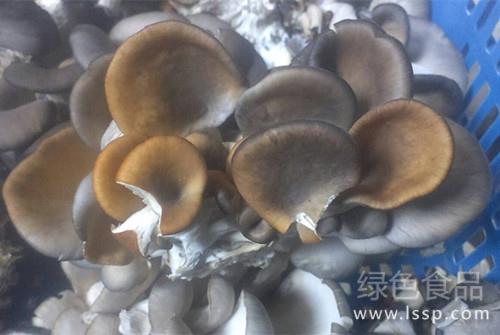
Yellow blotch disease in oyster mushrooms
1. Symptoms. Yellow blotch disease in oyster mushrooms mostly starts from the caps of young mushrooms or from the junction between the stipe and cap of small mushrooms. After infection, pale yellow spots appear on the caps of young mushrooms or in the depressions of caps of small mushrooms; the fruiting bodies of young mushrooms become sticky, stop growing and die, while small mushrooms grow slowly, lose their elasticity, and break and crumble at the slightest touch, after which the fruiting bodies become sticky and shrivel, giving off a rotten odor. The disease spreads rapidly, causing the surface of the cultivation substrate to become sticky and stopping mushroom production.
2. Causes. The pathogen of yellow blotch disease in oyster mushrooms is Pseudomonas bacteria. ① On moist environments and substrates rich in organic matter, conditions of high temperature and high humidity with poor ventilation favor the occurrence and growth of this bacterium. ② The cultivation site is old, the environment has deteriorated, and disinfection is incomplete. ③ Discarded spent substrate, defective mushrooms and stipes are scattered all over the shed; the dirty and messy conditions give the pathogen places to inhabit and reproduce. ④ At present, oyster mushroom cultivation mainly uses raw or fermented materials, and the cultivation material itself carries the bacterium, causing the disease. ⑤ The water or casing soil material carries the bacterium. ⑥ The strain has poor disease resistance or the spawn quality is poor, and poor management leads to thin mycelium in the cultivation bags and reduced resistance, ultimately resulting in infection by the pathogen.
3. Preventive measures.
① Select strains with strong disease resistance according to local conditions, such as Hei Ping Wang, Hui Ping Kang Bing No. 2, P89 and other strains, which are not easily affected or are only mildly affected. Do not plant the same strain in the same site for consecutive years; the variety needs to be changed once every 2 to 3 years.
② Use age-appropriate spawn that is free of contaminating organisms and has thick, white mycelium.
③ Use high-quality raw and auxiliary materials that are free of mold, rot, insects and contamination. The cultivation material must be sun-dried before use, and fungicidal drugs such as Kemiewang or carbendazim at 0.1% of the dry material weight should be added.
④ Old sites should not be used for consecutive years. If they are used, disinfection treatment must be carried out 1 month before the cultivation bags enter the shed. For mold control, use carbendazim 500-fold solution, benomyl 500-fold solution, etc.; for bacterial control, use bleaching powder 200-fold solution, agricultural streptomycin 500-fold solution, Wanxiaoling 2000-fold solution, etc.; for insect control, use dichlorvos 500-fold solution, beta-cypermethrin 1000-fold solution. Spray the ground and walls inside the shed and the environment outside the shed once a week. 2 to 3 days before the cultivation bags enter the shed, fumigate with sulfur in a sealed shed for 24 hours.
⑤ Strengthen management during the mycelial growth period to improve mycelial disease resistance. During the fruiting period, shed temperature and humidity must be well controlled. Excessively high temperature is not conducive to the growth of wide-temperature-type or low-temperature-type strains, and instead provides a suitable environment for the growth of various contaminating organisms and bacteria; high shed humidity is beneficial to oyster mushrooms, but it is also beneficial to various contaminating organisms.
⑥ Build the mushroom shed in a place with good ventilation and convenient drainage. Ventilation inside the shed must be smooth, and vents should be set so that flowing air can pass over every substrate surface, with no dead corners for ventilation. Adjust ventilation time promptly according to factors such as temperature, weather and wind speed.
⑦ When casing cultivation is used, the casing soil material must be disinfected.
⑧ Maintain good hygiene inside the shed. After harvesting oyster mushrooms, remove residual mushrooms promptly, keep the ground clean, and regularly spread lime powder for disinfection.