Fig Tree Top-Dressing Techniques: Neglecting Management Easily Leads to Declining Quality and Yield
In recent years, figs have become highly favored by consumers for their high nutritional value, so many fruit growers have started planting figs. However, because they neglect fig management, yields and quality decline, causing considerable losses. Here we share fig fertilization techniques with fruit growers.
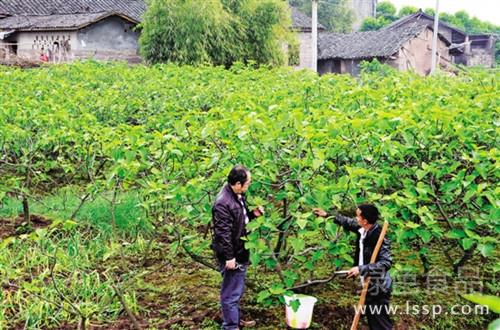
Fig Fertilization
1. Fertilization timing, divided into base fertilizer and top-dressing:
(1)Base fertilizer: Fig base fertilizer can be applied after pruning is completed in November to December, but late February to early March is preferable. Figs do not need deep plowing and turning like other fruit trees. If fertilizer is applied early and scattered on the surface of fallen leaves, much of it will be lost with rain, wind and snowmelt. But it should not be applied too late either. If base fertilizer is applied after March, the fertilizer needs a certain amount of time to decompose, break down and leach into the soil, and early absorption and utilization will be affected. Base fertilizer is mainly organic fertilizer, combined with compound fertilizer. It can supply the nutrients figs need over a relatively long period, continuously replenish nutrition, and restore tree vigor. It also lays the foundation for growth and fruiting the following year.
(2)Top-dressing: In fig cultivation, it is divided into early-stage top-dressing (summer fertilizer) and late-stage top-dressing (autumn fertilizer). That is, on the basis of applying base fertilizer, supplemental fertilizer is applied according to the nutrient requirements of each period, regulating the contradiction between growth and fruiting, and ensuring high, stable yields and high quality.
The specific timing and number of top-dressings should be determined according to the growth status of the figs and soil fertility. Generally it is divided into 3 to 6 applications. In high-temperature and rainy areas, nutrients are easily lost, so the number of top-dressings should be greater and the amount applied each time should be smaller; for weak trees with poor root growth, the number of top-dressings must be increased; for young trees, apply more and earlier in the early stage and less in the later stage, to promote full and solid new shoot growth and enhance cold resistance.
Fig plants grow quickly in the early stage and need much fertilizer. As new shoots elongate, inflorescence differentiation proceeds continuously. Late May to mid-July is the peak period of fertilizer demand. Top-dressing at this time plays a key role in the entire growth period of figs. It mainly resolves the contradiction between nutrient supply and demand during the period of new shoot elongation, fig development and the conversion of stored nutrients in the tree.
2. Fertilization amount: The fertilization amount for figs must be comprehensively analyzed in combination with soil fertility, tree age, yield target, and so on. Through fertilization trials, it should be continuously adjusted so that the fertilization amount fully meets the growth needs of figs.
In orchards with fertile soil, much organic matter and strong tree vigor, the fertilization amount should be 10% to 15% less than the standard. In the same orchard, fig plants with strong vigor should be given less, and those with weak vigor should be given appropriately more, to satisfy nutrient supply and promote strong vigor. But do not apply too much at one time; carry it out in divided applications as much as possible to prevent fertilizer burn from excessively high fertilizer concentration at the roots. The fertilization amount for young trees is generally 60% to 70% of that for adult trees. Applying too much fertilizer during the young tree stage easily causes excessive vegetative growth of branches and shoots, sprouting many useless secondary shoots, reducing cold resistance, and causing winter freeze damage. Using increased fertilization amounts to speed up orchard establishment should be avoided; haste makes waste and often leads to failure.