Why do cucumbers develop yellow heads? Control methods for yellowing and whitening of leaf veins with yellow spots
Cucumber "yellow head" refers to the yellowing near the growing point of the stem and vine, with some top leaves showing yellowing and whitening between the veins, and others showing yellow spots or patches. The causes are zinc and iron deficiency, root damage, pesticide damage, hormone poisoning, and disease. Here, vegetable growers are reminded to distinguish the cause and treat the symptoms accordingly.
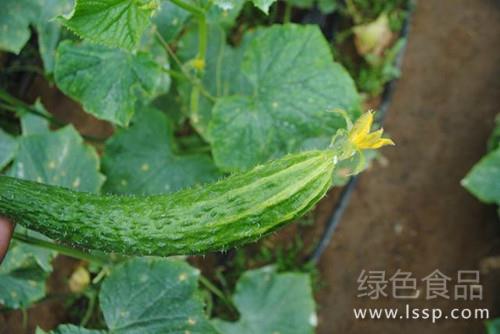
Cucumber yellow head
First: zinc and iron deficiency.
Zinc and iron are trace elements that are often neglected by vegetable growers. Over time, when cucumbers excessively absorb zinc and iron from the soil without replenishment, the soil becomes deficient in zinc and iron, making cucumbers prone to "yellow head." First the top leaves turn yellow while the veins remain green, then the areas between the veins become yellow and white, and gradually the leaf margins necrose and dry up. To address this, attention should be paid to the application of microelement fertilizers in the base fertilizer, such as ferrous sulfate at about 2 kg/mu and zinc sulfate at 1-2 kg/mu. After symptoms appear, timely spraying of foliar fertilizers containing zinc and iron can alleviate the symptoms.
Second: root damage.
When roots are damaged, it causes "yellow head" in mild cases and death of the cucumber plant in severe cases. The main causes of root damage are excessively high or low soil temperature and excessive water and fertilizer. For example, in winter, the root absorption capacity of cucumbers decreases and stress resistance declines; if fertilizer and water are not controlled, roots are easily damaged. "Leaves depend on roots for growth." After root damage, the ability to absorb nutrients decreases, making "yellow head" likely to occur. Therefore, in winter, the amount of watering should be reduced, with small amounts of water, and fertilizer flushing should mainly use biological bacterial fertilizer, humic acid fertilizer, or Apollo 963 chitin-based fertilizers that nourish roots and protect vines, so that the cucumber root system can return to normal as quickly as possible, thereby promoting the leaves to turn green.
Third: pesticide damage.
After pesticide damage occurs in cucumbers, it first shows on the leaves, with leaf margins drying up or yellowing, leaves losing green color, deformities, and spots or necrotic spots appearing. When applying pesticides, strictly prepare the solution according to the specified concentration and dosage, and try not to mix multiple types, especially not with copper-based preparations or foliar fertilizers. After pesticide damage occurs, timely spraying of cytokinin mixed with nucleotide-based foliar fertilizer (such as Lufeng 95) can alleviate it.
Fourth: excessive dipping of fruit.
This causes hormone poisoning, resulting in yellowing and stiffening of the top leaves. After hormone poisoning occurs, the top leaves become stiff, leaf margins curl upward, and growth is slow or stops. For cucumber plants suffering from hormone poisoning, on the premise of suspending fruit dipping, spraying Yunda 120 or Yunda Quanshuguo mixed with nucleotide-based foliar fertilizer can alleviate the symptoms.
Fifth: infection by disease.
For example, brown spot disease, when its damage is severe, causes yellow spots on the top leaves to merge together, resulting in cucumber yellow head. To control this, spray thiophanate-methyl or carbendazim mixed with Baitai or iprodione and other agents.