Thermal Insulation Methods for Winter Oyster Mushroom Cultivation: Bioenergy Insulation Is Safe and Economical
Winter cultivation of oyster mushrooms has a high success rate and is also a good opportunity for people to use their spare time to make money. But winter temperatures are low, and when cultivating oyster mushrooms, the mycelium grows slowly or does not grow at all, and during the fruiting period deformed mushrooms appear. Heating with a coal stove not only increases costs but also poisons the mushroom bodies. Through practice, I have created a bioenergy insulation method that is both economical and safe. It is introduced as follows:
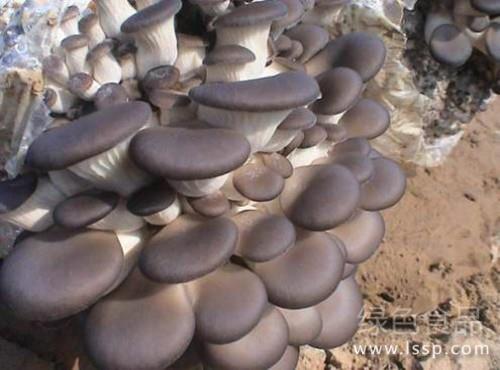
Oyster mushroom
1. In late autumn, oyster mushrooms should begin to be cultivated in bags. When the weather turns cold, prepare spawn bags with half a bag of mycelium as insulation spawn bags for oyster mushrooms. If no bag cultivation was done in advance, one-time heating for mycelium incubation can be carried out.
2. After the temperature becomes very low, stack the spawn bags closely, with high and wide stacks, to facilitate heat accumulation, warming and insulation. Stacking method: every 4 rows form one section, each row is stacked 7 bags high, with a gap of about 50cm between rows to facilitate air exchange. The distance between sections is 67cm, to facilitate walking for management and turning the stacks. Finally, cover with 2 layers of whole plastic film.
3. Stack freshly inoculated spawn bags together with insulation spawn bags. First place 3 layers of spawn bags with half a bag of mycelium on the lower level, and place 4 layers of freshly inoculated spawn bags on top. Then cover with plastic film.
4. Check the temperature every day. The spawn bags generate heat during the mycelium growth process. When the temperature reaches 27°C, uncover the film to control the temperature. When the mycelium has fully covered the bags, take them out immediately and place them at the fruiting site. Then stack freshly inoculated spawn bags on top of the bags whose mycelium has not yet fully grown, cover with film, and keep warm for incubation. In this way, gradually take out the fully grown spawn bags and add newly inoculated bags.
5. Take out the spawn bags fully covered with mycelium and move them to the fruiting site (indoors or in a shed, etc.) and arrange them for fruiting. Arrangement method: each row is stacked 7 layers high, stacked straight to prevent collapse, with a spacing of 40cm between rows, 3 rows in a row, then leave a large spacing, then another 3 rows in a row, with the large spacing being 70cm, to facilitate walking for management and mushroom harvesting. Work from both sides, and it is enough if the hands can reach each other. In case of low temperature, thin bamboo poles can be laid across the entire oyster mushroom stack and plastic film covered for insulation. When the temperature is high, open windows for ventilation to keep the air fresh. Other management methods follow conventional practice.