Late-stagemanagement advice for rapeseed: Seize the farming season, prevent disease and waterlogging, and ensure high yield
At present, rapeseed has entered the flowering stage. It is necessary to seize the farming season, respond scientifically, prevent disease and waterlogging, ensure high yield, and conscientiously implement late-stage field management techniques for rapeseed.
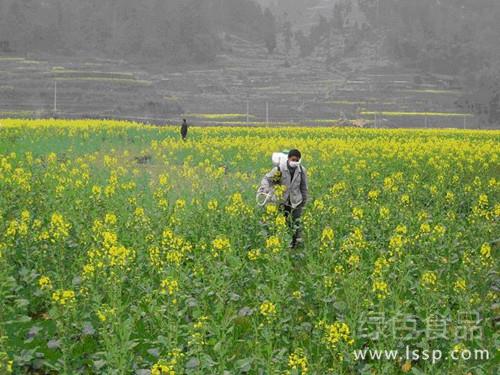
Rapeseed pest and disease control
1. Do a good job of clearing ditches and managing water.There are many cold and rainy days in spring, especially during the flowering period, when rainfall is relatively heavy. Seize the gaps when the weather clears and promptly clear the field ditch system to ensure that the “three ditches” are unobstructed, so that there is no hidden waterlogging in the plow layer and no standing water in the ditches, preventing waterlogging damage, raising soil temperature, and promoting rapeseed growth. Place the soil cleared from the ditches beside the rapeseed rows to improve the rapeseed's lodging resistance.
2. Strengthen pest and disease control.The early flowering stage is the key period for controlling rapeseed sclerotinia. According to surveys, sclerotinia has already occurred sporadically on leaves, with an average diseased plant rate of 0.23% and a maximum of 0.84%; for downy mildew, the average diseased plant rate is 1.6%, with a maximum of 5.0%; for aphids, the average number per 100 plants is 180, with a maximum of 400. Some rapeseed grows vigorously, and field ventilation and light penetration are poor. After temperatures rise, sclerotinia is prone to outbreak. Field surveys should be strengthened. For fields with severe sclerotinia, 100-200 grams of 40% dimethachlon or 100-200 grams of 50% carbendazim wettable powder can be used per mu, diluted with 50 kg of water for spray control.
3. Carefully apply flowering fertilizer.Spring is a period of rapid growth for rapeseed. Nitrogen fertilizer should be strictly controlled, and phosphorus and potassium fertilizers should be appropriately increased. For fields that received little or no boron, boron fertilizer should be supplemented as early as possible. Generally, 200 grams of potassium dihydrogen phosphate, 100-200 grams of carbendazim, and 50-100 grams of Sulubor (effective boron content ≥20%) are used per mu, diluted with 50 kg of water for spraying, to promote growth, prevent premature senescence, prevent sclerotinia, and increase grain weight.
4. Harvest scientifically at the right time.For rapeseed-rice rotation and dryland rapeseed, the farming season is relatively flexible. Harvest when 80% of the rapeseed in the whole field has turned loquat yellow, and pile it at the field edge or on the drying yard for 5-7 days. After full after-ripening, thresh on a sunny day to increase oil content. Rapeseed for one-time mechanical harvesting should be harvested after the siliques have completely withered and yellowed. For rapeseed in rice fields, in order to promptly clear the stubble and transplant rice, harvest when 60% of the rapeseed in the whole field has turned loquat yellow (2-3 days earlier than normal maturity), cut the rapeseed down from the middle-lower part, pile it at the field edge or on the drying yard (with the silique layer facing upward), cover it with plastic film for 3-4 days, then spread it out to dry, accelerating after-ripening of the rapeseed and increasing thousand-grain weight and oil content.