Crisphead Lettuce Growing Techniques: The soil must be fertile, and organic fertilizer must be plentiful
Crisphead lettuce prefers cool conditions and cannot tolerate high temperatures. Lettuce seeds can germinate above 4°C, with the optimum germination temperature being 15-20°C. The seedlings can withstand low temperatures; at an average daily temperature of 12°C, they grow robustly, and the optimum temperature for head formation is 13-16°C. Although leaf lettuce adapts to a wide range of soils, to obtain good heads, crisphead lettuce must be grown on fertile loam or sandy loam. If the soil is on the sandy side, poor, and low in organic fertilizer, various physiological disorders are easily triggered.
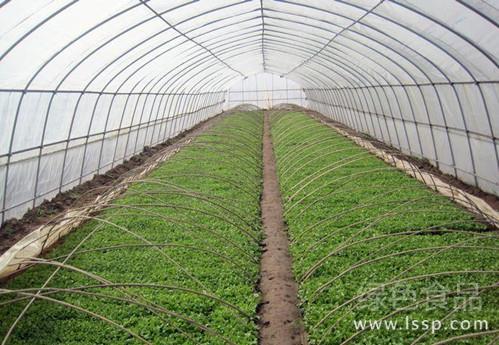
Raising Crisphead Lettuce Seedlings
1. Varieties: Heat-tolerant, early-maturing varieties are mostly chosen, such as 'Emperor' and 'Jingyou No. 1'. If large heads are desired, the mid-maturing lettuce variety 'Arpan' can be selected.
2. Cultivation techniques:
1. Choosing the sowing period: Crisphead lettuce prefers low humidity and cool conditions; the autumn sowing period runs from late September to mid-November. Seedlings can also be raised in protected cultivation in early spring, with transplanting carried out from late April to mid-May.
2. Sowing and seedling raising: First soak the lettuce seeds for a few minutes, then wrap them in a damp cloth, taking care to allow air circulation, and place them in a 15-20°C environment to germinate. After 2-3 days, once they have sprouted, they can be sown. The nutrient-cup seedling method uses less seed, gives a high seedling survival rate and strong seedlings, and keeps the root system intact at transplanting, so the plants grow quickly after transplanting and form heads early. Nutrient-cup seedling soil formula: 6 parts soil, 3 parts compost, 1 part rice husk (or vermiculite), plus a small amount of borax; mix well and fill the cups. Sow 2-3 seeds per cup. After sowing, cover with a thin layer of soil, then cover with rice straw, and water thoroughly. In addition, in some areas, plug-tray seedling raising is used and also gives good seedling results.
3. Seedling-stage management: The seeds sprout 2-3 days after sowing, at which point the rice straw can be removed; if the straw is not removed in time, leggy seedlings easily develop. For sowing and seedling raising in summer, a shade shed should be built, which both prevents rain from beating down on the seedlings and provides shade. After emergence, water every morning and evening. About 2 weeks after sowing, thin the seedlings, removing weak and leggy ones, and keep 1 vigorous seedling. After the seedlings are 15 days old, a dilute urea solution can be applied. The seedling stage generally lasts 25-30 days.
4. Land preparation and transplanting: Before transplanting, prepare the land carefully and apply plenty of base fertilizer so that the soil layer is loose, which favors root growth of lettuce and the absorption of fertilizer and water by the fibrous roots. For early-maturing varieties, use two-row planting with 35cm between rows and 25-30cm between plants, planting 4000-5000 plants per mu; for mid- and late-maturing varieties, plant more sparsely so they can grow fully. Raised-bed cultivation can be used, with 40cm between rows and 30-35cm between plants, planting 3000-3700 plants per mu. For 3-4 days after transplanting, water moderately every morning and evening to improve the survival rate. If any missing plants are found, fill them in promptly.
5. Field management: Crisphead lettuce has a long growing period, so fertilizer must be applied in several topdressings, generally once every 7-10 days. 4-6 days after transplanting, apply a light dressing of quick-acting nitrogen fertilizer to promote rooting and leaf growth. When head formation begins, increase the potassium fertilizer. Before the lettuce rows close over, apply a heavy dressing: 20 kg of compound fertilizer plus 7.5 kg of potassium chloride per mu, applied in a shallow furrow between the two rows and then covered with soil, so the fertilizer does not touch the roots. From transplanting to the rosette stage, furrow irrigation or watering can be used to keep the soil moist. Once the rosette stage begins, water must be strictly controlled to avoid disease. During the head-forming stage, standing water in the beds or water touching the lettuce heads must be avoided, so do not sprinkle or use overhead irrigation; instead use “running-horse style” furrow irrigation or water between the rows. Stop watering 15 days before harvest. Crisphead lettuce has a shallow root system, so cultivation should not be too deep, to avoid damaging the roots; cultivation should be done before the lettuce rows close over. When growing crisphead lettuce on a large scale, covering with black plastic film has a very good effect on lowering temperature, retaining moisture, and preventing fertilizer loss and weed growth.
6. Harvest: From transplanting to harvest, early-maturing varieties take about 55 days, mid-maturing varieties about 65 days, and late-maturing varieties 75-85 days. However, it is better to harvest a few days early. The harvest standard is to press down diagonally on both sides of the head with both hands; it should feel firm, not loose. Stop watering 15 days before harvest. At harvest, select lettuce with tight heads, cut them off at ground level, strip off the old leaves, and leave 3-4 outer leaves to protect the head, or strip off all the outer leaves. Wrap each head individually in polystyrene film, transfer it promptly to a refrigerated truck, and ship it out for sale; the suitable temperature for transport and storage is 1-5°C.