Wheat blossom midge is devastating, so the control methods must be mastered
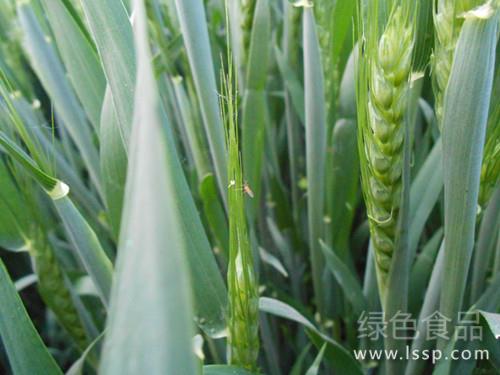
Wheat blossom midge
Damage characteristics: devastating. The wheat blossom midge belongs to the order Diptera, family Cecidomyiidae, and its larvae damage wheat grains that are in the filling stage. One larva in a wheat grain reduces yield by about 25%, 2 larvae reduce yield by about 50%, and 4 larvae cause total crop failure. Concealment. The wheat blossom midge spends about 11 months of the year in the soil, and the remaining month emerges, lays eggs, and hatches larvae. The larval damage period is about 20 days, hidden in wheat grains that are in the filling stage. Diapause: it does not emerge when conditions are unsuitable, and even when conditions are suitable, some larvae still do not pupate, so the insect population density in the soil rises year after year, making outbreaks likely in years with suitable conditions.
Monitoring points: start after wheat jointing in mid-to-late March, select representative local wheat fields, and use (10 cm ×10 cm ×20 cm) sample squares to take samples at five points along the diagonal of each field, wash the soil, inspect, and count. When a single sample square has 2 or more blossom midges, control is required. Visual inspection is generally used. During the adult stage, gently part the wheat plants to both sides by hand and visually check the number of emerging insects; when an average of 10 net sweeps catches 10 — 25 adults, chemical control is required.
Key control points: pupal-stage control is primary, and adult-stage control is supplementary.
To control the wheat blossom midge, grasp the key control period, that is, apply chemicals during the pest's vulnerable stage. Overwintering larvae of the blossom midge hide deep in about 20cm of soil; the following spring, as the temperature rises, the pest moves upward and pupates. Pupae generally occur 3-5cm below the soil surface, and after a pupal period of 8-12 days they emerge as adults. Adults are not strong fliers and generally move among wheat plants, with vigorous activity in the morning and evening. Adult lifespan is extremely short, about 3-5 days. Larvae damage wheat grains, and after maturing they enter the soil before wheat harvest to oversummer. From the perspective of the entire generation, the pupal stage is the most vulnerable period, followed by the adult stage, so the principle of “pupal-stage control as the main measure and adult-stage control as the supplementary measure” is followed.
Control timing: 1. Control threshold: fields with more than 2 insects per sample square should be treated at the pupal and adult stages. Other wheat areas should be treated at the adult stage, with simultaneous control of wheat aphids.
2. Control methods: place equal emphasis on the pupal and adult stages. (1) Pupal-stage control: broadcast poisoned soil to kill pupae. Carry it out 3—5 days before wheat heading (that is, April 24—30), and earlier is better than later. Chemicals used: 500 ml of 40% chlorpyrifos emulsifiable concentrate (with an appropriate amount of water) or 2 kg of 3% isofenphos-methyl granules, mixed evenly with 20 kg of fine sand to prepare poisoned soil, then spread it evenly on the soil surface along the wheat rows in the afternoon (be careful not to spread it on the leaves). Irrigating after spreading the poisoned soil can improve efficacy. (2) Adult-stage control: field spraying. Carry it out after wheat heading and before flowering (that is, May 2—7), with simultaneous control of wheat aphids. Chemicals used: 30 ml of 2.5% beta-cyfluthrin emulsifiable concentrate + 20 g of 10% imidacloprid wettable powder. Generally, control is carried out before 9 a.m. or after 5 p.m. on windless days. Spraying should be even and thorough to effectively control the adult population and egg-laying number of the blossom midge.
Precautions: (1) The timing for controlling the blossom midge is strict; if the key period is missed, the control goal cannot be achieved. Therefore, it is hoped that wheat farmers will seize the opportunity, apply chemicals at the right time, and fight the battle of blossom midge control well to ensure high and abundant wheat yields. (2) Pay attention to pesticide safety; when applying chemicals, necessary protective measures should be taken to avoid poisoning.