Control methods for sparse pod set and few seeds per pod affecting yield in early spring edamame
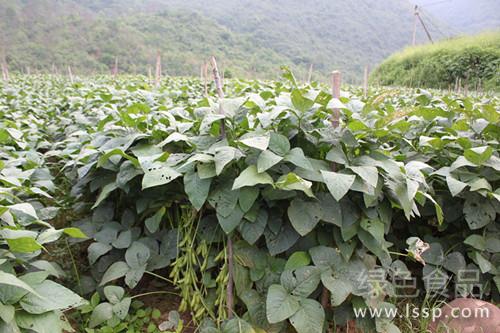
Edamame
I. Causes of sparse pod set and few seeds per pod in edamame:
1. Low temperature. The suitable temperature during the growth period of edamame is 15-25°C, and the optimum temperature at flower bud differentiation is about 20°C. After entering flower bud differentiation, if the temperature is below 15°C, growth and development are hindered, thereby affecting fertilization and seed setting in edamame; the optimum temperature at the flowering stage is a daytime temperature of 24-29°C and a nighttime temperature of 18-24°C, among which the nighttime temperature has the greatest effect. If the nighttime temperature is below 15°C, flowering cannot occur even if the daytime temperature is relatively high. Because spring temperatures change abruptly, protective measures should be taken. If edamame is affected by low temperature during the flower bud differentiation stage and the flowering and pod-setting stage, sparse pod set and few seeds per pod will occur.
2. Nutritional deficiency. Edamame has rhizobia that can fix nitrogen from the air to supply its own nutrition and can increase the nitrogen content of the soil. The beginning of the flowering stage is when nitrogen uptake in edamame begins to reach its peak. For early-maturing edamame varieties planted at low temperatures in early spring, because the temperature is low, rhizobia are not easy to reproduce, resulting in insufficient nitrogen fertilizer, which easily causes poor growth and severe flower and pod drop in early-maturing edamame. Edamame growth also requires large amounts of phosphate fertilizer, and applying phosphate fertilizer is effective for increasing edamame yield. If phosphorus is deficient at the branching stage, the number of nodes and branches will be reduced; if phosphorus is deficient at the flowering stage, the number of nodes and flowers will be reduced, and flower and pod drop will be severe. Moreover, in phosphorus-deficient edamame, the number of root nodules will also decrease, the activity of rhizobia will weaken, and nitrogen fixation will be low.
3. Soil drought. The flowering, pod-setting and seed-filling period is the period of most vigorous growth and greatest water demand in edamame, and the soil moisture content is required to remain at 60-70% of the field maximum water-holding capacity. If the soil is dry at this time, it will hinder the absorption of carbon dioxide by edamame, and photosynthesis will be blocked. If drought occurs at the early flowering stage, vegetative growth is affected, the number of flowers and pods is reduced, and flowers and pods subsequently drop; if drought occurs from pod setting to the seed-filling stage, the transport of nutrients is blocked, and the ovules cannot obtain the nutrition needed for development, causing young pods to drop and shriveled seeds and pods.
II. Preventive measures:
1. Cultivation under protected conditions. For planting early-maturing edamame in early spring, double-film protective measures such as large greenhouses and small arched sheds can be used, and sowing can be done from mid-February to early March when the soil temperature steadily exceeds 12°C. Throughout the entire growth period of early-maturing edamame, remove the film for ventilation in a timely manner according to the temperature required at each growth stage. Reasonable close planting can increase the number of pods, promote full seeds, and increase yield. Generally, about 20,000 basic seedlings per mu should be ensured, with a plant spacing and row spacing of 22 cm × 22 cm.
2. Apply more fertilizer. Base fertilizer should be the main part, with topdressing as a supplement. The amount of base fertilizer depends on soil fertility. Generally, apply 1000-1500 kg of decomposed compost, 30 kg of high-quality compound fertilizer, and 100-150 kg of plant ash per mu. During the growth period, topdress in a timely manner according to the growth of edamame. At the seedling stage, apply 10% decomposed human urine once; if growth is poor before flowering, apply 10-20% decomposed human urine again, or apply 0.3-0.5% urea. At the early flowering stage, spray 0.02-0.05% ammonium molybdate solution on the leaves, applying 25 kg per mu.
3. Reasonable irrigation. During the flowering, pod-setting and seed-filling period of edamame, if the weather is dry, follow the principle of "frequent irrigation and fine irrigation," generally irrigating 2-3 times.