When growing straw mushrooms, pay attention to nutrients and water; insufficient or improper amounts cause great losses
The straw mushroom is a saprophytic fungus and must absorb ready-made nutrients and water from dead plant matter and soil in order to survive. Therefore, experts remind growers to guard against straw mushroom losses caused by insufficient or improper supplementation of nutrients and water.
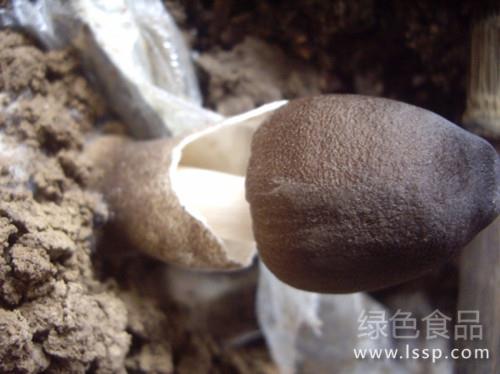
Straw mushroom
Prevent nutrient deficiency:If the mushroom bed or straw pile has sufficient nutrients, the straw mushrooms grow vigorously, the fruiting bodies are plump, the mushroom-producing period is long, and both yield and quality are good. Therefore, when cultivating straw mushrooms, choose high-quality, golden-yellow rice straw; do not use moldy rice straw, and add some soybean straw and dried powder of chicken, duck, pig and cattle manure and other organic matter to the straw pile to supplement nitrogen sources, which is conducive to high yield and good quality of straw mushrooms.
Prevent water deficiency:Water is not only an important component of the straw mushroom, but also the medium in which all nutrients must be dissolved before the straw mushroom can absorb and use them; the metabolites of the straw mushroom must also be dissolved in water before they can be excreted. Insufficient water will hinder the growth of the straw mushroom, causing it to dry up and die. However, if there is too much water, it will affect the aeration of the culture material, inhibit the respiration process, and cause the mass death of mycelium and mushroom buds. Practice has proved that when the water content in the substrate or straw pile is about 65%, it is more suitable for the growth and development of straw mushroom mycelium. When the relative air humidity around the mushroom bed is 85-90%, it is most suitable for the growth of straw mushroom fruiting bodies.
Prevent direct sunlight:Straw mushroom spore germination and mycelial growth generally do not need sunlight, but the formation of fruiting bodies does need sunlight. Diffused light can promote the formation of fruiting bodies, make them grow robustly, increase their resistance to diseases and insect pests, promote pigment transformation and accumulation, and deepen the color of the fruiting bodies. However, strong direct light inhibits the growth of fruiting bodies. Therefore, straw mushrooms cultivated in the open field must be covered with a straw mulch, and the site is best a sparse shaded woodland with “three parts sunlight and seven parts shade”.
Prevent unsuitable temperature:The straw mushroom is a high-temperature type of agaric mushroom. The optimum temperature for mycelial growth is about 32°C, the most suitable air temperature for fruiting body growth is 30-32°C, and the temperature inside the straw pile is most suitable for fruiting body development at 35-38°C. Therefore, during the growth of the mycelium or fruiting bodies, when the air temperature is lower than or exceeds these temperature ranges, measures should be taken immediately to restore the normal growth temperature.
Prevent overly rapid air circulation:Sufficient oxygen is an important condition for the normal growth and development of straw mushrooms. If oxygen is insufficient and carbon dioxide accumulates too much, the mushroom buds often stop growing or die because respiration is inhibited; but if ventilation is too great, water dissipates too quickly, which is also unfavorable to the growth of straw mushrooms. Therefore, it is best to choose a place with slow air convection for cultivating straw mushrooms.
Prevent pH imbalance:pH is one of the important factors affecting the growth and development of straw mushrooms. Practice has proved that the most suitable pH for the growth and development of straw mushroom mycelium is 7.2-7.5; the most suitable pH for fruiting body formation and growth is about 7.4; the most suitable pH for spore germination is 7.4-7.6. Excessive acidity or alkalinity will affect the normal growth and development of straw mushrooms.