Potted ornamental pumpkin growing method: delicate, fun and edible
Ornamental pumpkins have bright colors, in single color, double color, or two alternating colors; the fruits are quaint and delicate with unusual shapes and strong ornamental value. They can be grown in open fields and greenhouses, and can also be cultivated in flower pots, being both ornamental and edible.
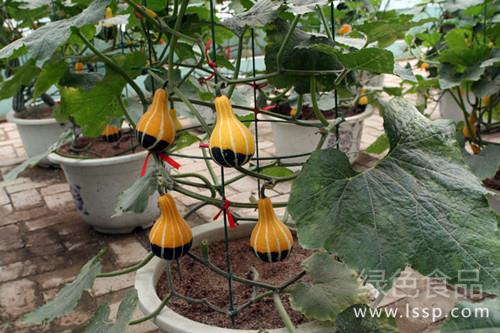
Potted pumpkin
1. Variety selection: Suitable varieties of ornamental pumpkins for potting include Golden Egg, Silver Egg, Wuzhishan, Golden Boy, Jade Girl, Incense Burner, White Jade, Golden Apple, Little Alarm Clock, A Bit of Green, A Bit of Yellow, Little Pillow, Crown, etc.
2. Nutrient soil preparation: Choose fertile pond mud or garden soil that has never grown cucurbits, fully sun-dry it and crush it into 1cm clods, then add 5kg of decomposed peanut bran and 15kg of straw mushroom mud per cubic meter; or mix 6 parts peat soil + 3 parts river sand + 1 part perlite, then add 1kg of compound fertilizer per cubic meter to make nutrient soil. Place the coarse particles at the bottom of the pot and fill the pot to 3/4 as appropriate. Ornamental pumpkins are climbing plants with relatively developed root systems and need trellis cultivation. Generally, choose flower pots with a diameter of 40cm-60cm and a height of 30cm-50cm.
3. Sow at the right time: Ornamental pumpkins prefer cool conditions and cannot tolerate high temperatures. The suitable growth temperature is 25°C. Sow in two seasons, spring and autumn. Ornamental pumpkin seeds have a relatively thick seed coat. Before sowing, soak the seeds to promote germination. Method: Wrap the pumpkin seeds in clean gauze, soak them in 30°C warm water for 4-5 hours, then rub them clean, remove them and promote germination. In early spring, when the temperature is low, place them in a 30°C constant-temperature incubator to promote germination. During germination, keep the gauze moist. After 48 hours, when the sprouts are about 0.5cm long, sow them. Before sowing, water the nutrient soil thoroughly, sow 3-4 seeds per pot, cover with about 1cm of soil after sowing, and water thoroughly. After 3-4 days, the seeds will emerge from the soil. Ornamental pumpkins mostly set fruit on the main vine, with very few fruits on side vines. Because the fruits are small, they are suitable for vertical (trellis or wall type) cultivation.
4. Potting and planting: Ornamental pumpkins have developed root systems, so use flower pots with a diameter of more than 20cm to ensure sufficient nutritional area. When potting, add a small amount of river sand to the bottom of the pot, then put in an appropriate amount of sesame paste residue as base fertilizer, then fill in part of the culture soil, plant the pumpkin, and then fill in the rest of the soil, press it firm, and water thoroughly once. During the growth period, as the seedlings grow, repot appropriately, generally changing pots 3 times: small, medium, and large. Before each repotting, let the pot soil dry out completely, then gently tap around the pot wall, and after it loosens, carefully knock it out. Before changing to a larger pot, do not disturb the original soil ball to avoid damaging the roots. The rest of the operation is the same as when potting.
5. Timely shaping: When the ornamental pumpkin plant is about 15cm tall, pinch off the top to make it produce branches. When the branches grow to about 10cm, pinch off the tops again. Generally, pinch off the tops 3-4 times to encourage more branching and form a short, sturdy plant shape, forming a spherical plant 40cm-50cm tall, which looks even more beautiful after bearing fruit. After the leaves become dense, remove leaves, removing the large, withered, and yellow old leaves to improve ventilation and light penetration, making the leaves fine and thick. When removing leaves, if you find leggy branches, overly dense branches, dead branches, or diseased and pest-damaged branches, they should also be pruned to make the plant shape elegant.
6. Management measures:
1. Temperature: Ornamental pumpkins like warmth. The suitable growth temperature is 15°C-35°C, and the optimum temperature is 25°C-28°C. In early spring, when temperatures are low, move them indoors or cover them with plastic bags to protect against the cold, avoiding damage; in summer and autumn, when temperatures are high, use cooling measures such as cool shade netting to lower the temperature.
2. Water: During the seedling stage of ornamental pumpkins, water once every 1-2 days to keep the pot soil moist. During the flowering and fruiting stage, on sunny days, transpiration is high and water demand is great, while flower pots have poor water storage capacity, so water 2-3 times a day.
Pumpkin pollination
3. Topdressing: Follow the principle of "light fertilizer applied frequently." Starting 7 days after thinning the seedlings, apply a 0.3%-0.5% compound fertilizer aqueous solution once a week; when entering the flowering and fruiting stage, the fertilizer demand is great, so combine with loosening the soil, apply 10g of compound fertilizer and 5g of urea per pot, and supplement nutrient soil until the pot is full to promote root development. After that, according to the pumpkin's growth, leaf color, fruiting, and other conditions, apply a 0.3%-0.5% compound fertilizer aqueous solution once every 10 days, and spray 2-3 times with foliar fertilizers such as Aiduoshou at 1000 times dilution, to promote the growth and development of the pumpkins and extend the ornamental period.
4. Plant arrangement: For ornamental pumpkins that mainly set fruit on the main vine, when the plant is 25cm-30cm tall, set up a trellis to guide the vine. The trellis material can be bamboo poles or iron rods, with a trellis height of 15m-18m. To improve the ornamental effect and reduce nutrient consumption, cut off all side branches, leaving only the main vine, and promptly remove yellow leaves, diseased leaves, and deformed fruits.
5. Assisted pollination: Manual assisted pollination can promote more fruit setting and better fruits in pumpkins. The method is: every morning from 8-9 o'clock, choose male flowers that open that day, remove the corolla, and apply the stamen pollen to the stigma of the female flower.