Easy to grow, large consumer market: key technical points for lettuce cultivation
Lettuce is the common name for leaf lettuce, belonging to the genus Lactuca in the Asteraceae family; it is an annual or biennial herbaceous crop. By leaf color, lettuce is divided into green lettuce and purple lettuce. By leaf growth habit, it is divided into loose-leaf lettuce and head lettuce; the former has loose, spreading leaves, while the latter has leaves that fold together into a head.
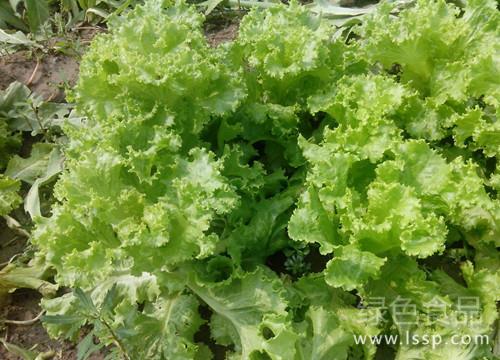
Lettuce
1. Growing conditions
1.1. Climatic conditions Lettuce prefers a cool climate. The minimum temperature for seed germination is 4°C, and germination takes a long time at this temperature. The optimum germination temperature is 15-20°C, with germination in 3-4 days; above 30°C germination is hindered. Therefore, when sowing in summer, low-temperature treatment is required to promote enzyme activity and the transformation of other substances within the seeds. The optimum temperature for stem and leaf growth of head lettuce is 11-18°C, and the optimum temperature during the heading stage is 17-18°C. Seedlings can tolerate a low temperature of -5°C; above 21°C, heads are not easily formed, or the excessively high temperature inside the head causes the heart leaves to rot and decay. When the temperature is above 30°C, growth is poor. Loose-leaf lettuce has a broader temperature adaptation range than head lettuce. In terms of sensitivity to daylength, early-maturing varieties are the most sensitive, mid-to-late-maturing varieties are next, and late-maturing varieties respond sluggishly.
1.2. Soil conditions Lettuce is suited to slightly acidic soil. Grown in soil rich in organic matter, it has strong water- and fertilizer-holding capacity and high yields. If grown in dry, water-deficient soil, the root system develops incompletely, growth is not vigorous, the taste of the vegetable is somewhat bitter, and quality is poor.
1.3. Moisture conditions Lettuce has different water requirements at different growth stages. During the seedling stage it must not be dry or too wet; too dry and the seedlings tend to age, too wet and the seedlings tend to grow leggy. During the rosette stage, water should be controlled appropriately; during the heading stage, water must be sufficient, as a lack of water results in small leaves and a bitter taste. In the late heading stage, water should not be excessive, to avoid head splitting, which leads to disease.
2. Cultivation techniques
2.1. Choosing varieties By choosing suitable lettuce varieties and combining them with protected cultivation, year-round production and year-round supply can be achieved. For early spring cultivation, loose-leaf varieties with strong resistance are mostly used, because head varieties tend to bolt in early spring and do not easily form heads during the hot summer season.
2.2. Sowing and raising seedlings Sowing periods for lettuce in the Beijing-Tianjin region: for the spring crop, sow and raise seedlings from February to April, with harvest in May to June; for the autumn crop, sow and raise seedlings from late July to late August, with harvest in October to November. Using protective facilities allows year-round production and year-round supply. For early sowing, loose-leaf varieties with strong resistance should be used; otherwise head varieties tend to bolt early in spring and do not easily form heads during the hot summer season. After sowing, under the optimum temperature of 15-20°C, germination occurs in 3-4 days. Because lettuce seeds are relatively expensive, seedling raising followed by transplanting is generally used in production. The usual seeding rate for a seedbed is 0.75-1.5 kg per mu, sown appropriately thinly to cultivate strong seedlings. One mu of seedbed can plant 10 mu of land. For autumn lettuce, seed treatment is generally carried out before sowing and seedling raising. First soak the seeds for 12 hours, then rinse them clean with water, wrap them well in wet gauze, and place them in a low-temperature environment of 5-6°C for 2 days; when most of the seeds begin to show white, take them out and sow. After sowing, the covering soil should not be too thick, generally about 0.5-1 cm. In summer and autumn, when it is hot and rainy, shade netting should be used to provide shade after sowing.
2.3. Transplanting and management Lettuce has a shallow root system, so soil with strong water- and fertilizer-holding capacity and fertility should be chosen for cultivation. The usual planting density: for early-maturing varieties, row spacing × plant spacing of 23 cm × 20 cm; for mid- and late-maturing varieties, 33 cm × 24 cm. Lettuce is generally top-dressed 3-4 times. After transplanting and seedling recovery, apply one top-dressing of recovery fertilizer at a relatively dilute concentration. For overwintering spring lettuce, apply one top-dressing after transplanting; in winter, fertilizer is generally not applied. In spring, 2-3 consecutive top-dressings are needed.
2.4. Pest and disease control The main diseases of lettuce include downy mildew, soft rot, viral disease and sclerotinia rot. Sclerotinia rot and soft rot are the more damaging, and these diseases occur readily under warm, humid conditions. Adopt crop rotation, reduce planting density, do not overwater, frequently hoe shallowly, and keep the soil surface dry. Keep the field clean regularly, promptly pull out and remove diseased plants. Clear away dead leaves and burn them in a centralized manner. After disease onset, spray agricultural streptomycin and amobam. In hot, humid seasons, spray chlorothalonil once every 5-7 days for prevention. The main insect pests include aphids, thrips and cutworms, controlled with omethoate, fenvalerate and similar insecticides.
2.5. Harvesting Lettuce should be harvested promptly once the heads are mature; harvesting slightly late will affect quality. Loose-leaf lettuce can be harvested about 40 days after transplanting, with a single-plant weight of 0.2-0.4 kg; head lettuce can be harvested 50 days after transplanting, with a single-plant weight of 0.4-0.5 kg. Yield per mu: early-maturing varieties 1000-1500 kg, mid- and late-maturing varieties about 2500 kg per mu.