Detailed Explanation of Key Points for Contamination Prevention in Bag Cultivation of King Oyster Mushroom
King oyster mushroom (Pleurotus eryngii), white lingzhi mushroom (Pleurotus nebrodensis), hypsizygus mushroom (Hypsizygus marmoreus) and others are edible fungi with relatively high economic returns, and many counties and cities across the country have listed them as leading industries. At present, the cooked-substrate method (high-temperature sterilization) is mainly used for cultivation. Due to the complex process technology, most cultivators lack production experience and practice relatively extensive cultivation, resulting in severe contamination by miscellaneous fungi, which has affected cultivation returns...
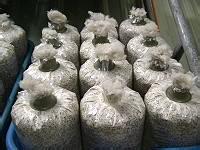
King oyster mushroom (Pleurotus eryngii), white lingzhi mushroom (Pleurotus nebrodensis), hypsizygus mushroom (Hypsizygus marmoreus) and others are edible fungi with relatively high economic returns, and many counties and cities across the country have listed them as leading industries. At present, the cooked-substrate method (high-temperature sterilization) is mainly used for cultivation. Due to the complex process technology, most cultivators lack production experience and practice relatively extensive cultivation, resulting in severe contamination by miscellaneous fungi, which has affected cultivation returns and production enthusiasm, and has also brought difficulties to cultivators and technology promoters.
In actual cultivation, mid-to-high-grade mushrooms such as king oyster mushroom, white lingzhi mushroom and hypsizygus mushroom are mainly prone to contamination, low finished-product rate and yield, and poor returns because their mycelium has weak decomposing ability, poor adaptability and contamination resistance, and slow mycelial growth. The next reason is that in cooked-substrate cultivation, the substrate is sterilized and cooked, and there are many production steps, the cultivators' technical level is low, conditions are simple, inoculation and disinfection are not strict, and contaminated raw materials and spawn are used, all of which make contamination by harmful miscellaneous fungi likely. To effectively solve miscellaneous fungus contamination, we apply a special pollution-prevention agent for pollution-free biochemical-type edible fungi and a contamination-prevention and yield-increasing agent for bag cultivation of shiitake. After dissolving 0.4-0.5% of its dosage in the water used for mixing the substrate, mixing the substrate and filling bags, the sterilization time for cooked substrate at 100°C is halved, so that in a relatively short sterilization process the substrate can kill harmful miscellaneous fungi and insect eggs, soften the culture medium, and achieve the same effect as cooked-substrate sterilization, while the mycelium can also grow well. Application of this technology can make the finished-product rate reach above 98%, reduce contamination by more than 20%, and save about half of the labor and energy costs for sterilization. Through large-scale and year-round application and promotion by users across the country, it has been welcomed and trusted by more and more mushroom farmers for its high cultivation success rate and yield, good quality and good returns, and has achieved remarkable social and economic benefits. The key technical points are introduced as follows:
I. Preparation of the culture medium: The culture medium can use conventional formulas such as sawdust, wheat bran, cottonseed hulls, corncobs, and crop straw (one raw material may be used, or several raw materials mixed with auxiliary materials as the culture medium). Now, taking the conventional sawdust-wheat bran culture medium formula as an example, the preparation method is introduced: sawdust 78%, wheat bran 20%, gypsum 1%, sugar 1%, special pollution-prevention agent or contamination-prevention and yield-increasing agent for bag cultivation of shiitake 0.4-0.5% (choose either one, hereinafter referred to as pollution-prevention agent), oxygen-increasing agent or lime powder 0.2-0.3%, water about 120-130 jin. Calculate each component according to the above culture medium formula proportions, then weigh the culture medium. First fully and evenly mix the water-insoluble sawdust, wheat bran and gypsum, then put the water-soluble sugar, pollution-prevention agent, oxygen-increasing agent, etc. into the water for mixing the substrate. After fully dissolving, mix them into the uniformly mixed dry culture medium, and repeatedly turn and mix so that the aqueous solution of the pollution-prevention agent fully penetrates into the culture medium and becomes uniform, then fill bags. After filling the bags, tie the bag mouths tightly and then sterilize.
II. Bag filling and sterilization: For filling, select high-quality polypropylene or polyethylene plastic bags (tubes) with a thickness of 0.04 mm or more, strong toughness, uniform thickness, not easy to become brittle and crack, and free of breaks or leaks. When making spawn, the substrate should be filled with moderate tightness; during cultivation, the substrate should be properly filled firmly. Fill to about 6-10 cm from the bag mouth, level the substrate surface, tie the bag mouth tightly with plastic tying rope, or seal it by conventional methods, and then sterilize. Generally, maintain 100°C for about 4-8 hours (4-5 hours for small bags, 6-8 hours for large bags). If the plastic bag is relatively large and holds more substrate, the sterilization time may be appropriately extended by 2-4 hours. After sterilization, take out the substrate bags and place them in a clean or disinfected cooling room, or inoculate after cooling in the inoculation room.
III. Inoculation and culturing: 24 hours before inoculation, for inoculation rooms that have not been used for a long time and spawn-making or cultivation sites with severe environmental contamination, dissolve 1.5%-2% of the special pollution-prevention agent in water, mix evenly and spray once for disinfection. The inoculation room may also be disinfected by conventional methods or by igniting a high-quality aerosol disinfectant at a dosage of 4 grams per cubic meter of space for sealed disinfection. In order to effectively prevent contamination in the inoculation room due to incomplete disinfection, seal and disinfect the inoculation room again 30 minutes before inoculation, and then inoculate. For inoculation, select healthy, contamination-free spawn with strong adaptability and stress resistance, fast fruiting and tide turning, a relatively short growth cycle, high yield and good quality. When inoculating, plastic bags may be inoculated at one end, and plastic tubes may be inoculated at both ends or by punching holes. During inoculation, the spawn should be scooped out in block form, and the inoculation amount should be appropriately increased to promote faster mycelial growth, shorten the mycelium-running period, and improve cultivation yield and quality. After inoculation, move them into the culturing room for culturing.
IV. Culturing: An indoor room with relatively good conditions for heat preservation, ventilation and cooling should be selected as the culturing room. Before use, treat it with insect-prevention and disinfecting agents, then move the inoculated substrate bags vertically or horizontally onto the culturing racks in the room, culture in the dark, and keep the temperature at about 20-25°C. After about 10 days of culturing, turn the bags to check survival and whether there is contamination. If there are substrate bags contaminated due to incomplete disinfection or spawn carrying fungi, pick them out of the culturing room, put them in new bags or seal the inoculation holes, then sterilize and disinfect them again, re-inoculate with spawn, and culture. During culturing, do well in heat preservation, cooling, bag turning and position changing, disinfection and insect prevention. After the mycelium fully colonizes the bag, continue culturing for a period; when the mycelium body slightly shrinks and becomes firmer, it can be used as spawn, or undergo fruiting management. Because varieties such as king oyster mushroom and white lingzhi mushroom have different requirements for temperature, humidity and ventilation, during cultivation they should be managed according to the growth conditions required by the cultivated variety and by referring to conventional methods, which will not be introduced further here.
This technology is most suitable for making cultivation spawn and cultivation bags from mother spawn, and can also be used to make mother spawn and stock spawn. It is also suitable for spawn making and cultivation application of many edible fungi such as oyster mushroom and shaggy ink cap mushroom. If suitable natural temperatures and artificial regulation measures can be fully and reasonably combined, and varieties of high-, medium- and low-temperature types are matched or cultivated alternately, year-round production can be formed. In production, as long as the substrate-to-water ratio is well controlled, the substrate is fully and evenly mixed, high-quality plastic bags are selected, a uniform concentration is maintained according to the dosage of the pollution-prevention agent, and key links such as disinfection and prevention are done well, contamination generally does not occur, and the finished-product rate can reach 100%.
V. Precautions: 1. Select fast-growing, high-quality, high-yield, healthy and contamination-free spawn that grows well on semi-cooked substrate. 2. For spawn making on semi-cooked substrate, the pollution-prevention agent must not be less than 0.5%; for cooked-substrate cultivation, the pollution-prevention agent must not be less than 0.4%; for disinfection and prevention and control of miscellaneous fungi, the pollution-prevention agent should be dissolved in water at a dosage of 1-1.5% before use. 3. When using this technology, do well in disinfection and prevention work to nip problems in the bud, so as to avoid unnecessary contamination. 4. If cooked-substrate cultivation is used, the pollution-prevention agent should be dissolved in the substrate-mixing water at a dosage of 0.4-0.5% (for example, for 100 jin of dry culture medium use 250 grams (0.5 jin) of pollution-prevention agent; with 120 jin of substrate-mixing water, the pollution-prevention agent should be dissolved in the 120 jin of water, fully stirred and dissolved and evenly mixed, then mixed into the dry culture medium; the pollution-prevention agent is increased or decreased according to the proportion of the dry culture medium), and the same dosage ratio must be maintained. If by any chance the water content is on the low side when mixing the substrate, dissolve additional pollution-prevention agent according to the dosage ratio used when mixing the substrate and mix it into the substrate; do not add clear water. If the culture medium has a large particle size, when mixing the substrate, add water and dissolve according to the dosage ratio of the pollution-prevention agent, and pre-wet 12 hours in advance, mix evenly, and then fill bags. 5. In cultivation, for king oyster mushroom, large-cap or columnar mushroom strains with high yield and fast fruiting may be selected, and bowling-ball-shaped mushroom strains with good quality and a relatively long growth period may also be used. To ensure yield, quality and returns, before cultivation the spawn should be subjected to cultivation trials before being used in production, so as to reduce unnecessary mistakes or losses.