Why do mushrooms develop "acne" on their surface?
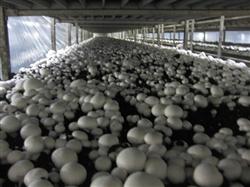
Most mushrooms cultivated in China are the white button mushroom (Agaricus bisporus), which is rich in protein, various amino acids, vitamins and other nutrients. It is known as a "healthy food for humanity" and has large sales both domestically and for export. Therefore, vigorously developing mushroom production plays a major role in developing rural sideline industries and increasing income. First...
 Some mushroom growers have reported that the oyster mushrooms they cultivated developed "acne," meaning the caps of the oyster mushrooms were densely covered with small bumps, seriously affecting their commercial quality and making them hard to sell. They ask what to do.
This symptom is "tumor cap disease." This diseased mushroom is not caused by infection with any pathogen, but is a physiological reaction formed because the temperature of its growing environment is too low, just as goose bumps appear on the human body when the temperature is too low and sweating occurs when the temperature is too high. It can absolutely be eaten as a normal mushroom, so there is no need to worry, but it does affect the commercial value of the mushroom to a certain extent.
The main cause of tumor cap disease in mushrooms is excessively low temperature. But some growers ask: the temperature in the mushroom shed can reach 8°C, or even above 10°C, so why does this phenomenon still occur? It is understood that most growers measure the temperature around noon, and the measuring position is mostly at a height of about 1.5 m above the ground rather than the ground temperature, which creates an illusion. As everyone knows, around noon, especially around 2 p.m., is the time period with the highest temperature of the day, so measuring the temperature at this time is inevitably biased. The correct methods are: first, use a maximum-minimum thermometer, which can display the highest and lowest temperatures over the 24 hours of a day separately; second, measure at about 2 p.m. and about 3 a.m. respectively. A simple calculation method is to add the two temperature readings together and divide by two to obtain the average temperature of the day. However, whether the average temperature is suitable or not does not represent the lowest temperature the mushroom can withstand. Generally, under low-temperature conditions in winter, the lower limit index of the temperature the mushroom can withstand should be compared with the lowest temperature in the mushroom shed. If it exceeds the lower limit it can withstand, tumor cap disease will inevitably occur. It should be said that in winter production, how to raise the temperature of the mushroom shed is the key to whether tumor cap disease occurs. So what preventive measures should be taken?
1. Solar heating. Use the method of removing the straw mats after 9 a.m. and before 3 p.m. and using sunlight to raise the temperature. This can generally raise the shed temperature by 5°C to 10°C, and on very clear, windless days it can even raise it by about 15°C. However, because ultraviolet rays in sunlight easily have negative effects on oyster mushroom mycelium and young mushrooms, a layer of shade netting or black plastic film should be stretched above inside the shed, so that heat can enter the shed while the light is blocked.
2. Adding small arch sheds. This mainly applies to the bed cultivation method. The method is to set up small arch sheds on the mushroom beds and cover them with black plastic film. Likewise, remove the straw mats after 9 a.m. and before 3 p.m. so that the shed temperature rises quickly. After covering with straw mats in the afternoon, fully open the small arch sheds, first to allow ventilation and second to make the heat even. After about one hour, cover the small arch sheds tightly to retain heat.
3. Heating with coal stoves. Install a coal stove in a utility room outside the shed, and inside the shed build a fire wall along the length of the shed or against the north wall with bricks and adobe to replace the chimney, so that smoke is discharged from the other end of the shed. This can effectively raise the shed temperature and is not affected by the weather. If this is combined with the first method, that is, solar heating on sunny days and coal stove heating on rainy and snowy cloudy days, then a production result that both ensures shed temperature and saves fuel, achieving the best of both worlds, can be obtained.
In addition, if the mushroom shed is built as a winter-warm greenhouse, or a return flue is built underground in the shed, or a small heating system is installed, it will be of great help in raising the temperature.