Detailed Explanation of Key Techniques for Bag Cultivation of Lion's Mane Mushroom (Hericium erinaceus)
1. Create suitable humidity. During the growth and development period of the fruiting body, water must be managed scientifically, and different amounts of water should be sprayed according to different conditions such as mushroom size, surface color, and clear weather. To sum up: in trench cultivation with high water surface humidity, there is no need to spray water. For indoor shelf cultivation, when the climate is dry, lightly spray the bag surface; while for outdoor shelf cultivation with holes...
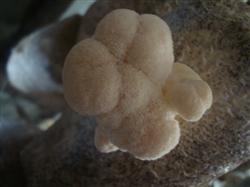 Lion's mane mushroom (Hericium erinaceus) is a well-known edible and medicinal fungus in China. The optimum growth temperature range for the mycelium is 22--24°C, and the best temperature for the fruiting body growth stage is 18--20°C. During bag cultivation, the mycelium growth stage has no strict requirement for air humidity, while the fruiting body growth stage requires a relative air humidity of 85%--90%. In production, as long as the above temperature and humidity conditions are met, year-round production can be organized.
Prepare the substrate. Substrate formulas: 1. Cottonseed hull 78%, wheat bran 20%, sucrose 1%, gypsum 1%. 2. Corn (2344, 0.00, 0.00%) cob 78%, wheat bran 20%, sucrose 1%, gypsum 1%. 3. Cottonseed hull 40%, sawdust 30%, wheat bran 25%, corn flour 2%, gypsum powder 1%, sucrose 1%, monopotassium phosphate 1%. In production, one of these formulas can be selected according to raw material supply and production scale to prepare the materials, and the raw materials are required to be fresh and free of mold. After the raw materials are prepared, mix them evenly in proportion, then add water and mix well so that the water content of the substrate reaches 60%--70% and the pH value is 4.5--6.5 (considering that the medium will gradually acidify during later cultivation, the pH value at this time is best at 6.5), then let it sit for about 30 minutes before bagging. It should be noted that when using formula 2, the corn cobs need to be crushed to the size of soybean (4469, -1.00, -0.02%) grains, soaked in water 1 day in advance to allow full water absorption, then taken out before use, drained of excess water, and mixed evenly with the other materials. The prepared substrate must not be piled for too long, especially in hot seasons, otherwise it will deteriorate and become unusable.
Bagging, sterilization, inoculation. After the substrate is prepared, it can be bagged. The plastic (11310, -5.00, -0.04%) bag specifications are 35 cm x 17 cm x 0.05 cm. For high-pressure sterilization, polypropylene bags are selected; for atmospheric-pressure sterilization, polyethylene bags can be selected. Each bag is filled with about 450 grams of dry material, and the filling should be appropriately firm. After filling, put on a hard plastic neck ring and cover with a lid. At this time, check whether the plastic bag, neck ring, lid, etc. are damaged; if damaged, they need to be replaced. Sterilization is divided into atmospheric-pressure sterilization and high-pressure sterilization. Atmospheric-pressure sterilization is carried out at atmospheric pressure for 12 hours, and high-pressure sterilization is carried out at a pressure of 1.5 kg/sq cm for 2 hours. After sterilization is completed, take out the substrate bags, check again for damage and water entry, and then move them into the inoculation room for inoculation. When the bag temperature is below 30%, inoculate under sterile conditions in an inoculation box. To shorten the mycelium growth time, use two-end inoculation, that is, inoculate at one point at the bag opening and at one point in a hole made at the bottom of the bag. After inoculation, quickly cover the lid and seal the hole tightly with tape or a special sealing film. After all substrate bags are inoculated, affix labels and send them to the incubation room for cultivation.
Management during the mycelium growth stage. 1. Temperature and humidity management. By means such as sprinkling water, shading, and ventilation, control the room temperature at 22--24°C and the relative air humidity below 70%. 2. Light management. Since the mycelium growth stage of lion's mane mushroom does not require light, the incubation room needs to be shaded to maintain darkness. 3. Other management. About 3--4 days after being moved into the incubation room, the mycelium begins to colonize the substrate. At this time, check once for contamination and remove contaminated substrate bags. In addition, also check for damage from mice and other pests.
Management during the fruiting body formation stage. After 25--30 days of cultivation, the mycelium has fully grown through the substrate bags or is about to fully grow through them. At this time, through ventilation and air exchange, lower the temperature of the incubation room to 20--22°C, remove the shading materials, and increase scattered light. After about another 7 days, when mushroom primordia begin to appear on the substrate surface, move the mushroom bags into the mushroom shed or adjust the temperature of the incubation room to 18--20°C, remove the lids of the substrate bags, and remove the neck rings to induce fruiting. At this time, maintain the relative air humidity at 85%--90%, increase scattered light, and pay attention to proper ventilation and air exchange. In this way, the fruiting bodies can mature after about 15 days.
Harvesting. When the fruiting body diameter of lion's mane mushroom reaches 5--10 cm or when it is 90% mature, it can be harvested. When harvesting, cut off the mushroom stem with a small knife, leaving a stubble of 1--2 cm to facilitate regrowth. After harvesting, continue to strengthen water, temperature, and humidity management, and after about 10 days new fruiting bodies will grow again. Generally, each mushroom bag can produce 3 flushes of mushrooms, with a biological conversion rate of 60%--80%.