Indoor Cultivation Methods and Key Technical Points for Lion's Mane Mushroom
1. Select good strains: "A good strain is half the success of the mushroom," which shows that selecting good strains is the key to successful lion's mane mushroom cultivation. According to our years of research and practice, it is best to choose varieties such as "Hou No. 2" and "Hou Xuan 37" for bag cultivation. 2. Preparation of culture material. Formulas: (1) 88% cottonseed hulls, 10% wheat bran, 1% sugar, 1% gypsum powder; (2) cotton...
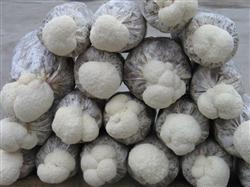 Indoor cultivation methods for lion's mane mushroom include bottle cultivation and open cultivation, among others. Culture materials include sawdust, cottonseed hulls, and so on: the suitable temperature for the growth of lion's mane mushroom mycelium is 22-28°C; the suitable temperature for fruiting body growth is 18-22°C, and if the temperature is too low, the fruiting body grows slowly. The mycelium requires a humidity of 60%, and the fruiting body requires a humidity of 85-95%.
I. Strain isolation and cultivation. To cultivate lion's mane mushroom, strain isolation must first be carried out. There are two methods of strain isolation: spore isolation and tissue isolation. Spore isolation is the collection, under sterile conditions, of spores released after the lion's mane mushroom matures, to serve as the material for culturing mycelium. Tissue isolation involves taking fresh young fruiting bodies, placing them in an inoculation box, cutting open the mushroom body under sterile conditions, and taking a piece of tissue about the size of a grain of rice from the firm, better-fleshed middle part, then placing it onto the slant culture medium in a test tube. The culture medium is made by mixing peeled potato, agar, and glucose, in a ratio of 200:20:20, adding 1000 g of water, adjusting the pH to 5.5-6, and then dispensing it separately into glass test tubes, without filling them full, followed by high-pressure sterilization and allowing it to form a slant. After inoculation, place the test tubes in a 25°C constant-temperature incubator for 3 days, and the inoculated piece begins to germinate mycelium; after 20-25 days, when the mycelium has covered the surface of the culture medium, select the culture with good growth and no contaminating microorganisms; once the mycelium has covered the slant culture medium in the test tube, cultivation of the spawn can begin.
II. Cultivation of spawn. The culture material for spawn can use sawdust (without aromatic oils or fungicides) or cottonseed hulls, etc. The ingredient ratios can be chosen as follows:
(1) 78% sawdust, 20% wheat bran, 1% gypsum, 1% white sugar;
(2) 98% cottonseed hulls, 1% gypsum, 1% white sugar;
(3) 80% fresh distiller's grains, 10% wheat bran, 9% chaff, 1% gypsum powder (add inorganic salt nutrient solution, formula: 3% ammonium sulfate, 1% monopotassium phosphate, 0.1% magnesium sulfate, adjusted with lactic acid to pH 4.
(4) Add 60-65% water to the culture material and mix evenly; when squeezed by hand, it is appropriate if water appears between the fingers but does not drip. Then, fill bottles to the shoulder and tamp firmly, and sterilize for 1 hour at 14.7 newtons of pressure. After sterilization, use sterile to pick a piece of slant spawn and place it into the culture material bottle, bring the temperature to 20-25°C and the relative air humidity to 60-65%, and plug with a cotton plug. After about 30-40 days, the mycelium covers the culture material and forms a mycelial film. When the fruiting body primordia on the mycelial film approach the cotton plug, remove the cotton plug.
III. Cultivation of fruiting bodies. Open cultivation of lion's mane mushroom involves sterilizing broadleaf tree sawdust under high pressure, or boiling it in a pot for 20 minutes, removing it and draining off the water, and after it cools, directly mixing in about 40% bottle spawn; after mixing, put it into plastic bags or wrap it with film. Fit a cotton plug at the bag opening or tied opening for ventilation, place it at a low temperature below 10°C for cultivation, and after it grows into a mycelial block, remove the film, then continue cultivating at natural temperature, and after a few months the lion's mane mushroom can grow. This method has a yield similar to bottle cultivation, but saves spawn and bottles, and can be used for larger-scale production. For bottle-cultivated lion's mane mushroom, after the cotton plug is pulled open, keep the room temperature at 18-20°C; if the temperature is too high, close doors and windows at noon, and ventilate in the early morning and evening when the temperature is lower; if the temperature is low, ventilate at noon. Keep indoor humidity at 85-95%; if too low, sprinkle water on the floor to keep it frequently moist, and at the same time spray the air 3-4 times a day, and after half a month the fruiting bodies can form. Compared with sawdust as culture material, cottonseed hulls have the characteristics of faster mycelial growth, fewer contaminating microorganisms, and earlier fruiting body formation, forming fruiting bodies about half a month earlier than sawdust.
IV. Harvesting. When the fruiting bodies begin to shrink and age and stop growing and developing, and the surface turns from white to brown, they can be harvested and dried in the sun. If for consumption, they can be harvested before the spores are released, which avoids the bitter taste of the spores. Under the same management conditions as above, bottle-cultivated lion's mane mushroom can harvest three per bottle, and the remaining mycelium can be used for medicine.