Detailed Explanation of Nectarine Cultivation Techniques and Management Methods
[Summary]In nectarine production, attention should be paid to strengthening the supply of fertilizer and water in the early stage; strengthening summer pruning to improve light conditions and promote fruit coloring; controlling the fruit load to prevent premature decline of tree vigor.
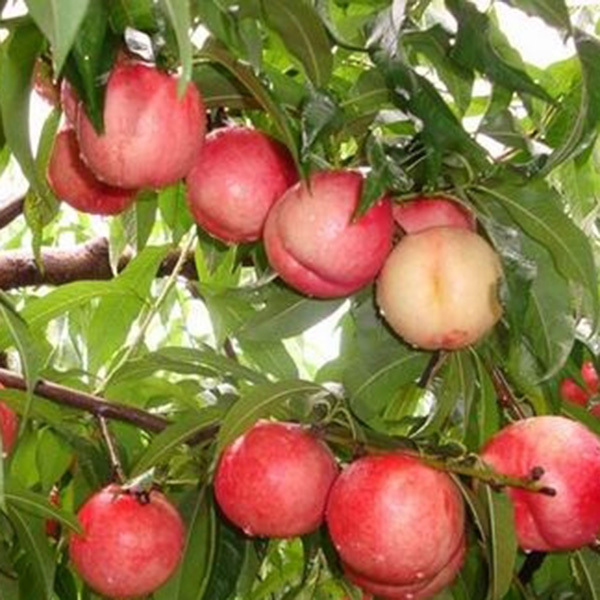
I. Fertilizer and Water Management: Promote Early, Control Late
Apply topdressing and irrigation in a timely manner according to the fertilizer requirements at each phenological growth stage of nectarine, with nitrogen as the main nutrient in the early stage and phosphorus and potassium as the main nutrients in the later stage. From seedling planting to early July, strengthen fertilizer and water management to promote rapid canopy growth. After mid-July, strictly control fertilizer and water. Before flowering, at the young fruit stage, and at the fruit enlargement stage of nectarine, spray the leaf surface with "Guaguo Zhuangdiling" + 0.2% urea and 0.2% potassium dihydrogen phosphate, once every 10 days, which helps alleviate the competition for nutrients between new shoot growth and fruit set and improves the fruit-setting rate. In September to October, apply 5-10 kg of decomposed chicken manure per tree, plus 0.2 kg of potassium sulfate fertilizer, then irrigate.
II. Growing Season Pruning
Nectarine trees have relatively strong apical dominance, many branches, fast new shoot growth, and easy flower bud formation, so it is especially important to early develop a high-yield tree shape. After nectarine planting, focus on promoting growth in the first two years to rapidly expand the canopy. Whether fruit-bearing branch pruning is done properly or not directly affects tree vigor and yield. Generally, branches with strong branching ability and low fruit-setting rate, and upward-slanting or flat-growing long branches of young trees should be left long; branches with weak branching ability and high fruit-setting rate, and thin branches and drooping branches should be left short; for trees with strong growth vigor compared with weak-growing trees, leave 1-3 more flower buds per fruit branch, while short fruit branches of weak trees generally should not retain flowers. Wounds caused by pruning should be smeared with "Yushang Fangfumo" for sterilization and disinfection to prevent cracking.
III. Controlling Shoots and Promoting Flowering
Nectarine trees have relatively vigorous growth vigor, and branches tend to grow excessively, so it is necessary to inhibit vegetative growth and promote flower bud differentiation. During the dormant period of nectarine, use an awl needle to pierce two rows of holes around the tender bark of the trunk or the lower part of main branches, then use a brush to apply "Cuhuawang No. 1" in a ring, which effectively controls new shoot growth, promotes flowering, saves nutrients, and improves the fruit-setting rate.
IV. Flower and Fruit Thinning
When the number of flower buds is large, most flower buds on thin and weak branches can be thinned out, as well as excess double flower buds on long and medium fruit branches left too long after pruning and poorly developed late-opening flower buds. The first fruit thinning is carried out in mid-May, mainly removing twin fruits, deformed fruits, small fruits, basal fruits, and tip fruits. The second fruit thinning is carried out from late May to early June. Generally, long fruit branches retain 2-3 fruits, medium fruit branches retain 1-2 fruits, and short fruit branches retain 1 fruit. The leaf-to-fruit ratio should not be lower than 50:1, and the fruit spacing should not be less than 20 cm.
V. Pest and Disease Control
The main diseases include bacterial shot hole disease and brown spot shot hole disease, etc. Spray with "Xin Gaozhimo" + 70% thiophanate-methyl wettable powder 800-fold solution and 65% zineb wettable powder 500-fold solution. The main pests include aphids and red spider mites, etc., and 10% imidacloprid 3000-fold solution can be used.
Compared with other protected cultivation fruit trees, nectarine is easy to manage, early to yield abundantly, well priced, and highly profitable. Strengthen the above management measures to produce high-benefit nectarines.