What to Do About Deformed Mushrooms During Lion's Mane Mushroom Cultivation
Lion's mane mushroom, also called Hericium erinaceus, hedgehog fungus, cauliflower fungus or yamabushitake, was originally a precious edible mushroom hidden deep in dense forests. Its fruiting body is round and thick, often hanging from tree trunks and covered with needle-like spines, shaped very much like a monkey's head, hence its name. Lion's mane mushroom is tender and aromatic, delicious and tasty, and its color, flavor and aroma are all of superior quality....
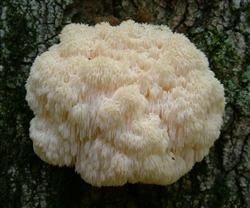 In lion's mane mushroom cultivation, because the cultivation management ecology gets out of control, deformed and misshapen fruiting bodies often appear, directly lowering the commercial value and affecting the producer's economic benefits, thus becoming a difficult point in production. Here we introduce the types of deformed mushrooms, their forms, the causes and preventive measures.
I. Bald and spineless type: The fruiting body is clustered and branched, large and plump, with a shriveled and rough surface, no spines, and flesh that is loose and crisp, slightly yellowish-brown, with normal aroma. The main cause is slightly high temperature and low humidity; often at 25°C the fruiting body loses too much water through evaporation while the humidity is not raised in time, so no spines grow and a bald mushroom forms. Preventive measures: pay attention to temperature control and moisture retention. When the temperature exceeds 25°C, for outdoor bed cultivation, uncover the covering film in the morning and evening for ventilation, and during the day open the film at both ends to let air through; irrigate the furrow ditches to lower the ground temperature, spray atomized water into the air to increase humidity, and keep the relative humidity above 90%; also thicken the shade shed covering to reduce sunlight penetration and lower water evaporation.
II. Coral clustering type: The base of the fruiting body branches and clusters repeatedly, shaped like coral, and a root-like rhizomorph connecting to the substrate can clearly be seen. Some of these fruiting bodies die during the fruiting period, while others continue to grow and develop, with the tips of the branchlets constantly swelling to form multiple small fruiting bodies. The main cause is excessive accumulation of carbon dioxide concentration, which stimulates the continuous differentiation of the stipe and inhibits development of the central part, resulting in irregular coral-like forms; in some cases, because the substrate contains aromatic compound sterilizing substances, mycelial growth is inhibited or stimulated; often, in order to keep warm and retain moisture, ventilation is neglected, and under such saturated humidity and still-air conditions the fruiting body is forced to develop abnormally. Preventive measures: (1) Strengthen ventilation and improve environmental conditions. (2) When selecting the substrate, take care to exclude trees containing sterilizing substances such as Chinese fir, pine, camphor, and poplar or locust. (3) For fruiting bodies that have already formed coral-like shapes, scrape them off together with the surface substrate while they are still young, then continue cultivation, and they can still fruit as normal.
III. Abnormal color type: The fruiting body turns yellow, and the spines are short and thick; some fruiting bodies turn red, or from the young mushroom stage to maturity are all pink, and the fruiting body tastes bitter. The main cause of this kind of color change is slightly low temperature; often in autumn and winter cultivation, when the temperature drops suddenly and the fruiting body development and growth stage is below 10°C, the fruiting body turns red, and as the temperature drops further, the color deepens. In some cases, during ventilation the fruiting body is stimulated by a direct draft, and the fruiting body turns sallow. For mushrooms with color changes, the cause should be distinguished and treated accordingly. For those caused by low temperature, when arranging inoculation, one should consider that about 25 days after inoculation the local temperature should preferably not be lower than 14°C; calculate forward from this as the boundary to determine the best inoculation period, and the harm from low temperature can be avoided. Methods for raising temperature: for outdoor bed cultivation, cover the film tightly, ventilate at noon when the temperature is high, and thin out the covering to let in light and raise the temperature; at the same time try to avoid direct ventilation blowing onto the fruiting bodies, or cover the mushroom bags at the air inlet with wet gauze.
IV. Shriveled and moldy type: The fruiting body grows normally in the early stage, then the spines in the middle wilt and fall, and the fruiting body shrivels; some fruiting bodies turn brown and moldy. The former is often caused by excessively high temperature, dry air and obvious water shortage, so that growth stops and the mushroom gradually shrivels and dries up. Spray water into the air in time, and spray a tiny amount onto the fruiting body to help it recover. If the fruiting body is found to be moldy, it is disease or mold invasion, and ventilation should be strengthened and the temperature lowered. Remove moldy ones promptly, and apply 3% bleach solution or 1% white lime water locally to control the spread.