What Are the Characteristics of the King Oyster Mushroom? A Detailed Guide
The king oyster mushroom, also known as the eryngo oyster mushroom (Pleurotus eryngii), has an almond-like aroma and thick flesh resembling abalone, which is how it got the name "king oyster mushroom." In Japan it is called "yukitake." From late spring to early summer it grows saprophytically and parasitically on the roots and surrounding soil of plants in the Apiaceae family such as field eryngo (Eryngium campestre). Its...
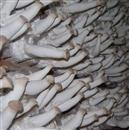
The king oyster mushroom, also known as the eryngo oyster mushroom (Pleurotus eryngii), has an almond-like aroma and thick flesh resembling abalone, which is how it got the name "king oyster mushroom." In Japan it is called "yukitake."
From late spring to early summer it grows saprophytically and parasitically on the roots and surrounding soil of plants in the Apiaceae family such as field eryngo (Eryngium campestre). Its natural distribution covers Italy, Spain, France, Germany, Czechoslovakia, Hungary, the southern part of the former Soviet Union, Morocco, India, Pakistan, **, China and western Sichuan, China.
The king oyster mushroom is rich in nutrients, crisp and tender in texture, superb in taste and unique in flavor, which is why it has earned the fine names "king of oyster mushrooms" and "delicious porcini of the grasslands."
Biological Characteristics
(1) Mushroom morphology The fruiting body is generally medium-sized. It grows singly or in clusters. The cap diameter is 2-12 cm; in the early stage the cap margin is inrolled and hemispherical, later gradually flattening, and after maturity it spreads flat but the margin does not turn upward, with a shallow depression in the center forming a shallow dish shape to funnel shape. When young it is pale gray, and after maturity it is pale yellowish-white, often with radial dark brown fine stripes around the center. The flesh is white and has an almond flavor. The gills run down the stem and are densely packed. The stem is characterized by a thick base, solid interior, fleshy texture and white color. When cultivated with little ventilation it becomes club-shaped to bowling-pin-shaped. The spore print is white or pale yellow. The spores are nearly spindle-shaped and smooth. The hyphae have clamp connections.
(2) Growth conditions
1. Nutrition The king oyster mushroom is an edible mushroom with a relatively strong ability to decompose lignin and cellulose, and it requires fairly rich nutrition, especially sufficient nitrogen sources, for vigorous mycelial growth and higher yields. For artificial cultivation, the main substrate materials grow very well on substrates such as cottonseed hulls, sawdust, sugarcane bagasse and wheat straw. Adding auxiliary materials to substitute-formula cultivation, such as rice bran, wheat bran, cornmeal, cottonseed cake powder, calcium carbonate and sugar, can promote the spread of mycelial growth and increase the number of mushroom primordia.
2. Moisture The king oyster mushroom is relatively drought-tolerant, but suitable moisture content is more conducive to growth and development and to increasing yield. During the mycelial growth stage, the suitable moisture content of the substrate is 60%-65%, but since water should not be sprayed on the mushrooms during cultivation, the water needed by the mushrooms mainly comes from the substrate, so when adjusting the substrate moisture content it can be appropriately raised to 65%-70%. For relative air humidity, about 60% is sufficient during the mycelial growth stage, while after primordia appear, during the fruiting body differentiation stage, 90-95% is suitable, and during the fruiting body growth stage it can be appropriately lowered to 85-90%.
3. Temperature Temperature is the key factor determining the success or failure of king oyster mushroom cultivation and the level of yield. The temperature range for mycelial growth is 22-27°C, with the optimum around 25°C; above 30°C the mycelium grows poorly. The king oyster mushroom is a constant-temperature fruiting mushroom; too large a temperature difference is unfavorable for primordium formation. The fruiting temperature range is 10-18°C, with the optimum 12-16°C; below 8°C primordia will not appear, and above 20°C deformed mushrooms easily appear, and diseases may also occur, causing dead and rotting mushrooms. The fruiting body growth temperature is 10-21°C, with the optimum 10-18°C. Mastery of temperature varies with different strains, so when introducing strains it is especially important to understand the characteristics of the strain.
4. Air During the mycelial growth stage the oxygen requirement is relatively low, and low concentrations of CO actually stimulate mycelial growth. As the mycelium grows, the CO2 concentration in the bag (bottle) gradually rises from the 0.03% found in normal air to more than 2%, and the mycelium can still grow very well. During the primordium stage, however, sufficient oxygen is needed, and the CO2 concentration should be reduced to about 0.5%. Otherwise the primordia will not differentiate and will swell into spherical shapes. During the fruiting body growth and development stage, fresh air is needed, and the CO2 concentration should preferably be less than 0.4%.
5. Light The mycelial growth stage does not require light; in a dark environment it will
accelerate mycelial growth. The primordium and fruiting body growth and development stages, however, require a certain amount of scattered light, with a suitable light intensity of 500-1000 Lx.
6. pH The pH range for mycelial growth is 4-8, with the optimum pH 6.5-7.5. The optimum pH during the fruiting stage is 5.5-6.5.