Key Techniques for Field-Style Bag-Cultivation of Wood Ear Mushroom
The log cultivation of wood ear mushroom consumes too many resources, is unfavorable for long-term development, and has low per-unit yield and unstable returns. The Hebei Lincheng Edible Fungus Farm explored field-style bag cultivation, and after 3 years finally mastered its key cultivation techniques. The inoculation success rate, fruiting yield and quality all made great breakthroughs compared with before, and it guided a group of wood ear...
The log cultivation of wood ear mushroom consumes too many resources, is unfavorable for long-term development, and has low per-unit yield and unstable returns. The Hebei Lincheng Edible Fungus Farm explored field-style bag cultivation, and after 3 years finally mastered its key cultivation techniques. The inoculation success rate, fruiting yield and quality all made great breakthroughs compared with before, guiding a group of wood ear farmers onto the road to prosperity.
1. Cultivation season Bag making should be carried out from early October to early November. At this time the room temperature is 18-24°C, the relative air humidity is 65%, and the temperature gradually drops, so the activity of contaminating fungi is at a low ebb, which is favorable for the wood ear mushroom mycelium to colonize the substrate and also favorable for fruiting in early spring.
2. Raw material ratio The raw materials for bag cultivation of wood ear mushroom are mainly broadleaf tree sawdust, and the raw materials are required to be fresh and free of mold. Formula one: miscellaneous wood sawdust 80%, rice bran 10%, wheat bran 8%, calcium carbonate and brown sugar 1% each. Formula two: miscellaneous wood sawdust 60%, rice husk powder 28%, wheat bran 10%, calcium carbonate and brown sugar 1% each. The water content of the culture substrate is 55%.
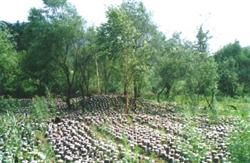
3. Selection of the fruiting site Choose a field plot or dry land with good ventilation, sufficient sunlight, convenient water source, no pollution sources and flood prevention as the fruiting site. Shape the raised bed into a turtle-back form, 120 cm wide, with unlimited length, and the side ditches serve as walkways. Cover the surface of the raised bed with dry grass to help retain moisture and prevent mud and sand from eroding the fruiting logs. No plastic film covering is needed; arrange them in the open air.
4. Log arrangement and fruiting management In early February, move the fully colonized fungus logs out to the fruiting site, and choose a sunny or cloudy day to punch holes and arrange them. Punch 150 fruiting holes in each fungus log (use a 0.6 cm nail head to make the hole-punching tool). Seven days after punching the holes in the fruiting logs, fine water spray management can begin, spraying once in the morning and once in the evening. After half a month of management, the fruiting bodies can be picked when they are 80-90% mature. After picking one batch, turn the logs end for end once, so that both ends fruit evenly and the mycelium is promoted to form fruiting bodies. The fruiting logs should be kept alternately dry and moist. After one batch of fruiting bodies is harvested, rest the mycelium for 1 week and stop spraying water. Wait for the second batch of fruiting bodies to form, then manage as usual. A total of 3-5 batches are picked.
With the new bag cultivation method, wood ear mushroom takes only 4 months from being arranged at the fruiting site to the end of harvesting. The cost is slightly lower than bag-cultivated shiitake, and each bag produces 50-75 grams of dried fruiting bodies. Calculated at the market price of 46 yuan/kg, each bag brings in 2.3-3 yuan. It also happens to fill a seasonal market gap, so the product sells well and the economic benefits are considerable.