Detailed Explanation of Straw Cultivation Methods and Techniques for Black Wood Ear Mushroom
After the autumn harvest, rural areas have a large surplus of straw, and it is a great pity to throw it away. Using straw to cultivate black wood ear mushroom works very well, and it is also a path to wealth for farmer friends. Practice shows that generally every 100 kg of straw can yield more than 10 kg of dried black wood ear mushroom, and high-yielding batches can bring a net income of more than 200 yuan from this. Straw cultivation of black wood ear mushroom uses...
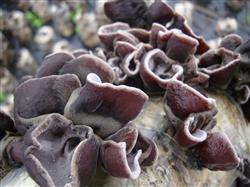
After the autumn harvest, rural areas have a large surplus of straw, and it is a great pity to throw it away. Using straw to cultivate black wood ear mushroom works very well, and it is also a path to wealth for farmer friends. Practice shows that generally every 100 kg of straw can yield more than 10 kg of dried black wood ear mushroom, and high-yielding batches can bring a net income of more than 200 yuan from this. Straw cultivation of black wood ear mushroom can be done either in bottles or in bags. The cultivation techniques include the following points:
First, choose dry, fresh, mold-free straw as the raw material; choose dry, fresh rice bran and wheat bran as auxiliary materials. For fertilizer, single superphosphate and gypsum powder can be used. The former is used to adjust the pH of the culture material and can also provide phosphorus; the latter is used to adjust the pH of the culture material and can also promote the decomposition of nutrients by the mycelium. For the selected straw, if bottle cultivation is adopted, the straw should be cut into small pieces about 3 cm long, soaked for 10 hours, and taken out for later use. If bag cultivation is adopted, the straw should be crushed, and before bagging, water should be added while mixing so that the straw powder is thoroughly moistened.
The formula proportions for the culture material for straw cultivation of black wood ear mushroom are: straw 66%, rice bran 20%, wheat bran 10%, single superphosphate 1.5%, gypsum powder 1%, sucrose 1.5%, plus 150 ml of black wood ear mushroom yield-increasing agent and multiplication agent. The material-to-water ratio is 1:2. For bottle cultivation, two layers of old newspaper plus one layer of plastic film can be used to wrap the bottle mouth.
Second, sterilization and inoculation. For bottle cultivation, it is best to use wide-mouth canning jars, and all tools used should be strictly disinfected with 0.1% potassium permanganate or 3% Lysol or 75% alcohol.
The inoculation box and inoculation room should be fumigated and disinfected with formalin; the culture room should be spray-disinfected with 0.3% benzalkonium bromide and 3% Lysol aqueous solution. The culture material should be sterilized for one and a half to two hours under 1-2 kg pressure. If normal-pressure sterilization is used, it should be kept for 10 hours after the water boils. Bagged material should be arranged layer by layer with one layer of bags and one layer of paper to prevent overlapping and squeezing from affecting the disinfection effect. After disinfection, when the bottles and bags have cooled to about 35°C, they should be moved into the inoculation room and inoculation box for inoculation. Inoculation should be done while retaining heat. After the culture bottles or bags are placed into the inoculation box or inoculation room, disinfect with a mixture of formalin and potassium permanganate, seal for half an hour, then disinfect hands and inoculation tools with 70%-75% alcohol. During inoculation, the mycelial film on the surface of the spawn should be removed, and the spawn should be dug out and inoculated into the bottles or bags. Each bottle of cultivated spawn can inoculate 45-65 bottles or 30 bags of straw culture material.
Third, mycelial growth and fruiting body induction. Place the inoculated bottles or bags into the culture room. They can be stacked, but do not move them frequently.
Keep the culture room dark and clean, and ventilate frequently. From 1-6 days after inoculation, the temperature in the culture room should be controlled at 25-28°C so that the black wood ear mushroom mycelium can germinate and colonize as quickly as possible and reduce contamination by foreign fungi. From the 7th to 15th day, the room temperature should be lowered to 22-25°C so that the mycelium becomes thick and strong. At this stage, humidity is generally not considered. After 30-40 days, the entire culture material can be fully covered with mycelium. For bottle cultivation, 10 days after the mycelium reaches the bottom of the bottle, the sealing newspaper or kraft paper should be removed, leaving only one layer of transparent film wrapped around the bottle mouth, and then more than ten holes should be pricked in the film with a needle to promote the growth of fruiting body buds. Then place the bottles horizontally on the ground and stack them 7-10 layers high. The bottles can also be moved outdoors to a shading-equipped fruiting yard for fruiting body induction management. For bag cultivation, when the culture material is fully covered with mycelium, oxygen should be allowed to penetrate into the bag. At this time, the temperature of the culture room is 20-23°C, the relative humidity is 80%, and a 0.5 cm inoculation punch should be used to make several fruiting holes around the bag in a triangular distribution, with a hole spacing of 5-6 cm. With sufficient oxygen in contact with the bag material, mycelial development accelerates. To promote fruiting, newspaper can be covered over the bags and water sprayed on the newspaper to maintain 85%-90% relative humidity. Direct light should be avoided indoors to prevent excessive evaporation of moisture from the bag material.
Fourth, fruiting management. When the wood ear mushroom is as large as a soybean, remove the sealing film from the bottle and carry out moisture-retaining fruiting management.
Generally, during the fruiting bud stage, the relative humidity of the fruiting house should be 85%-90%; during the stage when the fruiting body stem is wrinkled, the relative humidity should be 90%-95%; and in the early stage of expansion and curling, the humidity should be above 95%. When spraying water, use the "three observations": observe the weather, spray less or not at all during cloudy and rainy weather, and spray more during clear and dry weather; observe the shape of the fruiting bodies, spray less when the fruiting bodies are small, spray less when in a water-soaked state, and spray more when the fruiting bodies are numerous and dense; observe the temperature, when above 25°C, focus on heat preservation during the day and spray water at night; when above 20°C, spray water in the morning and evening; when around 15°C, spray more during the day. Also note that water should not accumulate for a long time at the mouths of bottles and bags, to prevent the wood ear mushroom from autolysis and affecting yield. When the temperature is above 15°C, 0.1% urea and 0.1% monopotassium phosphate solution should be applied as a top dressing in conjunction with water spraying; when below 15°C, about 1.5% glucose solution should be applied as a top dressing. Spray the fertilizer solution directly onto the fruiting bodies. After the first batch of fruiting bodies is harvested, water spraying should be stopped for 5-7 days to allow the mycelium to recover and grow. The management method is the same as introduced above, and fertilization should be carried out in conjunction with water spraying.
Fifth, harvesting and processing. The growth period of black wood ear mushroom is generally about 100 days. When the color of the wood ear mushroom changes from dark to light, the fruiting bodies unfold, the edges curl inward, the base of the fruiting body shrinks, the fruiting bodies become soft, the flesh is thick and plump, and elastic, and white spore powder is produced on the ventral surface, it is at the mature stage. It should be harvested promptly on a sunny day, with frequent and careful harvesting, to ensure high quality and high yield of the wood ear mushroom. Black wood ear mushroom processing can be done by sun-drying or drying over a low fire. To prevent moisture regain, it should be sealed in plastic bags and stored in a dry, ventilated, clean, and pest-free warehouse.