Detailed Explanation of Key Points of Agaricus bisporus Cultivation Techniques
Agaricus bisporus has the characteristics of excellent quality, good taste, low investment, and high efficiency, with broad market prospects. The economic benefit per 667 m2 reaches 12,000 yuan. Its cultivation techniques: 1. Prepare the compost and formula. Based on cultivation of 100 m2, it is necessary to prepare 1,500 kg of high-quality dry wheat straw, 600 kg of dry cattle and horse manure, 50 kg of phosphate fertilizer, ...
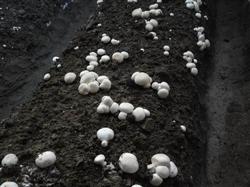
Agaricus bisporus has the characteristics of excellent quality, good taste, low investment, and high efficiency, with broad market prospects. The economic benefit per 667 m2 reaches 12,000 yuan. Its cultivation techniques:
1. Prepare the compost and formula. Based on cultivation of 100 m2, it is necessary to prepare 1,500 kg of high-quality dry wheat straw, 600 kg of dry cattle and horse manure, 50 kg of phosphate fertilizer, 15 kg of urea, 25 kg of gypsum powder, and 12.5 kg of calcium carbonate.
2. Composting and turning of the compost. (1) The entire process of composting the compost requires about 25 days, and the stacking time is carried out 5 days before sowing. (2) Composting and turning. For composting the cultivated material, choose a place with level ground, no water accumulation, no pollution, and a water source. 2-3 days before stacking, soak the wheat straw in water and then take it out, evenly sprinkle 1.5 lime powder layer by layer, then pile the wheat straw into a large rectangular heap, and firm it layer by layer, while pre-wetting the horse manure soil. When stacking, first spread a layer of soaked wheat straw on the composting yard, 15-20 cm thick, then spread a layer of manure on the wheat straw, for a total of 10-12 layers. Starting from the second layer, add an appropriate amount of water. Turn the pile four times. The first turn is carried out on the seventh day after stacking, and thereafter at intervals of 5-6 days each time. Each turning must be carried out strictly according to technical requirements.
3. Sowing. (1) Sowing time: when the outside temperature is around 25°C and the compost temperature is below 28°C, it is suitable for sowing. According to the temperature conditions in our city, September 5 is suitable. (2) Sowing amount: inoculate 500 g/bottle per m2.
4. Management after sowing and before casing soil. (1) After sowing, keep the relative humidity at about 80%. If the compost temperature exceeds 28°C and the temperature inside the shed exceeds 30°C, ventilate appropriately to cool down. (2) Within 4-10 days after sowing, carry out timely trace ventilation. If the humidity is about 70%, which is on the low side, cover the surface of the compost with paper, then spray 1% lime water onto the paper until the paper is wet but without standing water. (3) After 10 days from sowing, remove the paper in time. After 15-20 days, when the mycelium has basically covered the compost layer, casing soil can be applied. 5. Casing soil and management after casing soil. (1) Casing soil: based on 100 m2, 2.5 m3 of soil is required. Mix 50 kg of phosphate fertilizer and 1-2 lime powder into the soil, penetrate with water, and it is suitable when it can be grasped into a ball and scattered when released. Spread the soil evenly on the surface of the compost, with a thickness of 2-2.5 cm being suitable. (2) Management after casing soil. 1. Water: the moisture content of the casing soil layer is generally optimal at 20%. When the mushroom buds grow to the size of rice grains, spray once with emerging water. 2. Humidity: after casing soil, the spatial humidity is required to be between 80-90%. 3. Temperature: the suitable temperature for mycelial growth is 13-18°C, and the suitable temperature for fruiting body growth is 13-18°C. 4. Timely harvesting: harvest at a diameter of 2-4 cm.