Detailed Explanation of Key Techniques for Bag Cultivation of White King Oyster Mushroom
White King Oyster Mushroom, also known as White Ferula Mushroom, comes from **, and is also called Tianshan Divine Mushroom. It is a rare edible mushroom that is easy to cultivate, tender and delicious, pure white in color, and high in nutritional value. The mycelium of White King Oyster Mushroom is denser and whiter than that of general Pleurotus varieties, with strong resistance to contamination; the fruiting bodies grow in clusters or singly, with thick and substantial flesh and thick, long stipes, generally with a stipe diameter of...
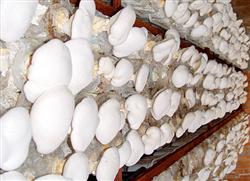
White King Oyster Mushroom, also known as White Ferula Mushroom, comes from **, and is also called Tianshan Divine Mushroom. It is a rare edible mushroom that is easy to cultivate, tender and delicious, pure white in color, and high in nutritional value. The mycelium of White King Oyster Mushroom is denser and whiter than that of general Pleurotus varieties, with strong resistance to contamination; the fruiting bodies grow in clusters or singly, with thick and substantial flesh and thick, long stipes, generally with a stipe diameter of 3-7 cm and a length of 6-10 cm, solid stipes, and crisp and tender caps. When mature, the cap margin curls inward, generally with a cap size of 8-15 cm and a fresh weight per mushroom of 50-160 g, with a maximum of up to 400 g.
White King Oyster Mushroom belongs to the medium-temperature mushroom category. The mycelium can grow at 3-32°C, with the optimum at 24-27°C; the fruiting temperature is 3-26°C, with the fastest growth and best quality at 12-22°C, and it can also grow slowly at around 0°C; the relative air humidity during the fruiting body growth period is 84-95%; both the mycelium and fruiting body require fresh air for growth and development, and when the CO2 concentration exceeds 0.5%, deformed mushrooms are likely to appear. Mycelium growth does not require light, while the fruiting body growth stage requires scattered light.
The artificial cultivation techniques for White King Oyster Mushroom are introduced as follows:
I. Production Season
Cultivation in winter and spring yields high output and the best quality. In Gutian County, Fujian, sowing begins in early September, mushroom growth begins in mid-October, spring sowing cannot exceed early February, and harvesting ends in early May.
II. Culture Medium Preparation
White King Oyster Mushroom is best cultivated with a high-nitrogen formula. It grows well on comprehensive culture media such as cottonseed hulls, mixed sawdust, sugarcane bagasse, rice straw, wheat bran, and corn (2345, 12.00, 0.51%) meal, with a biological efficiency of 80-100% over two flushes.
Culture medium formulas: (1) cottonseed hulls 40%, mixed sawdust 40%, wheat bran 10%, corn meal 8%; (2) rice straw 57%, cottonseed hulls 10%, sawdust 13%, wheat bran 10%, corn meal 8%; (3) sawdust or cottonseed hulls and sugarcane bagasse 78%, wheat bran 12%, corn meal 8%. Each formula should be supplemented with 1% brown sugar and 1% gypsum, with a moisture content of 65%. The optimal pH value is 6-7. When the temperature is relatively high, 0.5% lime can be added to the substrate to prevent the culture material from souring and swelling. The culture material is prepared according to conventional methods.
III. Inoculation and Mycelium Running
Bag cultivation is more suitable for White King Oyster Mushroom. Sterilize at atmospheric pressure at 100°C for 16 hours, cool to 25°C, then under sterile conditions open the tied opening or remove the cotton plug and inoculate with White King Oyster Mushroom spawn. The mycelium running temperature is 25-28°C, air humidity below 70%, with frequent ventilation. Prevent strong light exposure during the bag cultivation period.
IV. Fruiting Management
After 30-40 days of cultivation, the mycelium will fully colonize the bag. When primordia appear on the surface or sides of the substrate, move the cultivation bags that have reached physiological maturity to the fruiting shed for mushroom growth. After the bags are moved into the fruiting shed, open the bag openings. Control the temperature at 10-23°C, and primordia will appear in about 7 days. When the cap grows to 2 cm, increase watering and strengthen ventilation. In the early stage, spraying the space to maintain 80% relative humidity is sufficient; in the later stage, control light. Alternatively, after opening the bag, sterilized garden soil can be used to cover the substrate inside the bag with a 2-3 cm casing layer.
V. Harvesting and Processing
White King Oyster Mushroom can generally be harvested 8-12 days from the appearance of primordia to the maturity of the fruiting body. After harvesting, stop watering, clean the area around the bag opening and the environment, and let the mycelium rest and recover. After 5 days, resume watering and temperature control. Generally, 2 flushes can be harvested. Fresh mushrooms can be sold directly on the market or salted; they can also be sliced and dried for export.