What issues need attention in the production of white king oyster mushrooms?
White king oyster mushrooms (Pleurotus nebrodensis), due to their relatively high market price recently, are being cultivated by more and more growers. However, because of the low conversion rate of white king oyster mushrooms, generally only one flush is harvested, and the spent mushroom logs after production still contain very rich nutrients. If they cannot be recycled and reused, it will not only cause a waste of resources but also pollute the environment. In order to turn spent mushroom logs from waste into treasure...
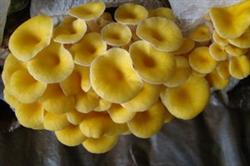 White king oyster mushroom, also known as white eryngii mushroom or white asafoetida mushroom, is one of the rare edible fungi with the greatest development potential because its fruiting bodies are as white as snow, taste good, and are rich in various nutrients. Here is a brief introduction to the issues that should be noted in white king oyster mushroom cultivation.
1. Select varieties according to the market. In some places, varieties are introduced blindly regardless of the sales region and variety characteristics, resulting in products that do not suit market demand after production, low prices, and poor grower profits. At present, the international market requires a palm-shaped mushroom with a short stipe. For export, Tianshan No. 2 can be selected. For the domestic market, funnel-shaped mushrooms with long stipes can be sold, so Tianshan No. 1 can be selected.
2. Moisture content of the culture material
Measure the moisture of the main ingredients of the culture medium, and scientifically add water according to the moisture content so that the moisture content of the culture medium reaches 55%-60%.
3. Add auxiliary materials after the main ingredients are fermented
Growers report that the contamination rate after inoculation of fermented material is high, while the success rate of unfermented culture material is high. This is because most growers add the main ingredients and auxiliary materials at the same time before fermentation. High temperatures cause the acidity of the culture material to be too high, increasing the chance of contamination by miscellaneous bacteria. At the same time, insufficient nutrients in the later stage affect fruiting. Tests show that in order to increase yield, only the main ingredients and the fermentation agent should be mixed and fermented during fermentation. After the main ingredients are well fermented, the auxiliary materials should then be added, bagged, and sterilized.
4. Appropriately increase the inoculation amount
In white king oyster mushroom cultivation, because two-end inoculation is used and the opening is tied with string, some fungus bags grow slowly in the later stage and fruiting is delayed. For this reason, some technicians have proposed leaving an air vent the size of a soybean when tying the string after inoculation. However, because growers do not master this technique well enough, the air vent is too large, or the air vent deviates from the inoculation block and directly faces the culture material, causing contamination of the culture material. Therefore, when inoculating, ventilation should not be emphasized one-sidedly. The air vent should face the spawn block directly and must not deviate, or the inoculation opening can be clipped with cotton for ventilation.
5. Number of layers for placement
Generally place 4-6 layers. When the temperature is high, leave more ventilation channels and place fewer layers, and use bamboo poles to separate the layers. In principle, keep the bag temperature no higher than 28°C. If it is higher than 28°C, measures such as breaking up the stacks, spreading them out, ventilating, and shading should be taken to cool them down.
6. Cultivation management according to variety characteristics
There are many varieties currently being promoted, and their characteristics differ. As far as the main cultivated varieties are concerned, Tianshan No. 2 has a longer growth period than Tianshan No. 1, and the temperature for primordium formation is also 3-5°C lower. Therefore, corresponding technical measures should be taken for different varieties, giving suitable temperatures to promote early fruiting. At the same time, management should be carried out in batches according to how early or late the fungus bags mature. The mushroom induction shed and the mushroom growing shed should be separated, that is, mushroom bags that have formed primordia after temperature difference stimulation should be promptly moved into the growing shed for constant-temperature cultivation.
7. Scratching must be done properly
After the fungus bags are fully colonized, continue culturing for 40-50 days. The mycelium develops into a dense white fungal skin, and the fungus bags become relatively hard. When primordia appear on individual bags or individual parts, carry out scratching. The method is: untie the bag opening, scrape off the old spawn block, or gently scratch off the surface fungal skin at the center of the end of the fungus column, with an area of about 2 cm in diameter. After scratching, gather the bag opening again, pull it outward with a little force, and at the same time rotate it 1 full turn to twist the bag opening closed. After scratching, control the temperature in the shed at 15-20°C. After 3-5 days, begin to widen the temperature difference, controlling the day-night temperature difference at 10°C, humidity at 80%-85%, and requiring scattered light. After primordium formation, keep 1-2 strong mushroom primordia per end and move them into the growing shed for constant-temperature cultivation.