Key Technical Points for Off-Season Cultivation of Straw Mushrooms in Winter
The entire straw mushroom production process takes place in a high-temperature, high-humidity environment, so there are many insect pests and contaminating microorganisms. The main contaminants are ink cap mushrooms (Coprinus), Trichoderma, and Penicillium. The main causes of ink cap mushrooms are a relatively high nitrogen content in the raw materials, a relatively low pH value, and incomplete fermentation and disinfection. Trichoderma and Penicillium are mainly due to insufficient fermentation, relatively...
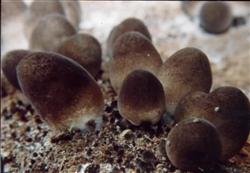 Straw mushrooms are a type of fungus that thrives in high temperature and high humidity and are suitable for growing in a constant-temperature, stable-humidity environment. Off-season cultivation of straw mushrooms in winter in greenhouses with good insulation capacity yields relatively high economic returns.
Preparing the culture material: Mix the culture material in the ratio of 68% cottonseed hulls, 20% rice straw, 1% urea, 6% lime, 3% calcium carbonate, and 2% plant ash, or 77% waste cotton, 10% rice straw, 5% wheat bran, and 8% lime. Use the two-stage fermentation method: first sun-dry the cottonseed hulls for 3-4 days, adjust with limewater to a moisture content of 70%-75% and a pH value of 7-8, pile them outdoors for 3 days, then move the culture material indoors and maintain the material temperature at 70°C for 10 hours.
Sowing at the right time: After the fermentation of the culture material is completed, adjust the moisture content to 65% and the pH value to 9, and sow when the material temperature drops to 35°C. Use the strip-laying broadcast sowing method: divide an 80 cm wide bed into 5 strips, each 16 cm wide, fill the middle strip with fertile soil, and fill both sides with culture material, using 10 kg of material per square meter. After laying, press it down slightly, scatter the spawn on the surface of the material at a sowing rate of 4%-6% of the material weight, then scatter a layer of culture material over the spawn, and attach 5-6 cm of fertile soil along the outer sides of the two culture material strips. After sowing, close the mushroom shed and keep the shed temperature at 30°C-35°C; do not open doors or windows for 3 days to maintain a high-temperature, high-humidity environment to favor mycelial germination. After that, ventilate for 20-30 minutes each day, and after 4-5 days spray a small amount of water to promote mycelial growth. After 6 days, when the mycelium has covered the culture material, supply sufficient water, strengthen ventilation and light exposure, and promote fruiting body formation. After 8 days, when the mycelium begins to knot and form primordia, control watering and keep the material surface dry to increase mushroom formation and reduce dead mushrooms.
Management during the fruiting period: When the mushroom primordia form, strengthen ventilation to remove stale air and regulate room temperature, keep the room temperature at 32-34°C and the relative air humidity at 85%-90%, reduce the amount of water sprayed, and increase the frequency of spraying. Harvest the first flush 13-15 days after sowing, accounting for 60%-70% of the total yield. After each flush is harvested, promptly clean the material surface, spray water to maintain moisture while keeping the mushroom room temperature basically stable, and adjust the pH value to slightly alkaline to promote mycelial recovery and growth. When replenishing water, supplemental fertilizer solutions such as 0.1% urea solution may be applied to promote fruiting body development. Harvest the second flush after 7 days.