Key High-Yield Techniques for Early and Delayed Cultivation of Straw Mushrooms
I. Poor Aeration Straw mushroom is a high-temperature aerobic fungus and requires sufficient oxygen during its growth and development. During cultivation, in order to raise the pile temperature, the plastic film is sometimes left in place for too long, causing excessive carbon dioxide in the compost pile and leading to oxygen deficiency; the young mushrooms, due to poor aeration and poor gas exchange, find it difficult to grow normally and wilt. Spawning...
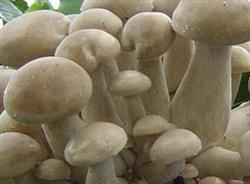 Straw mushrooms have tender, plump flesh and a fresh taste, and are deeply loved by consumers. However, they are a high-temperature edible fungus, and their market supply period is short. Through nearly two years of exploration, scientific and technical personnel in Shuyang County, Jiangsu Province, extended the straw mushroom production period by half a year at both ends, achieving obvious economic and social benefits. Their cultivation techniques are briefly introduced below.
Timing Arrangement and Production Methods
Indoor cultivation can be combined with outdoor cultivation. Indoor cultivation can use mushroom houses and other idle rooms, while outdoor cultivation can use either small arched sheds or plastic greenhouses. Whichever method is used, it must meet the requirements of shading, wind protection, heat preservation, and humidity increase.
The time limit for extended cultivation is the season when conditions are basically close to but still below the normal air temperature for straw mushroom growth. Combined with the local climate characteristics, cultivation is carried out without heating or with little heating. Generally, April 20 to June 20 is the first cycle, and extension to mid-September to mid-October is appropriate.
Compost and Its Preparation
The compost for straw mushroom cultivation is mainly waste cotton, cottonseed hulls, and corncobs, giving relatively high yields. For indoor cultivation, first spread a 10 cm thick layer of fresh rice straw on the bed frame, then cover with waste cotton or cottonseed hulls for cultivation. When using waste cotton to cultivate straw mushrooms, on the day before or the day of spawning, the waste cotton should be pre-wetted to absorb water thoroughly, mixed with 5% lime, and pre-piled for 24 to 48 hours; before the new material enters the bed, water with lime water at pH 8.5 should be poured so that the compost absorbs enough water; before the rice straw enters the bed, it should be pre-wetted with lime water for 1 to 2 days to absorb enough water. For indoor cultivation, the moisture content of the compost should be such that when the pile is squeezed by hand, 5 to 6 drops of water appear, with a water content of about 70%.
Key Points of Cultivation Management Techniques
Indoor cultivation The time should be early, generally in early May. During this period, the temperature is low and changeable, so indoor bed cultivation should be appropriately increased. Indoor cultivation bed frames should preferably have 3 to 4 layers. On the bed, first spread a 10 cm thick layer of rice straw pre-wetted with lime water, then spread waste cotton or cottonseed hulls, shaped into waves, about 10 cm thick, and broadcast the spawn, using 4 kg of spawn per 50 kg of material. After spawning, cover with about 1 cm of fine soil. During colonization, first cover flat with plastic film, and when the mycelium begins to grow, remove the film to facilitate downward extension of the mycelium. Seven days after spawning, primordia appear. At this time, attention should be paid to maintaining moisture and preventing temperature differences, and harvesting can be done in about 12 days. If the temperature is low at spawning, it can be appropriately heated to about 35°C. After removing the film, control it at 30°C to 32°C. During the fruiting stage, 28°C to 32°C is appropriate. Avoid excessive temperature differences, and the mushroom house needs to maintain relatively high humidity.
Greenhouse cultivation This is a stable and high-yield cultivation method, with a long cultivation period and convenient operation. Bed entry and spawning are similar to the conventional small arched shed method. In early May, when the temperature is relatively low, generally a vegetable greenhouse is fitted with a small arched shed, and only the small arched shed is shaded. Sunlight can shine directly into the greenhouse, the microclimate temperature is relatively high, and it also helps keep warmth at night. The temperature is also easy to control, and rainwater can be prevented from dripping in. When the temperature returns to normal, the film on both sides of the greenhouse can be opened to facilitate ventilation and cooling without affecting the temperature inside the small arched shed and the normal growth of straw mushrooms, or straw curtains can be added outside the greenhouse, the shading straw curtains of the small arched shed removed, and the film lifted up. When cultivating straw mushrooms in September, it is necessary to prevent sudden low temperatures during the fruiting period. When the nighttime temperature drops, the small arched shed should be covered with rice straw for insulation.
For early and delayed high-yield cultivation of straw mushrooms, after entering July, when the temperature stabilizes above 30°C, cultivate according to conventional methods. In short, when cultivating straw mushrooms, the relationship between temperature and humidity must be handled well, an environment suitable for straw mushroom growth must be created, and spawning should be carried out when the room or shed temperature is about 35°C, so that the mycelium in the material layer grows fully and well, laying a foundation for stable and high yields.