How to prevent deformed mushrooms in winter oyster mushroom cultivation
The cultivation area of oyster mushrooms continues to expand, cultivation techniques are constantly being renovated and improved, and severe weather also disrupts oyster mushroom cultivation from time to time. Severe weather in winter and spring mainly includes: snowy weather (including blizzards and blizzard conditions), cold wave weather, windy cooling weather (including blowing sand and floating dust weather), continuous...
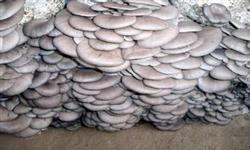 Thick-stemmed mushrooms: after the primordia form, the differentiation and development speed of the caps is abnormal, showing small caps, long stipes, and thick, hard stipes, with relatively low commercial value. The main cause is the use of a closed, sealed insulation and cold-protection measure, which leads to insufficient oxygen supply and loss of balance in nutrient transport within the mushroom body. Preventive measures: during continuous low-temperature weather, when using closed, sealed insulation and cold protection in mushroom sheds producing mushrooms, pay attention to short periods of ventilation at noon, but avoid strong winds blowing directly on the substrate surface, to prevent young mushrooms from dying.
Blue mushrooms: when the mushroom body grows, a blue halo appears at the edge of the cap, and in severe cases the entire mushroom body looks as if blue ink has been splashed on it, and the color does not fade even when the mushroom is harvested. Cause: heating with firewood, coal fires, and similar methods increases toxic carbon monoxide gas in the mushroom shed, causing poisoning of the mushroom body and stimulating a discoloration reaction. Preventive measures: for winter heating of mushroom sheds, sunlight, heating, and electric heat are preferable; if firewood or coal fires are used for heating, a closed heat-transfer and smoke-exhaust pipe must be installed to exhaust smoke.
Tumor-capped mushrooms: during the development of the mushroom body, growth is relatively slow, and tumor-like or granular protrusions appear on the cap surface. In severe cases, the cap becomes rigid and shrunken, the mushroom texture hardens, and growth stops. Cause: the temperature during mushroom body development is too low, and the duration of low temperature is too long, causing disordered cell elongation in the inner and outer layers of the cap. Preventive measures: it is necessary to clarify the lowest temperature that the cultivated variety's mushroom body can tolerate for normal development; for winter cultivation, choose medium-low temperature varieties, and at the same time strengthen insulation and heating measures, and control the fruiting temperature of the mushroom shed (room) well. Usually, for medium-temperature varieties, the mushroom shed temperature should be controlled above 8°C, and for low-temperature varieties it should be controlled above 0°C.