How can shiitake mushrooms be cultivated to achieve high yield and high quality?
1. Dense inoculation method: increase the inoculation points on the log. More inoculation points mean a larger colonized area, so the mycelium can penetrate the log in a relatively short time. The log exchanges gases with the outside mainly by absorbing and evaporating water; the alternating wet and dry water movement can supply sufficient oxygen to the interior of the log, allowing the mycelium to grow deep into the log and feed on it, ...
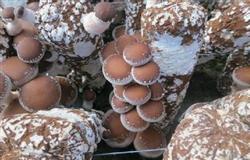 Fresh shiitake mushrooms in summer are a hot-selling item in the edible mushroom market. With the development of science and technology, high-temperature strains have entered production in recent years. The author advocates using water-temperature air conditioners for fruiting and adopting medium-temperature strains, which greatly raises the market price of the product. The main measures are:
1. Facility or equipment requirements Cultivation facility: an ordinary edible mushroom greenhouse. After spring production is completed, remove the original mushroom bags, clean the greenhouse thoroughly, check and repair the greenhouse film, and spray an appropriate amount of chemicals such as Baibingquwuzong for sterilization treatment. Then, pour clean water into the greenhouse. After the water seeps down, spread lime powder in the greenhouse, and then the mushroom bags can be moved onto the shelves. Cooling equipment: a water-temperature air conditioner can provide cooling production in summer and also heating cultivation in winter, serving two purposes with one machine, with excellent results.
2. Mushroom bag preparation Basic formula: 1800 kg sawdust, 200 kg wheat bran, 20 kg superphosphate, 3 kg urea, 20 kg lime powder, 10 kg gypsum powder, 1 kg shiitake-specific additive. Carry out management such as conventional bagging, sterilization, inoculation and spawn running.
3. Color change of mushroom bags After spawn running is fully completed, the white mushroom bags can be stacked in a "#" shape and covered with film, straw mats, etc., so that while the temperature rises, by adjusting the covering of straw mats and film and uncovering them at night, first, the white mycelium on the surface of the mushroom bags is prompted to lie down, and second, the temperature difference of the mushroom bags is increased to promote color change as quickly as possible.
4. Temperature regulation to induce budding After the color change is completed, the mushroom bags, after punching holes and replenishing water, can be moved into the greenhouse and arranged in a single layer at intervals of about 5 cm. After cooling treatment with a water-temperature air conditioner for 1-2 days, high-temperature stimulation is then applied. Combined with stimulation from moisture, light, etc. in the greenhouse, small mushroom buds appear in about a week. After that, maintain conventional water use and minimize humidity differences as much as possible to ensure a continuous emergence of mushroom buds. The basic management indicators at this stage are: keep the temperature between 20°C-25°C, as low as possible; air humidity between 75%-95%. Because the caps of shiitake mushrooms are relatively thick and tolerate relatively large humidity differences, there is no need to worry that too large a humidity difference will cause adverse effects; by adjusting the covering on the greenhouse roof, keep the light intensity in the greenhouse at 300-1200 lux; provide appropriate ventilation to keep the air in the greenhouse relatively fresh.
5. Fruiting management The film of shiitake mushroom bags is relatively thick, and when the mushroom buds cannot break through the bags on their own, the film must be cut manually. The method is to use a small blade to cut the film where mushroom buds appear, taking care not to damage the mushroom buds. If management is careful, the film can be cut in a circular opening around the mushroom buds, which can avoid deformed mushrooms to the greatest extent. From the time the young buds emerge, the fruiting management stage begins. At this stage, keep the temperature at 20°C-25°C, humidity at 75%-95%, light at about 500-1000 lux, and appropriate ventilation. When the cap diameter reaches more than two cm, a three-dimensional nutritional essence for edible mushrooms can be sprayed directly on the mushroom bodies. When the edge of the shiitake cap is still curled downward but is about to expand, it should be harvested promptly. To a certain extent, the greenhouse temperature and foliar fertilization at this stage will determine the level of shiitake yield and quality. Management using mushroom sticks for fruiting is more convenient than using mushroom bags for fruiting, but because the mushroom sticks are exposed, they lose more water during fruiting, so humidity should be increased, and soaking the mushroom sticks or water injection treatment should be given. The harvest flushes of shiitake mushrooms are relatively obvious. After one flush is harvested, the mushroom bags lose water quite seriously, so water replenishment and spawn resting are needed before the next flush can be harvested. The common methods of water replenishment are: use existing ditches, canals, pits, or dig an earthen pit, line it with film, arrange the mushroom bags inside, and when about 20 cm from the upper edge, lay a film to make it concave, fill the concave pit with water, and after a certain pressure is formed, pour water into the pit with the mushroom bags. After it is full, maintain for 24 hours, then drain the water, place the mushroom bags back on the fruiting shelves, and refer to the above management.