How to Cultivate Bamboo Fungus (Phallus indusiatus) Artificially? Methods and Techniques Explained
How to cultivate bamboo fungus artificially? Please provide an introduction to the methods. Bamboo fungus, known as the "king of edible fungi," has a delicious flavor and is rich in nutrients. It is a sought-after commodity that sells well in both international and domestic markets. According to analysis and testing, bamboo fungus contains eight essential amino acids required by the human body. Long-term consumption can inhibit the rise of blood pressure and reduce blood cholesterol...
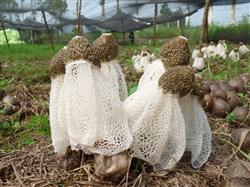
How to cultivate bamboo fungus artificially? Please provide an introduction to the methods
Bamboo fungus, known as the "king of edible fungi," has a delicious flavor and is rich in nutrients. It is a sought-after commodity that sells well in both international and domestic markets. According to analysis and testing, bamboo fungus contains eight essential amino acids required by the human body. Long-term consumption can inhibit the rise of blood pressure and reduce blood cholesterol levels, making it an edible fungus with great development potential.
At present, there are many species of bamboo fungus, with more than ten kinds found domestically and abroad. However, due to the influence of climate and environmental conditions, only a few species are suitable for cultivation in northern China, such as Dictyophora indusiata (long-skirted bamboo fungus), Dictyophora duplicata (short-skirted bamboo fungus), and Dictyophora rubrovolvata (red-wrapped bamboo fungus). Here we introduce the cultivation techniques for bamboo fungus suitable for northern regions.
I. Cultivation
1. Raw material cultivation:
(1) Selection of raw materials: The raw materials suitable for bamboo fungus cultivation are quite extensive, such as broadleaf tree sawdust, cottonseed hulls, crop straw, bamboo, and so on.
(2) Raw material treatment: Grind the selected raw materials into powder form (such as sawdust), and use two methods for treatment. 1. Lime water soaking. Soak the raw materials in 0.3-0.5% lime water, stir, and let soak through for about 1-2 minutes; then scoop out and place in a basket, rinse with clean water. The pH value should be around 7. Then drain the raw materials to a moisture content of about 65% before inoculation. 2. Chemical treatment method. Soak the raw materials in a 1:800 dilution of carbendazim or thiophanate solution, making sure the liquid level is above the material surface. After 2-3 minutes, scoop out and drain excess water to bring the moisture content to about 65% before inoculation.
(3) Cultivation method: First, fumigate and disinfect the cultivation room using formaldehyde combined with potassium permanganate. Then, lay plastic film on the cultivation box, add a layer of sandy soil, and then alternate layers of substrate and spawn for 2-3 layers. The substrate thickness should be about 25 cm. Typically, use 2-3 bottles of bamboo fungus spawn per square meter. After inoculation, wrap with plastic film.
2. Sterilized substrate cultivation:
(1) Raw material treatment: To the selected raw materials, add 18% wheat bran or rice bran, 2% corn flour, 0.3% urea, 1.5% superphosphate, and 0.3% sulfuric acid. After mixing, add clean water and mix thoroughly again until the moisture content reaches the point where water appears between the fingers when squeezed.
(2) High-temperature sterilization: Place the mixed raw materials into a high-temperature sterilization pot. When the temperature rises to 100°C, steam continuously for 5-6 hours, then remove and wrap in pre-laid plastic film.
(3) Cultivation method: Wait until the substrate temperature drops below 30°C, open the wrapped film, inoculate with spawn, and then wrap with film again.
II. Management
1. Ecological conditions:
(1) Temperature: The mycelium growth temperature for bamboo fungus is 25-32°C, with the optimal temperature being 23-24°C. The fruiting body growth and development temperature is between 15-28°C, with the optimal temperature being 22-25°C. Above 32°C or below 5°C, mycelium growth slows or stops.
(2) Humidity: The humidity for mycelium growth is between 60-70%. The humidity for the growth and development of mushroom buds is in the range of 75-95%. When the ball breaks and the skirt spreads, the relative humidity should be 85-95%, with 95% being the best. If humidity is below 80%, fruiting bodies are difficult to form or become deformed.
(3) Air conditions: Bamboo fungus is an aerobic fungus. During the growth period, sufficient fresh air is needed, and attention should be paid to ventilation in the room.
(4) Light conditions: Light has an inhibitory effect on bamboo fungus development, so mycelium growth requires no light. The growth and development of fruiting bodies requires diffused light.
(5) Nutritional conditions: The nutrients utilized by bamboo fungus growth are mainly carbon sources and nitrogen sources, followed by inorganic salts and trace vitamins. Dead plant matter such as sawdust and straw are the nutrients it needs. During the reproductive growth stage of bamboo fungus, a small amount of peat soil is also needed.
2. Management methods:
Within 3-4 days after sowing, the temperature should be maintained between 24-27°C. After a period of mycelium growth, when mycelium covers the surface of the culture medium, cover with a layer of humus soil (i.e., soil used for growing flowers) 3-5 cm thick. After covering, keep the air in the room fresh, ventilate every day, and keep the covering soil moist. Maintain the temperature at 22-24°C and relative humidity at 85-95%. Normally, after 1-2 months of mycelium development, mycelium extends to the soil surface. At this time, maintain the temperature between 23-26°C with unchanged relative humidity, provide a certain amount of diffused light, and after another 5-10 days, small white dots appear on the surface, which proves that the fruiting body primordium has formed. During fruiting body growth and development, the relative humidity should be 80-95%. From budding to maturity takes 40-80 days, depending on temperature. When relative humidity reaches 95%, the mushroom skirt has the greatest strength.
III. Harvesting and Processing
When the bamboo fungus skirt has fully opened and the spores have not yet autolyzed, harvest immediately. Remove the cap and volva, then dry them separately (sun-drying or oven-baking are both acceptable). After making dried products, tie them into 50-gram bundles with red string, place them in non-toxic double-layer polyethylene food bags and seal, then store in a jar with a moisture absorbent, waiting for sale.
Click to get more bamboo fungus cultivation techniques
Click to get more edible fungus cultivation techniques