Detailed Guide to Bamboo Fungus Cultivation Techniques: Edible Mushroom Cultivation Methods
Bamboo fungus (Phallus indusiatus) has an elegant appearance, is rich in nutrients, and is delicious and tasty. It is a precious edible mushroom, honored with the titles "flower of the fungi" and "queen of mushrooms." I. Biological Characteristics 1. Morphology. Bamboo fungus is also called bamboo ginseng, bamboo sheng, immortal sheng, bamboo maiden, and bamboo egg, etc. It belongs to the class Basidiomycetes, order Phallales...
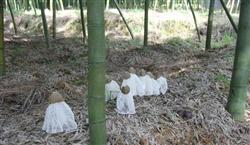
Bamboo fungus (Phallus indusiatus) has an elegant appearance, is rich in nutrients, and is delicious and tasty. It is a precious edible mushroom, honored with the titles "flower of the fungi" and "queen of mushrooms."
I. Biological Characteristics
1. Morphology. Bamboo fungus is also called bamboo ginseng, bamboo sheng, immortal sheng, bamboo maiden, and bamboo egg, etc. It belongs to the class Basidiomycetes, order Phallales, family Phallaceae, genus Phallus. Bamboo fungus consists of two parts: the mycelium and the fruiting body. The mycelium is initially white and downy, then gradually thickens into threads, and finally expands into rhizomorphs. Young mycelium is pure white; with a long cultivation period it may turn pink, light purple, or yellowish-white. The fruiting body consists of four parts: the cap, the indusium (skirt), the stipe, and the volva.
2. Living habits of bamboo fungus. In summer and autumn, bamboo fungus grows singly or in groups in bamboo forests, mixed forests of bamboo and broadleaf trees, and at the edges of courtyard groves.
3. Living conditions of bamboo fungus. Bamboo fungus is a saprophytic fungus; its mycelium can absorb the carbon, nitrogen, and inorganic salts it needs from rotting bamboo, rotting wood, bamboo roots, bamboo rhizomes, and humus soil. For artificial cultivation, various bamboo by-products, sawdust, wheat straw, and sugarcane bagasse can be used as carbon sources, and wheat bran, rice bran, and soybean cake powder as nitrogen sources. Bamboo fungus is a mesophilic species. The mycelium can grow at 10-29°C. The fruiting body develops at 16-29°C, with 22-25°C being most suitable. The suitable relative humidity for the mycelium is 70-75%, and the suitable relative air humidity for fruiting body growth is 90-95%. The mycelium can grow in the dark or under weak light. It prefers a slightly acidic environment and requires good ventilation.
II. Cultivation Methods
1. Preparation of spawn. (1) Formula and preparation of mother spawn culture medium. ① Culture medium formula: peptone 1%, glucose 1%, agar 2%, water 100 mL. pH 5-6. ② Potato 25%, glucose 2%, agar 2%, water 100 mL. pH 5-6. (2) Preparation of the culture medium: prepare according to conventional methods, fill into tubes, sterilize, and make into slants.
(2) Preparation of stock spawn and cultivation spawn. First: crushed bamboo pieces (1-2 cm) 65%, sawdust 15%, wheat bran 20%, add water until the moisture content of the culture material is 65%. Second: miscellaneous chips 75%, wheat bran 20%, sugar 1%, gypsum 1%, soybean cake powder 3%, add water and adjust until the moisture content of the culture material is 60-65%.
Mix ingredients, fill bottles, sterilize, inoculate, and culture according to conventional spawn production methods. At a temperature of 18-23°C, the stock spawn takes about 60 days to fully colonize the bottle, and the cultivation spawn takes 40-50 days to fully grow.
2. Cultivation methods. Bamboo fungus can be cultivated when the temperature is above 7°C, with cultivation in October-December being most suitable.
(1) Indoor box cultivation: use waste wooden boxes as cultivation containers. First spread 5-10 cm of humus soil on the bottom of the box, then spread bamboo segments, wood segments, or other substitute materials on top, and inoculate bamboo fungus cultivation spawn onto the material. Use 3 bottles of spawn per square meter, finally cover with 5-8 cm of fertile soil, water thoroughly, and culture at room temperature to let the mycelium run. Sprinkle water regularly to keep it moist. Under suitable temperature and humidity conditions, the mycelium can fully colonize the culture material in 4-5 months. When the temperature reaches 20-24°C, primordia form in the surface soil. At this time, the indoor relative air humidity should be maintained above 85%. After the mushroom balls emerge from the surface soil, the relative air humidity should be raised above 95%.
(2) Outdoor bed cultivation: choose a sheltered, shady site and dig a bed 10-15 cm deep, 100 cm wide, and of unlimited length. Leave 10 cm of loose soil at the bottom of the bed, first spread a layer of bamboo pieces or log segments (dry bamboo pieces need to be washed and soaked for 8-12 hours, then dried of surface moisture), sow 1 layer of spawn on the bamboo pieces or log segments, scatter 1 layer of dry bamboo leaves, and finally cover with 10 cm of fertile soil on top. If shading conditions are poor, a shade shed should be built over the bed. Sprinkle water frequently to keep the surface soil moist. From inoculation to harvest takes 10-12 months.
In addition, there are also cultivation methods such as pressing spawn into blocks and direct cultivation in plastic bags.
3. Management of bamboo fungus
(1) Water management is the key to the success or failure of cultivation. During the mycelium growth stage, soil moisture should be maintained at 65-70%; too much or too little moisture is unfavorable. If the soil is too dry, spray with a fine mist, but do not allow water to accumulate on the soil surface. (2) Management at each growth stage. During the primordium growth stage, the temperature is best controlled at 20-23°C, and the relative air humidity at 70-75%; during the fruiting body growth stage, the relative air humidity is raised to 90-95%, and water can be sprayed 3-4 times a day; open windows for ventilation 1-2 times a day, 30 minutes each time. (3) Management of outdoor bed cultivation. Strictly prevent trampling by people and livestock. During the mycelium running process, do not dig in to check, so as not to break the mycelium. (4) Replenish soil in time. If buried log segments are exposed above the soil surface, replenish soil to cover them in time.
Click to get more bamboo fungus cultivation techniques
Click to get more edible mushroom cultivation techniques