How to manage the fruiting period of white lingzhi mushroom? Key points of cultivation techniques explained
How to manage the fruiting period of white lingzhi mushroom? Please introduce the following key points for managing the fruiting period of white lingzhi mushroom: 1. Temperature. The temperature should be kept at 8-16°C. If the temperature is too low, the fruiting body develops slowly; if the temperature is too high, the fruiting body grows quickly, but the cap is thin and the commercial value is relatively low. It should be noted that white lingzhi mushroom...
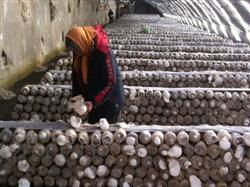
How to manage the fruiting period of white lingzhi mushroom? Please introduce
The fruiting period of white lingzhi mushroom can be managed by referring to the following key points:
1. Temperature The temperature should be kept at 8-16°C. If the temperature is too low, the fruiting body develops slowly; if the temperature is too high, the fruiting body grows quickly, but the cap is thin and the commercial value is relatively low. It should be noted that white lingzhi mushroom is relatively sensitive to temperature. If the bag temperature exceeds 25°C, the primordium may die, and it will be very difficult to produce mushrooms afterward.
2. Humidity Keep the humidity at 80-90%, and do not spray water on the mushroom bodies. At the same time, prevent water droplets on the mushroom bags or plastic sheeting from dripping onto the mushroom bodies, so as to avoid forming stains and reducing commercial value. Before harvesting, the air humidity can be appropriately lowered to keep the surface of the mushroom bodies white.
3. Ventilation and light Good ventilation is one of the important conditions for producing high-quality white lingzhi mushroom. The market standard for high-quality white lingzhi mushroom is: no stipe or short stipe, palm-shaped. If ventilation is poor, the fruiting body can grow into an inverted horseshoe shape, with a thick, long stipe and a small cap. Such mushrooms have relatively low market value. Therefore, in production, under the premise of properly coordinating temperature and humidity, keep the indoor ventilation as good as possible. The purpose of ventilation is to reduce the CO2 concentration in the greenhouse and promote normal development of the cap. Producing high-quality white lingzhi mushroom also requires sufficient scattered light, with an illuminance requirement above 1000 lux. However, direct light must not shine on the mushroom bags or mushroom bodies. If the light is too strong, the cap color becomes earthy yellow rather than the pure white of high-quality white lingzhi mushroom.
4. Bud thinning: When the primordia grow to the size of corn kernels, thin the buds in time. Bud thinning requires a large amount of labor, so preparations should be made in advance to avoid missing the best time for bud thinning. The principles of bud thinning are as follows: ① Keep only one young mushroom per mushroom bag. ② Keep large mushroom buds and remove small mushroom buds. ③ Keep robust buds and remove mushroom buds with weaker growth vigor. ④ Keep mushroom buds with large caps and remove mushroom buds with long stipes. ⑤ Keep mushroom buds with a round and neat mushroom shape and remove long strip-shaped mushroom buds. ⑥ Keep mushroom buds without spots or wounds. ⑦ Keep mushroom buds growing directly on the surface of the substrate and remove mushroom buds formed on the spawn blocks.
During bud thinning, the following points should be noted: ① Before bud thinning, on-site training should be provided for the bud-thinning workers. ② The bud-thinning tool should be disinfected once with 75% alcohol for each mushroom bag to avoid cross-infection of bacterial diseases. ③ The bud-thinning tool must not injure the retained young mushrooms or the mycelium at the base of the young mushrooms.
Click to get more white lingzhi mushroom cultivation techniques
Click to get more edible mushroom cultivation techniques