Detailed Explanation of the Key Techniques for Shortened Cultivation of Bailing Mushroom
How is Bailing mushroom shortened-cultivated? Please provide a detailed introduction. The following methods can be referenced for shortened cultivation of Bailing mushroom: 1. Bailing mushroom is a variety of the medium-low temperature type and is extremely sensitive to temperature. Its mycelium has a relatively wide temperature tolerance range and can survive at 4°C~37°C, but the temperature during its growth period is preferably 23°C~28°C, and the mycelium maturation temperature...
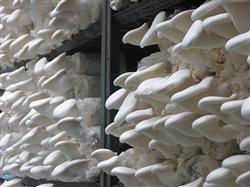
How is Bailing mushroom shortened-cultivated? Please provide a detailed introduction
The following methods can be referenced for shortened cultivation of Bailing mushroom:
1. Bailing mushroom is a variety of the medium-low temperature type and is extremely sensitive to temperature. Its mycelium has a relatively wide temperature tolerance range and can survive at 4°C~37°C, but the temperature during its growth period is preferably 23°C~28°C. The mycelium maturation temperature is required to be 5°C~30°C, and the fruiting temperature range is 0°C~25°C, but the temperature at the early growth stage during the mushroom bud stage is preferably 8°C~13°C, and the temperature for young mushroom growth at the later stage is preferably 15°C. From this it is not difficult to see that the fruiting body growth of Bailing mushroom requires the temperature to be low first and then high.
2. Another characteristic of Bailing mushroom is that mycelium growth requires a fairly long maturation stage to reach physiological maturity, that is, after the Bailing mushroom bags are fully covered with mycelium, they cannot fruit directly like oyster mushrooms; they must go through a mycelium maturation period before fruiting. Depending on the characteristics of the strain, this stage generally takes about 60 days, and individual strains may even take as long as 80 days, which is extremely inconvenient in production scheduling, greatly prolongs the production cycle, and relatively reduces production and operating benefits. The core of the artificially regulated shortened-cultivation, high-quality, high-yield technology for Bailing mushroom is to shorten its maturation period and achieve smooth fruiting by artificially regulating the temperature conditions during the mycelium maturation period of Bailing mushroom. The basic approach: first adjust the mycelium maturation temperature to 30°C and maintain it for about 10 days so that the mycelium fully develops, then lower the temperature and maintain it at 0°C~10°C for about 15 days, so that the mycelium forms self-protection under relatively unfavorable conditions, thereby accelerating its development process. General strains can smoothly transition to reproductive growth after one temperature-control cycle, while individual strains require two temperature-control cycles to transition to reproductive growth.
3. When the color of the mushroom bag becomes whiter, a sound like tapping hollow wood is produced when tapped, and the feel is relatively hard with strong elasticity, it can be moved out of the cold storage and moved into a plastic greenhouse. At this time, the greenhouse temperature should be raised as much as possible, humidity should be increased, and an appropriate amount of strong light stimulation and relatively large ventilation should be provided. About 7 days after being moved into the plastic greenhouse, a slightly yellow bacterial liquid appears at the inoculation block. After that, the temperature should be lowered as much as possible and wait for budding. Generally during this period, the greenhouse temperature should be kept below 15°C, the straw mats should be well covered, ventilation in the morning and evening should be strengthened, and watering on the ground and spraying water in the air should also be strengthened. Only a few days of short-term low temperature below 15°C is needed, and mushroom buds can form quickly.
4. Generally, each fruiting surface can produce 1~3 mushroom buds. Before they complete differentiation, thin the buds and keep only one mushroom bud.
Click to get more Bailing mushroom cultivation techniques
Click to get more edible mushroom cultivation techniques