How effective is abamectin as an insecticide?
How effective is abamectin? Which pests is abamectin effective against? Please give an introduction. Abamectin has stomach poison and contact action against mites and insects, but cannot kill eggs. Unlike general insecticides, its mechanism of action interferes with neurophysiological activity, stimulating the release of gamma-aminobutyric acid, and aminobutyric acid has an inhibitory effect on the nerve conduction of arthropods...
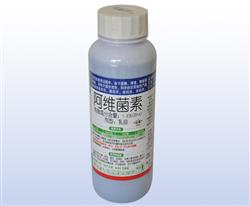 How effective is abamectin? Which pests is abamectin effective against? Please give an introduction.
Abamectin has stomach poison and contact action against mites and insects, but cannot kill eggs. Unlike general insecticides, its mechanism of action interferes with neurophysiological activity, stimulating the release of gamma-aminobutyric acid, and aminobutyric acid has an inhibitory effect on the nerve conduction of arthropods. After adult mites, nymphs and insect larvae come into contact with abamectin, they immediately show symptoms of paralysis, becoming immobile and stopping feeding, and die after 2 to 4 days. Because it does not cause rapid dehydration in insects, the lethal action of abamectin is relatively slow. Although abamectin has a direct contact-killing effect on predatory insects and parasitic natural enemies, it leaves little residue on plant surfaces, so the damage to beneficial insects is very small. Abamectin is adsorbed by soil and does not move within it, and is decomposed by microorganisms, so it does not accumulate in the environment and can be used as part of integrated pest management. It is easy to prepare: pour the formulation into water and stir briefly before use, and it is also relatively safe for crops.
The first characteristic of abamectin is that it is highly effective and can kill many kinds of pests, including Lepidoptera, Diptera, Homoptera, Coleoptera pests and spider mites, rust mites, and it is also a highly effective agent for killing many parasitic nematodes; the second characteristic is that its mode of action differs from other insecticides, so it is not prone to developing resistance; the third characteristic is that it is safe, because the agent sprayed on plant surfaces breaks down quickly, so it is relatively safe for natural enemies and causes little environmental pollution, and even a 10-fold overdose will not cause phytotoxicity to plants.
Disadvantages: First, it kills pests relatively slowly; after pests eat abamectin, they first become sluggish and stop feeding, and only die after 2 to 4 days, so farmers often think the efficacy is poor. Second, the technical material is highly toxic, and various formulated products lower the toxicity level of the agent by using a low content of active ingredient, but safety precautions are still needed during use.
Click to get more insecticide application techniques
Click to get more pesticide application techniques