Key Management Techniques for the Fruiting Period of Pleurotus pulmonarius (Phoenix Mushroom)
How to manage Pleurotus pulmonarius during the fruiting period? Please provide methods. The management of Pleurotus pulmonarius during the fruiting period can be carried out with reference to the following methods: after the mycelium of Pleurotus pulmonarius has fully colonized the bag, continue cultivating for 5-7 days so that the mycelium reaches physiological maturity and accumulates nutrients, then it can be transported to the fruiting site and mushroom house for fruiting. The fruiting house should be easy to manage and is required to...
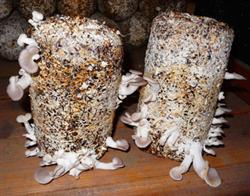 How to manage Pleurotus pulmonarius during the fruiting period? Please provide methods
The management of Pleurotus pulmonarius during the fruiting period can be carried out with reference to the following methods:
After the mycelium of Pleurotus pulmonarius has fully colonized the bag, continue cultivating for 5-7 days so that the mycelium reaches physiological maturity and accumulates nutrients, then it can be transported to the fruiting site and mushroom house for fruiting. The fruiting house should be easy to manage and is required to be ventilated, insulated, moisture-retaining, clean and hygienic, with no garbage, no feces and no foul-smelling ditches around the mushroom site.
Before moving the fungus bags in, first spray the entire mushroom house with dichlorvos and omethoate to eliminate insects, and then spray with a 5% formaldehyde aqueous solution for sterilization.
After 5 days, the mature fungus bags can be moved in and arranged for management and fruiting. Before moving the fungus bags in, pre-moisten the already disinfected and insect-free mushroom house (shed) first, and spray a large amount of water on the bed frames, walls and floor to increase the humidity of the entire mushroom house (shed).
Arrange 2-3 insect-killing lamps in the mushroom house (shed) to control insect population density. After the fungus bags enter the house, cultivate the fungus for 2 days, cut off the plastic bag along the neck ring, scrape off the old original spawn or enlarged primordia, and keep the relative air humidity of the mushroom house at 90%. For 3-5 consecutive days, keep the temperature at 23-25°C and provide a certain amount of diffused light every day. At this time, the mushroom house should be sprayed with water frequently and ventilated slightly. After 3-5 days, the primordia on the surface of the substrate can be seen beginning to differentiate, and when a large number of mushroom buds form, increase slight ventilation and light duration, maintain a suitable carbon dioxide concentration, and keep the humidity at 85-90%. At this time, never spray water directly onto the mushroom buds, otherwise the mushroom buds are prone to turning yellow, shrinking and dying.
When the caps gradually flatten, use a fine sprayer to spray frequently. Under dry weather conditions, the mushrooms can be harvested after 1-2 days. After the first flush of mushrooms is harvested, it is best to scrape clean the dry old roots on the surface, dead mushrooms and mushroom buds all on the same day. The humidity of the mushroom house can only be maintained at 70-80%, allowing the surface of the substrate to dry slightly, in order to prevent mold diseases and the hatching of some insect eggs on the fresh substrate surface. When the substrate surface is too dry, spray a little fine mist. Under these conditions, cultivate the fungus for 6-10 days.
After fungus cultivation, before the second flush of mushrooms emerges from the fungus bags, the fungus bags need to be supplemented with water so that each bag gains 30-50 grams in weight. For bed cultivation with casing soil, the soil surface should be kept neither dry nor wet. After water supplementation, if conditions permit, give the fungus bags in the mushroom house a low-temperature stimulus below 10°C for 1-2 days, or a day-night temperature difference stimulus of about 10°C for 3 days, while also inhibiting the growth of contaminating microorganisms. The management at this time is the same as for the first flush of mushrooms, and at this time ventilation and moisture retention are particularly important. The management of the third flush, fourth flush, and fifth and sixth flushes of mushrooms is similar to that of the second flush. The key is to master the technical essentials of fungus cultivation and water supplementation well, so as to achieve stable and high yields.
Click to get more Pleurotus pulmonarius cultivation techniques
Click to get more edible mushroom cultivation techniques