Detailed Explanation of Pollution-Free High-Efficiency Cultivation Techniques for King Oyster Mushroom
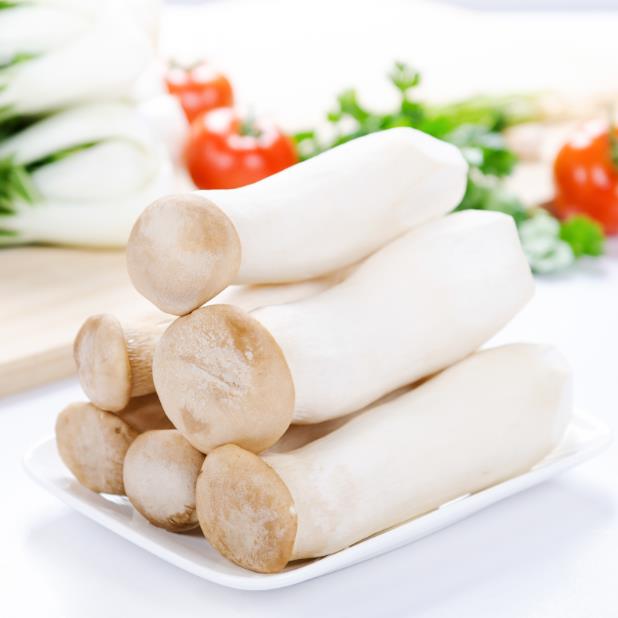
[Summary]:The king oyster mushroom (Pleurotus eryngii) has thick, fleshy texture, rich nutrition, and a long shelf life, making it one of the best-tasting mushrooms, praised as the "King of Oyster Mushrooms." The king oyster mushroom benefits qi, kills parasites, and has cosmetic effects; it is a rare edible mushroom variety with good taste and medicinal functions.
1、Biological Characteristics
Temperature: The king oyster mushroom is a moderate-to-low temperature variety. The optimum temperature for mycelial growth is 23-26°C; the optimum temperature for primordium formation is 10-15°C; the temperature for fruiting body development varies by strain, generally 15-18°C. When the temperature is below 8°C or above 20°C, fruiting body development is poor. Temperature is the key to the success or failure of king oyster mushroom cultivation.
Nutrition: The king oyster mushroom is an edible mushroom with a strong ability to decompose cellulose and lignin, and it requires relatively rich nitrogen sources; the richer the nitrogen source, the better the mycelial growth and the higher the yield. Substrate materials include cottonseed hulls, sawdust, bagasse, wheat straw, etc.; the medium with cottonseed hulls as the main material gives the highest yield, with large fruit body shape and better fruiting body flavor.
Water and humidity: The suitable water content of the medium is 60%. When mixing the substrate, the water content should be moderate, preferably on the lower side rather than the higher side, with a material-to-water ratio of 1:1.1; the relative humidity during the fruiting body formation and development stages should be 90%-95% and 85%-90% respectively.
Air: Both mycelial growth and fruiting body development require fresh air, but a certain concentration of carbon dioxide can significantly stimulate mycelial growth and primordium formation.
Light: The mycelial growth stage does not require light, but fruiting body differentiation and growth require a certain amount of scattered light; the suitable light intensity is 500-1000 lx. pH value: The optimum pH for mycelial growth is 6.5-7.5, and the optimum pH during fruiting is 5.5-6.5.
2. High-Yield Cultivation Techniques
(1) Seasonal arrangement. The king oyster mushroom has relatively strict temperature requirements for fruiting; it is difficult to form fruiting bodies when the temperature is too high or too low. It is best to arrange the production season according to the fruiting temperature range of the selected variety, because if the first flush of king oyster mushrooms fails to form normally, it will affect the normal fruiting of the second flush. Generally, it is suitable to make the spawn bags in early September and begin fruiting in mid-to-late October. Under normal circumstances, fruiting ends around New Year's Day.
(2) Cultivation substrate formula. ① Corncob 50%, cottonseed hull 30%, wheat bran 15%, cornmeal 3%, sucrose 1%, calcium carbonate 1%. ② Sawdust 35%, cottonseed hull 40%, wheat bran 20%, cornmeal 3%, gypsum 1%, sucrose 1%, water content 60%-65%. The mixed substrate of sawdust and cottonseed hull is the best.
(3) Bagging, sterilization, and inoculation. King oyster mushrooms are generally produced by the sterilized substrate bag cultivation method. Plastic bags of 17-50 cm are conventionally used. After disinfection and sterilization, single-end inoculation is carried out, and the spawn bags are placed in a culture room with suitable temperature and dim light for cultivation. When the mycelium grows to 10-1.5 cm, micro-hole aeration can be applied. The method of single-side perforation inoculation, bagging for mycelial growth, and fruiting from the inoculation holes is better.
(4) Mushroom induction and fruiting management.
① Mushroom induction and rack arrangement: After the mycelium has fully colonized, rack arrangement can be carried out. The mushroom logs are arranged in the mushroom shed in a north-south direction, with two rows per mushroom wall, the fruiting ends facing outward, and a management aisle left in the middle. To prevent water accumulation in the inoculation holes, before fruiting the inoculation holes of the spawn bags must face downward; after the primordia form and grow to the size of soybeans, turn the spawn bags over and place the fruiting bodies facing upward.
② Bud thinning: Bud thinning of king oyster mushrooms is an important technical step to ensure high quality and high yield. With proper operation, marketable mushrooms can be increased by 10-20 percentage points. The method is: first prepare a small pointed knife, select densely clustered young buds at the budding points, determine to retain 2-4 young buds per fruiting surface, and simply cut off the tips of the remaining buds with the pointed knife; second, the spacing between the retained buds should be appropriate to avoid crowding after they grow, and do not damage the retained buds during thinning. After completing the bud thinning operation, promptly spray the walls, floor, ventilation openings, and other areas inside the shed with a 100-fold bleach solution to prevent infection of the thinning wounds by viruses and pathogenic bacteria.
③ Control of moisture and temperature: Keep the mushroom shed temperature at 10-18°C. Below 10°C, primordia are difficult to form; above 20°C, primordium differentiation stops; if the temperature remains above 20°C, the small mushroom buds that have already formed will soften, shrink, and die. Therefore, ventilate appropriately according to the size and number of mushrooms, and maintain the relative air humidity in the shed at 85%-90%. The relative air humidity can be increased by spraying water on the floor and into the air; try not to spray water directly onto the fruiting bodies to prevent bacterial infection and rotting.
④ Integrated pest and disease control: The main pests and diseases of king oyster mushrooms are bacteria, green mold, Trichoderma, and mushroom flies. Generally, pests and diseases are less likely to occur at low temperatures. Strengthening ventilation and regulating temperature can prevent the occurrence of pests and diseases. If bacterial, green mold, or Trichoderma contamination is found, promptly remove the spawn bags and bury them deep outside; for mushroom flies, use electric lights and sticky insect boards for trapping and killing, combined with spraying 2000-2500-fold dilution of Banqianling.
3. Timely Harvesting
(1) Harvest when the cap is flat and spread, the edge is slightly incurved, and the spores have not yet been discharged. When harvesting, hold the stipe, rotate and pull up the entire mushroom, promptly trim off the sawdust on the stipe, clean the substrate surface after harvesting, stop spraying water, and after 7-10 days of mycelium resting, the second flush can be produced.
(2) After the spawn bags have produced 2 flushes, the nutrients and moisture inside the bags can no longer meet the needs of later fruiting. It is necessary to promptly remove the film and carry out soil-covered cultivation. With soil-covered management, 2 more flushes can still be produced later.
(3) Harvested king oyster mushrooms can be graded, fresh-kept, packaged, and marketed according to standards. Those that do not meet the standard requirements can be sliced and sun-dried or processed into soft canned products. This can achieve the purpose of long-term storage while better maintaining the original shape and flavor of king oyster mushrooms, making them quick and convenient to eat and safe and hygienic.