Goji (Wolfberry) Cultivation Techniques and Disease and Pest Control Methods
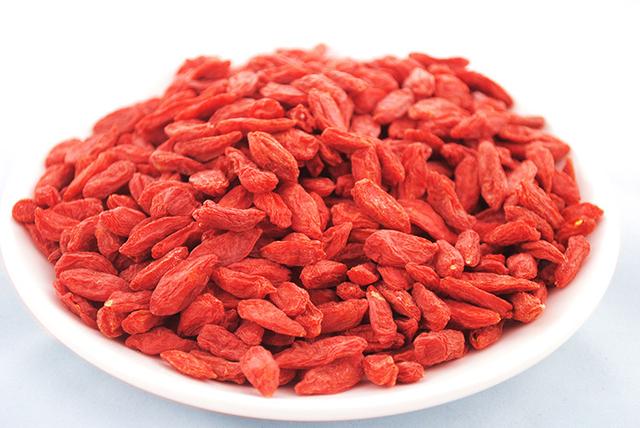
[Abstract]When people think of goji, the first thing that comes to mind is the red goji berries; few know that there is also a leafy goji whose tender leaves can be eaten as a vegetable.
The vegetable goji is a deciduous shrub of the Solanaceae family, with a plant height of 1 m. The branches are slender, long, curved or drooping; young branches are angular, the outer bark is gray, hairless, and usually bears short thorns that grow in the leaf axils. The leaves are alternate or clustered on short branches; the leaf blades are ovate, ovate-rhombic or ovate-lanceolate, with entire margins. The flowers are usually borne 1-4 in clusters in the leaf axils; the calyx is bell-shaped; the corolla is funnel-shaped, light purple, with ciliate margins, and deeply 5-cleft. The berry is ovate or oblong, red; the seeds are numerous, flat and kidney-shaped, yellow. The flowering period is June-September, and the fruiting period is August-November.
The vegetable goji has strong adaptability and can tolerate cold and drought, but it is afraid of waterlogging. For artificial cultivation, deep, fertile, well-drained sandy loam and neutral or slightly alkaline soil are best. In cultivation, attention should be paid to:
1.Site selection and land preparation
Choose sandy loam close to a water source, with light loam as second choice. A salt content below 0.2% is suitable. In autumn, plow deeply to 20-30 cm, apply 2000-2500 kg of barnyard manure per 667 sq m; if fertilizer is abundant, 4000-5000 kg may be applied. Spread it evenly, plow it into the soil, and water with winter irrigation. Before sowing the next spring, shallow plow and harrow finely to make beds 1 m wide and of unlimited length, and level the bed surface ready for planting.
2.Sowing time and sowing methods
Vegetable goji can be sown in spring, summer or autumn. In northern regions, spring sowing is generally used, with sowing in late March. Before sowing, soak the seeds in 40°C warm water for a day and a night, which can promote uniform emergence. When sowing, open shallow furrows for drilling, with a furrow depth of 3-5 cm and a furrow spacing of 30 cm. Mix the seeds with sand evenly, scatter them into the furrows, cover with 2-3 cm of soil, tread lightly, and then water. The sowing rate is 0.5-0.7 kg per 667 sq m. In dry weather, the bed surface can be covered with rice straw, wheat straw, rapeseed straw, etc., and the cover removed after emergence. Pay attention to weeding, loosening the soil, and controlling insects.
3.Field planting of cuttings or tiller seedlings
After the spring thaw, make the plowed land with sufficient basal fertilizer into high ridges 30 cm wide and 20 cm high, with a ridge spacing of 20 cm, and plant the cuttings or tiller seedlings at a plant spacing of 10-15 cm. After planting, water in the furrows so that the high ridges are thoroughly moistened. Pay attention to intertillage and loosening the soil to promote rooting.
4.Field management
After sowing or field planting of vegetable goji, attention should be paid to intertillage and weeding. After the cuttings or tiller seedlings have rooted, apply fertilizer 1-2 times a month, water appropriately, and keep the soil moist. At 50-60 d after sowing, when the seedlings are about 50 cm tall, they can be harvested. Harvesting begins successively from May. When harvesting, cut off the tender tips, leaving 2-3 tender branches to allow continued growth and development. The tender tips can be packaged and sold on the market.
5.Disease and pest control
- Vegetable goji gall mite. It mainly damages the leaves, tender tips and flower buds of vegetable goji. The damaged leaves are densely covered with small yellow nearly round raised blister-like spots; in severe cases, light purple or black diseased galls form, severely hindering plant growth and causing a decline in fruit yield and quality.
Control methods: (1) Spray pesticides before adult mites overwinter and when a large number of adult mites emerge from the galls after overwintering, in order to reduce the density of harmful mites. Agents such as 50% fenbutatin oxide suspension concentrate at 600 times dilution, 50% sulfur suspension concentrate at 300 times dilution, or 1.8% abamectin at 3000-4000 times dilution may be used. (2) Grasp the local period when gall-emerging adult mites are exposed or when overwintered adult mites are active, and spray 0.5 degree Baume lime sulfur mixture, 4% propargite emulsifiable concentrate at 2000 times dilution, or 50% sulfur suspension concentrate at 300 times dilution 2-3 times.
2. Vegetable goji leaf beetle. It mainly damages the tender leaves and tender tips of vegetable goji. Adults and larvae feed on the leaves, causing irregular notches and holes; in severe cases, they eat all the leaves and excrete droppings on the branches, seriously affecting the product quality of vegetable goji.
Control methods: (1) In spring, when overwintering larvae and adults resume activity, combine field management with irrigation and loosening the soil to destroy their overwintering environment, thereby eliminating the overwintering population. (2) In mid-April, when overwintering adults begin activity, use 50% phoxim emulsifiable concentrate at 4000 mL per hectare plus an appropriate amount of water, mix it into the soil, scatter it into the field, and then carry out intertillage. (3) During the damage period of seedlings and adults, spray 90% trichlorfon crystalloid at 1000 times dilution, 20% fenvalerate at 3000 times dilution, or 20% fenpropathrin at 3000 times dilution, etc., spraying 3-5 times in total depending on the pest situation, at intervals of about 10 d.
3. Vegetable goji aphid. Adult aphids or nymphs mostly gather on tender leaves and tender buds to pierce and suck sap, causing the tender tips to become brown and withered. In severe outbreaks, the leaves are covered with oily secretions, called "honeydew," which affects photosynthesis, causes early leaf drop, and weakens the tree vigor.
Control methods: (1) Burn the branches pruned in autumn and winter in a centralized manner to eliminate overwintering eggs; during the growing season, promptly prune off excessive vigorous branches and carry them out to eliminate aphids clustered on young tender parts and reduce the field pest population density. (2) Spray pesticides promptly at the early stage of damage; 20% fenpropathrin at 2000 times dilution, 50% pirimicarb at 3000 times dilution, or 10% imidacloprid wettable powder at 1500 times dilution may be used.
6.Harvest
When the main stem of vegetable goji is 20 cm tall, the tender tips can be harvested for eating. After the tender tips are harvested, in warm seasons, harvest once every 15-20 d; in cool seasons, harvest once every 30-40 days.