Detailed Explanation of Key High-Yield Techniques for Greenhouse Cultivation of the Shaggy Mane Mushroom
Among edible mushroom products, the shaggy mane mushroom (Coprinus comatus) is deeply welcomed by consumers for its delicious taste, tender and palatable texture, unique flavor, rich nutrition, and medicinal value, with great market potential. As an emerging project in industrialization, shaggy mane mushroom production is very suitable for promotion in the adjustment of rural industrial structure. By utilizing...
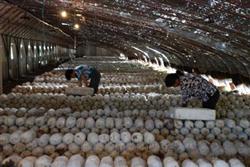
Among edible mushroom products, the shaggy mane mushroom (Coprinus comatus) is deeply welcomed by consumers for its delicious taste, tender and palatable texture, unique flavor, rich nutrition, and medicinal value, with great market potential. As an emerging project in industrialization, shaggy mane mushroom production is very suitable for promotion in the adjustment of rural industrial structure. By using the plastic greenhouses at vegetable planting bases for rotation with shaggy mane mushroom production, excellent economic benefits have been achieved.
1 Greenhouse Shading
To cultivate shaggy mane mushrooms in vegetable greenhouses, the greenhouse must first be shaded. For early autumn cultivation, straw curtains should be used to cover the greenhouse surface; for late autumn or winter, a double layer of shade film can be used. To prevent strong winds from blowing off the straw curtains, it is best to cover the straw curtains with another layer of shade film on top. The film around the greenhouse should be able to be lifted up and put down easily for ventilation.
2 Soil Treatment
For greenhouses that previously grew watermelons or vegetables, before making the raised beds, pest control should be carried out once by spraying dichlorvos or fenvalerate pesticide; highly toxic pesticides are strictly prohibited. Before placing the spawn bags, the soil must be thoroughly broken up and refined. It is suitable to make three raised beds in one greenhouse, each bed about 90 cm wide; the depth of the pits for placing spawn bags should not exceed 30 cm; after the pits are made, sprinkle dry powdered lime for disinfection.
3 Spawn Bag Preparation
The suitable growth temperature for shaggy mane mushroom fruiting bodies is 8-30°C, with the optimum being 12-18°C. For cultivation in the northern part of Zhejiang Province, fruiting can begin after the end of September, so spawn bags for shaggy mane mushrooms should be made after mid-August using 15 cm × 32 cm low-pressure polyethylene plastic bags. For the culture substrate, Formula A: 90% cottonseed hulls, 4-5% wheat bran, 4-5% cornmeal, 1% gypsum; Formula B: 75% mixed wood sawdust, 15% wheat bran, 8% cornmeal, 1% sugar, 1% gypsum powder. Follow conventional methods: mix materials, fill bags, sterilize, inoculate. After inoculation, incubate the mycelium in a clean culture room. At suitable temperatures, the mycelium generally fills the substrate in about 40 days, then the bags are moved to the cultivation shed and opened.
4 Timing of Placement
The greatest characteristics of the shaggy mane mushroom are that it does not produce fruiting bodies without casing soil and that it is particularly tolerant of low temperatures. The mycelium can be preserved for a very long period under low-temperature conditions. When opening the bags, close attention must be paid to the temperature conditions at that time and whether they are suitable for the formation of shaggy mane mushroom fruiting bodies. After removing the bags and casing with soil, shaggy mane mushrooms generally form fruiting bodies in about 15 days. For shaggy mane mushroom cultivation in vegetable greenhouses, the earliest placement time in autumn is mid-September, and the most suitable placement time is from mid-October to the end of November.
5 Casing Soil Method
After the shaggy mane mushroom spawn bags are fully covered with mycelium, under suitable temperature conditions, the bags can be removed and placed on the mushroom beds, and casing soil should be applied immediately while placing. The casing material can be soil directly from beside the mushroom beds, which needs to be thoroughly crushed and pre-moistened. The covering material is best to be nutrient soil. One month before casing, select a field in a pollution-free area, add manure when plowing, allow natural piling and fermentation, then break it up, add 1% lime to adjust the water content to 25% for casing.
6 Fruiting Management
After covering with pre-moistened soil, small arch sheds should be set up over the mushroom beds at the same time and covered with film to maintain soil layer humidity and allow ventilation. Generally after half a month, the primordia of shaggy mane mushroom fruiting bodies will form. When fruiting bodies are forming, relatively high humidity is required, and ventilation should be carried out frequently. In management, the key focus is temperature control. When the shed temperature exceeds 28°C, priority should be given to cooling and increasing humidity; during ventilation, avoid wind blowing directly onto the bed surface so as not to affect mushroom quality. When the mushroom shed temperature is below 15°C, priority should be given to warming and reducing humidity; remove the shading material from the surface of the mushroom shed and set up small arch sheds inside the shed to promote normal formation of shaggy mane mushroom fruiting bodies. After one flush of mushrooms is harvested, spray pesticide once on the bed surface for pest control, and sprinkle dry lime powder to prevent contaminating fungi.
The most suitable harvest period for shaggy mane mushrooms is the button stage, that is, when the cap tightly wraps the stipe, the annulus has not yet loosened or has just loosened, and the mushroom body is 60-70% mature. For large shaggy mane mushroom varieties, the harvest height is 15-20 cm; for ordinary varieties, the harvest height is 8-15 cm.