How to Grow Enoki Mushrooms? Detailed High-Yield Cultivation Techniques for Northeast China
Enoki mushrooms are a premium food among edible fungi, with high nutritional and health value. They have now become an essential ingredient in hot pot in our region and are deeply loved by consumers. In order to further improve the yield and quality of enoki mushrooms, based on many years of personal practice, the key technical points for high-yield cultivation of enoki mushrooms are summarized here for mushroom growers' reference...
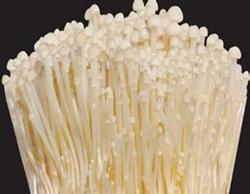
Enoki mushrooms are a premium food among edible fungi, with high nutritional and health value. They have now become an essential ingredient in hot pot in our region and are deeply loved by consumers. In order to further improve the yield and quality of enoki mushrooms, based on many years of personal practice, the key technical points for high-yield cultivation of enoki mushrooms are summarized here for mushroom growers' reference.
I. Spawn Production
1. Variety Selection. At present, there are many enoki mushroom varieties across the country. From improved varieties from various regions, we selected high-yield new varieties suitable for local conditions - "White Enoki No. 1" and "Jinzhen f03". Their yield, quality and stress resistance are all superior to other varieties, with a biological efficiency reaching 100%, and a yield increase of 10%-15% over ordinary varieties. They have now been widely promoted and applied.
2. Stock culture medium: sawdust 78%, wheat bran 20%, white sugar 1%, gypsum 1%, water content 60%.
3. Spawn culture medium: (1) Sawdust 84%, wheat bran 15%, gypsum 1%, water content 60%. (2) Sawdust 50%, corncob 34%, wheat bran 15%, gypsum 1%, water content 60%. Each bag (17 cm x 33 cm high-density polyethylene) holds 0.9 kg of material.
4. Sterilization: For bottled secondary and tertiary spawn, sterilize at 1.5 psi pressure for 2 hours, or at 100°C under normal pressure for 8 hours. Cultivation bags are sterilized at 100°C under normal pressure for 12 hours.
5. Culturing spawn and cultivation bags. Culturing mainly involves management of temperature and light. During the mycelial growth stage, keep away from light and ventilate regularly. The mycelial growth temperature for enoki mushrooms is 8°C-32°C, with the optimum at 20°C-25°C. Fruiting body growth occurs at 5°C-18°C, with the optimum at 10°C-14°C. Above 22°C, fruiting bodies are difficult to form.
II. Cultivation Methods
1. Prepare superior spawn. Spawn with robust mycelial growth is required, preferably spawn whose mycelium has just fully colonized without aging.
2. Master the best cultivation season. Enoki mushroom is a low-temperature variety. Without artificial temperature control, natural temperatures should be fully utilized, and mastering the cultivation season well is an important key to promoting high yield. According to the natural temperatures in our province, cultivation from September of the previous year to the end of February of the following year is suitable, and cultivation from October to November gives the highest yield.
3. Use high-quality raw materials and optimal formulas. (1) Cottonseed hulls 80%, wheat bran 15%, superphosphate 2%, gypsum 2%, sucrose 0.7%, urea 0.3%. (2) Cottonseed hulls 70%, wheat bran 20%, sawdust 10%. (3) Sawdust 75%, wheat bran 20%, superphosphate 2%, gypsum 2%. (4) Corncob 50%, soybean stalk powder 20%, wheat bran 20%, superphosphate 5%, gypsum 2%, urea 1%.
4. Bagging and sterilization. There are many cultivation methods for enoki mushrooms, and plastic bag cultivation gives relatively good results. After thoroughly mixing the various raw material formulas, when the water content reaches 65%, bagging can begin. Each bag is filled to a material height of 12 cm, requiring uniform force and appropriate tightness - neither too loose nor too tight. Press the surface flat and leave 20 cm of empty space at the top for subsequent fruiting body growth. To ensure uniform spawn age and rapid fruiting, poke a hole in the center of the material down to the bottom, then seal with a cotton-free cover before sterilization. Handle gently to prevent plastic bag breakage; if broken, patch with adhesive tape.
5. Sterilization and inoculation. High-pressure or normal-pressure sterilization methods can be used. For larger production volumes, use normal-pressure sterilization; when the material temperature reaches 100°C-110°C, maintain for 12 hours. Wait for the material temperature to naturally drop below 20°C before inoculating. If natural temperatures are high during inoculation, the contamination rate from unwanted microorganisms will be greater, so inoculation must be carried out in an inoculation box inside an inoculation room after disinfection and sterilization with chemicals. In particular, during inoculation, the spawn and tools must be wiped and disinfected with 75% alcohol. Each bottle of spawn can inoculate 25-30 bags. After inoculation, cover the opening and proceed with spawn-running culture.
6. Mycelial culture. The mycelial culture of enoki mushroom cultivation bags mainly involves temperature management. Although it can grow at 8°C-32°C, it grows best at 20°C-23°C. During spawn running, prevent bags from being stacked too high or too densely, which generates heat and causes excessively high temperatures that damage the spawn; at the same time, also address excessively low temperatures. During mycelial growth, dark-light culture must be used. Excessive light first inhibits mycelial growth, and second, before the mycelium reaches physiological maturity, light stimulation on the medium surface can cause premature fruiting, affecting yield and quality. Dark-light culture during the mycelial growth stage helps concentrate nutrients and produce uniform fruiting.
7. Opening bags for fruiting. After more than 20 days of culture, when the mycelium has fully colonized the entire bag and natural temperatures are suitable for enoki fruiting body growth, immediately untie the bag opening to facilitate fruiting body formation. In particular, after opening the bag, promptly cover the opening with newspaper or cloth; otherwise, the medium surface will lose water, affecting mushroom bud formation.
8. Fruiting management. After enoki bags are opened, increase light and humidity in the room to a certain extent, but avoid direct sunlight. Spray water daily onto the newspaper or cloth, maintaining relative humidity in the space at 85%-95% and space temperature at 7°C-18°C. After 3-5 days, small mushroom buds will appear. When spraying water, do not spray directly onto the fruiting bodies, to avoid fruiting body rot, black roots, spots and other diseases. After 10-15 days of management, the enoki stipes will grow out of the bag opening, and when the stipes reach 15-20 cm, they can be harvested.
9. Harvesting. After enoki mushrooms mature, harvest promptly; otherwise, the stipes easily discolor and rot. The maturity standard is when the caps have begun to expand; if the cap edges curl upward, it indicates over-maturity and reduced quality. When harvesting, pick all the enoki mushrooms in each bag together, large and small. Pinch the base of the stipes with your hand and gently shake to pick them. Then trim off the culture material stuck to the base of the stipes, and place them neatly in baskets for sale.
10. Scratching. After each batch of enoki mushrooms is harvested, remove old mycelial skin, mushroom roots, dead mushrooms, etc., scrape off a thin layer from the surface of the material, cover with newspaper or cloth, stop spraying water for 3-5 days, then manage as described above to promote early formation of the second batch of mushrooms.
The yield of enoki mushrooms is mainly high in the first batch, accounting for 50% of total yield. The second and third batches gradually decrease. If the medium becomes excessively dry and dehydrated in the later stage, a small amount of water can be sprayed inside the bag to help increase yield.