Detailed Explanation of Improved Inoculation Methods for King Oyster Mushroom
Cultivation season: The king oyster mushroom (Pleurotus eryngii) is a medium-to-low temperature mushroom. The optimum temperature for mycelial growth is 23-25°C, and the optimum temperature for fruiting is 12-18°C. Below 8°C, primordia do not form, and above 20°C, deformities are likely. Based on these characteristics, inoculation for the cultivation season can generally be carried out in September-October; after 45-50 days of culture, fruiting occurs around November. Raw material preparation...
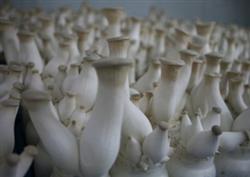 At present, bag cultivation is mostly used for cultivating king oyster mushroom, and the inoculation methods include one-end inoculation and two-end inoculation. Using these two inoculation methods, especially with manual bag filling, often leads to inconsistent mycelial growth between the inside and outside. To overcome this drawback, the inoculation method for king oyster mushroom needs to be improved.
A hole-injection inoculation method can be adopted, that is, inserting the spawn 2-3 cm deep into the substrate, filling the hole opening completely without leaving any gaps, inoculating 4 holes per bag, and sealing with breathable tape. In this way, after the spawn at both ends of the bag germinates, it quickly covers both ends of the bag, and the entire bag takes on a fully enveloping form, with mycelia inside and outside growing simultaneously. Experiments have shown that when the same bags are inoculated at the same time, compared with the conventional inoculation method, the hole-injection inoculation method allows the mycelia to fully colonize the bag 7 days earlier, and it is easy to operate with less contamination. Therefore, king oyster mushroom growers can switch from one-end or two-end inoculation to hole-injection inoculation. It should be noted that when filling the substrate, the bag openings must all be tied tightly. Whether inoculating in an inoculation box or inside an inoculation tent, disinfection and sterilization are required, and the openings should be sealed immediately after inserting the spawn.