Oyster Mushroom Cultivation Techniques Sharing: A Comprehensive Explanation of Growing Methods
Some time ago, a netizen called and said: right now there are very few oyster mushrooms on the market and the price is good, so they want to cultivate oyster mushrooms in a greenhouse. But they are a bit lacking in technical know-how... Answer: For this situation, we recommend using the bag cultivation method for oyster mushrooms. At present, there are many methods for cultivating oyster mushrooms in our country, including bed cultivation, furrow cultivation, fungus bricks, bag cultivation, and intercropping or relay cropping with vegetables or crops...
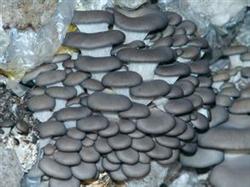
Some time ago, a netizen called and said: right now there are very few oyster mushrooms on the market and the price is good, so they want to cultivate oyster mushrooms in a greenhouse. But they are a bit lacking in technical know-how...
Answer:For this situation, we recommend using the bag cultivation method for oyster mushrooms. At present, there are many methods for cultivating oyster mushrooms in our country, including bed cultivation, furrow cultivation, fungus bricks, bag cultivation, and intercropping or relay cropping with vegetables or crops.
Bag cultivation is a cultivation method in which the growing medium is put into plastic bags, inoculated with spawn, and cultivated until mushrooms appear. This is currently a widely used cultivation method in production, and it has many advantages: first, the raw materials are easy to obtain (plant stalks, bran, husks and other agricultural by-products), making use of waste and turning waste into treasure. Second, it saves labor and is easy to manage. Third, three-dimensional cultivation can make full use of the site space. Fourth, many kinds of sites can be used, including indoors, greenhouses, air-raid shelters, and it can also be placed in crop and vegetable fields for intercropping.
The process flow of oyster mushroom bag cultivation: preparing the growing medium + preparing plastic bags + bagging and inoculation + stacking for spawn running + management during the fruiting period + harvesting. Technical key points of oyster mushroom bag cultivation:
I. Preparing the growing medium
Oyster mushroom is a wood-decaying fungus. Plant stalks, bran, husks and other agricultural by-products containing lignocellulose can all be used as growing medium for cultivating oyster mushrooms. Three kinds are commonly used:
(1) Cottonseed hulls. ① Take fresh cottonseed hulls and directly add water and mix evenly, so that the moisture content of the medium reaches about 65%. For 500 grams of medium, add 550-650 milliliters of water. ② Mix the medium with 1% limewater, and the moisture content is the same as above. ③ Mix the medium with 1% limewater and 0.1% carbendazim, and the moisture content is the same as above. Carbendazim has a bactericidal effect, and limewater can adjust the pH value and can inhibit the growth of contaminating bacteria. Therefore, when the temperature is low, contamination by foreign bacteria is unlikely to occur, and mixing the medium with clean water can reduce costs; when the temperature is high, use limewater to mix the medium to prevent contamination; when the temperature is even higher, use limewater plus carbendazim to mix the medium to ensure successful cultivation.
(2) Corn (2340, -4.00, -0.17%) cobs. ① Crush corn cobs (fresh and mold-free) into pieces the size of soybean (4466, -4.00, -0.09%) grains, soak them in 1% limewater for 24 hours, take them out and drain off excess water slightly, add 20-30% cottonseed hulls, and make the moisture content of the medium reach about 65%. ② Corn cobs 78%, wheat bran 20%, sugar 1%, gypsum powder 1%, add an appropriate amount of water. Adding cottonseed hulls or wheat bran is to increase nutritional components; all growing media except cottonseed hulls need these added.
(3) Peanut shells and stalks. ① Crushed peanut shells and stalks 78%, wheat bran 20%, sugar 1%, gypsum powder 1%, add an appropriate amount of water. ② Crushed peanut shells and stalks 79%, cottonseed hulls 20%, gypsum powder 1%, add an appropriate amount of water.
For other agricultural by-products used as growing medium, the preparation method is basically the same as for peanut shells.
II. Specifications and requirements for plastic bags
Choose plastic tubes 0.03-0.04 cm thick, 24-30 cm wide, and 40-50 cm long (open at both ends).
III. Bagging and inoculation
First tie one end of the plastic tube with a plug made from clean old newspaper rolled with cottonseed hulls (diameter 3.3 cm, length 6.6 cm). Alternatively, tie a corn cob plug 3.3 cm long dipped in 0.3% carbendazim or potassium permanganate solution, sprinkle in some spawn, then add the growing medium, pressing firmly while filling. When half filled, sprinkle in another layer of spawn, then continue filling the medium. When filled to 6.6 cm from the bag opening, sprinkle in some more spawn, level and press firmly so that the spawn is in close contact with the medium. Then take another plug and tie the bag opening tightly.
The function of the plug is ventilation. Plugs may also be omitted, but then the spawn running speed will be somewhat slower. The inoculation amount is generally 10-15% of the medium. Note that more spawn should be sprinkled near the bag opening so that oyster mushroom mycelium grows first, making it difficult for contaminating bacteria to breed.
Note: the mixed growing medium must be bagged and inoculated the same day. The inoculation time generally starts from September to early March of the following year. Spring planting should be early, and autumn planting should be late, with the temperature kept below 20°C. This is both beneficial to the growth and development of oyster mushrooms and unfavorable to the growth of contaminating bacteria. In air-raid shelters or other places where temperature can be manually controlled, production can be carried out all year round.
IV. Stacking for spawn running
Arrange the bags with tied openings layer by layer and stack them together. The number of stacked layers should be determined according to the temperature at the time. When the temperature is about 10°C, they can be stacked 3-4 layers high; at 18-20°C, 2 layers are suitable; when above 20°C, the bags can be arranged in a scattered stack or placed flat on the ground to prevent the medium temperature inside the bags from getting too high and killing the mycelium. After about 15 days, once the temperature inside the bags is basically stable, stack them again into 6-7 layers or more.
Two days after inoculation, the medium temperature begins to rise. Be careful to prevent the medium temperature from exceeding 35°C. When the temperature rises to 32°C, promptly open doors and windows and spray water on the ground to cool it down. If the temperature continues to rise, turn the stacks or reduce the number of layers. It is best to keep the temperature at about 24°C.
After about 15 days, adjust the stacks: put those with good mycelium growth together, put the poor ones together, and pick out the contaminated ones. For lightly contaminated bags, untie the bag openings and leave them in a cool place for a few days, or smear them with 0.3% carbendazim; for heavily contaminated bags, bury them deeply. In this way, mushroom emergence is uniform and management is convenient. Keep indoor air humidity at about 65%, and the mycelium will grow well in about 30 days.
V. Management during the fruiting period
After the mycelium has covered the growing medium, after 5-10 days, under suitable environmental conditions, mushroom primordia will appear in the bags. At this time, promptly untie the bag openings, remove the plugs (corn cob plugs need not be removed), turn the bag openings outward, and expose the cluster of mushroom primordia.
At this point, begin spraying water on the ground. The relative air humidity indoors should be kept at 85-90%. Spraying frequency: generally 2-3 times a day, spray more on sunny days, and spray less or not at all on cloudy days. If the growing medium is too dry or the air humidity is too low, the young mushrooms will wither.
Ventilate properly to prevent excessively high temperature and excessive humidity. Spraying water too early or excessively high temperature and too much humidity can also cause small mushrooms to die. Poor ventilation and excessively high carbon dioxide concentration will cause abnormal growth of the fruiting bodies, forming "big-foot mushrooms."
Also note light transmission so that the cultivation site has scattered light. Light is a necessary condition for the differentiation of fruiting bodies. In a dark environment, mushroom primordia cannot develop into normal fruiting bodies, but instead grow into a lump like dough, with no commercial value.
In addition, after each flush of mushrooms is harvested, keep warm appropriately during the day and open windows at night to cool down, so that the cultivation site forms an obvious temperature difference, which is beneficial to the transformation of mycelium into fruiting bodies.
VI. Harvesting
After the mushroom primordia appear, they can be harvested after 5-10 days. For the entire growth period of oyster mushrooms, from inoculation to harvesting the first flush, about 35-40 days are needed.
When the fruiting bodies stop increasing in size, the color changes from dark to light and approaches white, and before spores are discharged, this is the best harvest time. At this time, the harvested mushrooms are thick and plump, delicious in taste, and high in yield. If harvested too early, the fruiting bodies have not yet grown large and the yield is relatively low; if harvested too late, the fruiting bodies become old, lose flavor and nutritional value, and cannot be eaten or sold.
· Harvesting method: hold down the growing medium with the left hand, and with the right hand pinch the mushroom stem tightly and twist to pick it off. It can also be cut off with a knife at the point where the mushroom stem is close to the growing medium. When harvesting each flush of mushrooms, harvest them all regardless of size, as this makes management convenient.
After each flush of mushrooms is harvested, clean off the dead mushrooms and mushroom stems remaining on the surface of the fungus bags to prevent rotting. Stop spraying water for 4-5 days, then spray water appropriately to keep the medium surface moist. After about 10 days, mushroom primordia will grow again on the medium surface, and management should still be carried out according to the methods for the first flush.
With this method of cultivating oyster mushrooms, after harvesting 4 flushes, the plastic bags can also be removed, and the fungus blocks can be buried in vegetable plots, shaded woodland, corn fields, or cotton
fields (opening furrows along the rows). After watering, 2 more flushes of mushrooms can still be produced. This is unmatched by other cultivation methods.