How to Weed Organic Vegetable Gardens? Practical Methods Shared
How do you weed when growing organic vegetables? Advice sought: "In organic vegetable production, the most troublesome thing is weed control." So said a vegetable farmer at an organic vegetable base with a sigh. Since organic vegetables are not allowed to use synthetic pesticides, fertilizers, herbicides, growth regulators, etc. during cultivation, this places requirements on the cultivation process that differ from conventional vegetable growing when it comes to the unavoidable weed problems...
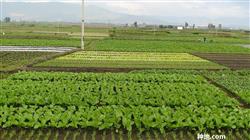
How do you weed when growing organic vegetables? Advice sought
"In organic vegetable production, the most troublesome thing is weed control." So said a vegetable farmer at an organic vegetable base with a sigh. Since organic vegetables are not allowed to use synthetic pesticides, fertilizers, herbicides, growth regulators, etc. during cultivation, this places requirements on the unavoidable weed problems during cultivation that differ from conventional vegetable growing. Organic vegetables prohibit the use of genetically engineered products and chemical herbicides for weed control; the main weeding measure is manual weeding. In addition, some supplementary measures can be used to reduce weeds.
Manual weeding mainly refers to manual inter-row cultivation and weeding. Manual inter-row cultivation and weeding is highly targeted: it can not only remove weeds between the rows, but also remove weeds between the plants. It is clean and thorough, and the technique is simple. It both controls weeds and provides good growing conditions for the vegetable crops. Throughout the entire growth process of vegetable crops, manual inter-row cultivation and weeding can be carried out multiple times as needed. When weeding, seize the favorable opportunity to remove them early, while small, and thoroughly. Do not leave small weeds behind, to avoid future trouble.
Strengthen cultivation management to control weeds: control weeds by adopting cultivation techniques that restrict weed growth and development (crop rotation, planting green manure, fallowing, etc.); organic fertilizer must be fully decomposed (some organic fertilizers contain weed seeds); make use of the inhibitory effect of the previous crop on weeds. When arranging the preceding and following crops, pay attention to the inhibitory effect of the preceding crop on weeds, so as to create favorable production conditions for the following crop. Generally, carrots, celery, etc. grow slowly and have little weed-suppressing effect; onions, garlic, and root vegetables are also prone to weed damage; whereas pumpkins, winter melons, etc., because their side vines quickly cover the ground during the growing period, make weeds easy to eliminate; cabbage, potatoes, turnips, etc. also have a relatively strong weed-suppressing effect. You can also spray edible fermented vinegar with an acidity of 4%~10%, which can both eliminate weeds and disinfect the soil; the effect is better when sprayed while the weeds are young.
Mulching to suppress weeds: straw mulching to suppress weeds. Using straw mulch can not only preserve moisture, keep warmth, promote rooting, and build fertility, but also has a weed-suppressing effect. Spread crop straw whole or cut into small pieces 3~5 cm long evenly between the plant rows and between the plants. The mulching amount should be moderate, because too little mulch will not preserve moisture or increase yield; too much mulch may cause seedling crushing and seedling burning, and also affect sowing of the following crop. The mulching amount per mu is about 400 kg, with complete covering as the standard. Straw mulching also requires mastering the mulching period well. For example, ginger should be mulched after sowing during the seedling stage, and the mulch removed when temperatures drop in early to mid-September; summer and autumn garlic can be mulched throughout the entire growing period. Before mulching, the straw should first be turned and sun-dried; after mulching, promptly prevent pests and weeds. In addition, old newspapers, etc. can also be used to cover the bed surface, which can have a good weed-suppressing effect. Plastic film mulching to suppress weeds: when using plastic film mulching, improve the quality of the plastic film mulching; generally, when the mulching quality is good, weeds also grow less. When covering with plastic film, pull it tight and spread it flat so that it fits closely to the ground. If the film-covering quality is poor, it will not only be prone to ventilation and air leakage, with poor warmth, water, and fertilizer retention effects, but will also promote weed growth. Using black plastic film mulching has the best weed-suppressing effect, but herbicidal film (because it contains chemical herbicides) must not be used for mulching and weed control.
Mechanical weed elimination: mechanical weeding uses various forms of weeding machinery and surface soil working machinery to cut weed roots, interfere with and suppress weed growth, and achieve the purpose of controlling and eliminating weeds. Mechanical inter-row cultivation and weeding is more advanced than manual inter-row cultivation and weeding, with high work efficiency, but it is not very flexible. Generally, this method is adopted on farms with a relatively high degree of mechanization. Shallow loosening for weed elimination: before sowing, use a shallow loosener for mechanical shallow loosening and weeding, with a loosening depth of 5~6 cm. Through shallow loosening, about 70% of annual weeds are killed; for the remaining difficult-to-remove weeds, manual weeding at the seedling stage is sufficient. Rotary tillage or rotary sowing for weed elimination: before sowing, use a rotary tiller for shallow rotary weed elimination, or when sowing, use a rotary seeding machine for rotary sowing weed elimination. The depth of rotary tillage or rotary sowing is generally 6~8 cm. After rotary tillage or rotary sowing, about 75% of weeds are rotary-killed; for the remaining large weeds that grow out at the seedling stage, manual weeding is sufficient. Inter-row cultivation for weed elimination: at the seedling stage, use an inter-row weeder or an inter-row fertilizer applicator and weeder for inter-row cultivation and weeding. For shallow-rooted crops, the depth of inter-row cultivation and weeding is 3~4 cm; for deep-rooted crops, the depth of inter-row cultivation and weeding is 5~10 cm. More than 95% of field weeds can be removed; for the remaining weeds, manual weeding is sufficient. It should be done as early as possible on a sunny day after the first peak emergence period of the main weeds, when the crop seedlings are not easily buried by soil. Mechanical inter-row cultivation and weeding that needs to be done a second time should be completed before the row crops close their rows. Deep loosening for weed elimination: mainly for deep-rooted crops with relatively wide row spacing, use a deep loosener for deep loosening and weeding. The depth of deep loosening and weeding is generally 25~30 cm. More than 95% of field weeds can be removed; for the remaining weeds, manual weeding is sufficient. It is suitable to choose to do this in autumn.
Click to get a massive amount of herbicide application techniques
Click to get a massive amount of pesticide application techniques
Click to get a massive amount of vegetable growing techniques