Detailed Explanation of Key Points for High-Quality Shiitake Mushroom Cultivation
How to cultivate high-quality shiitake mushrooms? Please advise. High-quality mushrooms with a large cap diameter, thick flesh, and an unopened veil are the finest grade of shiitake. After fresh-keeping processing and export to foreign countries, the price of this type of mushroom is often 3-4 times that of ordinary shiitake. Therefore, for shiitake producers, how to use scientific cultivation and management techniques to produce more...
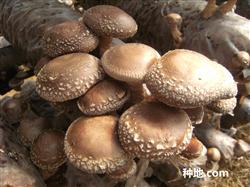
How to cultivate high-quality shiitake mushrooms? Please advise.
High-quality mushrooms with a large cap diameter, thick flesh, and an unopened veil are the finest grade of shiitake. After fresh-keeping processing and export to foreign countries, the price of this type of mushroom is often 3-4 times that of ordinary shiitake. Therefore, for shiitake producers, how to use scientific cultivation and management techniques to produce more high-quality mushrooms is the key to obtaining higher economic benefits. Northeast China has relatively low temperatures and large day-night temperature differences, with sufficient nutrient accumulation, which is conducive to producing high-quality shiitake.
I. Choose shiitake varieties with medium-to-large caps, low-temperature type, and late maturity. Generally speaking, under the premise that the veil remains unopened, the larger the cap diameter and the thicker the mushroom flesh, the higher the grade and the higher the price. Some shiitake varieties with a lower temperature type and late maturity decompose lignin more thoroughly, accumulate sufficient nutrients, and are more conducive to the production of high-quality mushrooms. In production, varieties such as 1363 and Zhongxiang No. 2 can be selected.
II. The main cultivation substrate should use sawdust from high-quality hardwood tree species. For example, oak, Quercus, ash, maple, and so on. Because these hardwood sawdusts have a dense texture and high lignin content, shiitake mycelium grows relatively slowly, which is conducive to nutrient accumulation in the mycelium, dense flesh, and large mushrooms with thick flesh.
III. There must be a reasonable carbon-to-nitrogen ratio in the cultivation substrate. During the shiitake mycelium stage, a reasonable carbon-to-nitrogen ratio of 20-30:1 is required. Because sawdust is rich in carbon and deficient in nitrogen, reasonable nitrogen-containing compounds, such as wheat bran and rice bran, must be added to the formula. The amount of nitrogen-containing compounds added should be increased or decreased according to the characteristics of the shiitake strain. The dosage for early-maturing high-temperature varieties is 15%, while for late-maturing low-temperature varieties it should be increased to 20%.
IV. Strictly control the water content of the culture medium. The most ideal water content in the culture medium is 60%. Under general conditions, mycelium grows more robustly and yields are somewhat higher when the culture medium is on the wetter side rather than the drier side. Whether in the mycelium stage or the fruiting body stage, the amount of water is crucial. If there is insufficient water in the culture medium, the mycelium grows thin and slow, and nutrients will not accumulate enough. If there is too much water in the culture medium, air permeability is poor, the mycelium lacks oxygen, and this is extremely unfavorable for producing good mushrooms later. Therefore, the water content in the culture medium must be well controlled.
V. Compact the culture substrate. When shiitake is cultivated on wood logs, the mushroom quality is firm and good because the wood log material is dense. In substitute substrate cultivation, whether in mushroom column cultivation or ground bed cultivation, the substrate should be pressed as firmly as possible. Because the spaces in the substrate are small and there is little air, the mycelium grows more slowly, respiration is weaker, nutrient consumption is small, and by the time of fruiting, sufficient nutrients in the substrate can be guaranteed, so the shiitake grown is of good quality and high yield.
VI. Control temperature and humidity well during the fruiting stage. Temperature during the fruiting stage not only affects shiitake yield but also affects shiitake quality. Many edible mushroom producers think that a primordium is a mushroom bud, but this is incorrect. A primordium is a structureless mass of mycelium formed by hyphae tangling at 8-20°C, while a mushroom bud is the young fruiting body in which this mycelial mass undergoes physiological changes after low-temperature stimulation and differentiates a cap and stipe. The temperature that stimulates the primordium to form mushroom buds varies depending on the temperature type of the shiitake. Therefore, once a mushroom bud forms, it means the shiitake mycelium has reached physiological maturity and has begun transforming from vegetative growth to reproductive growth. At this stage, the temperature should preferably be controlled at 8-15°C; the spatial humidity at 50-60%; and the light intensity at 300-800 lux.
When cultivating shiitake with sawdust substitute substrate, even if the yield is slightly lower, efforts should still be made to create the cultivation raw materials and optimal environmental conditions required for high-quality mushroom growth, so that mushroom buds can grow slowly under low-temperature and dry conditions and develop into high-quality shiitake with large caps, short stipes, thick flesh, and dense tissue, enabling producers to obtain higher economic benefits.
Click to get more shiitake cultivation techniques
Click to get more edible mushroom cultivation techniques