How is black fungus (wood ear mushroom) cultivated?
How is black fungus (wood ear mushroom) cultivated? Please advise: the fruiting body of black fungus is solitary and ear-shaped, or clustered in a petal-like form, gelatinous, semi-transparent, concave in the middle, with the back usually appearing greenish-brown and covered with downy short hairs, while the ventral surface is smooth with vein-like wrinkles and reddish-brown. The fruiting body is 6-12 cm in diameter, 0.8-1.2 mm thick, and expands 8-22 times its size when soaked. From the back of the fruiting body...
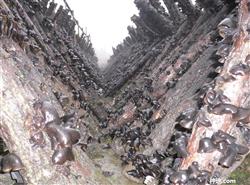
How is black fungus (wood ear mushroom) cultivated? Please advise
The fruiting body of black fungus is solitary and ear-shaped, or clustered in a petal-like form, gelatinous, semi-transparent, concave in the middle, with the back usually appearing greenish-brown and covered with downy short hairs, while the ventral surface is smooth with vein-like wrinkles and reddish-brown. The fruiting body is 6-12 cm in diameter, 0.8-1.2 mm thick, and expands 8-22 times its size when soaked. Counting from the back of the fruiting body, the layers are: the hairy layer, the dense layer, the subdense upper layer, the middle layer, the subdense lower layer, and the hymenium.
Nutrition: cellulose and lignin are its main nutrient sources. When decomposing and absorbing nutrients, the black fungus mycelium continuously secretes a variety of enzymes, which break down cellulose, lignin and starch. In addition, glucose, maltose, sucrose and other sugars, as well as calcium, phosphorus, iron, potassium, magnesium and other inorganic salts.
Moisture: the water content of the substrate is 60-70%; during the fruiting body growth stage, the relative air humidity is 85-95%; below 80%, the fruiting body grows slowly.
Temperature: black fungus is a medium-temperature type; the mycelium grows at 6-36°C, with 20-30°C being optimal, and is inhibited below 5°C and above 38°C. Mycelium differentiates into fruiting bodies at 15-27°C, with 20-25°C being optimal.
Light: the mycelium does not need light, but a certain amount of scattered light promotes mycelial development. The fruiting body needs plenty of scattered light, and also a certain amount of direct light (250-1000 LX), to grow into robust fruiting bodies that are dark in color and thick-fleshed.
Air: black fungus is an aerobic fungus.
II. Cultivation Techniques
1. Cultivation time: the choice of cultivation time is the key to success or failure in cultivating black fungus, and is closely related to yield and quality. Make bags and incubate the spawn from late September to the end of October, and grow the mushrooms in November. In high mountain areas it can be appropriately earlier. This period is relatively ideal, as the room temperature at this time is 15-28°C, the relative air humidity is about 65%, and the temperature gradually drops, so contaminating fungi are at a low ebb, which is favorable for black fungus mycelium to colonize and feed, and also favorable for fruiting.
2. Raw material ratio: black fungus is a wood-rotting fungus, and using sawdust as the substrate can meet its nutritional needs for growth and development. Tree species suitable for cultivating shiitake are all suitable for cultivating bagged black fungus. Pine, fir, cypress and others contain oils, alcohols, ethers and similar substances, and tree species of the Lauraceae and aromatic spice trees also contain aromatic substances; the sawdust of these tree species must be treated before it can be used to cultivate black fungus, otherwise they should not be selected. Sawdust is best crushed in one pass through 8 mm mesh into granular form; cottonseed hulls and rice husk powder are also ideal cultivation materials. Bran, rice bran and other supplements make up the culture medium. Raw materials must be fresh and free of mold. The formulas are as follows:
(1) Cottonseed hulls 90%; bran 8%; lime 1%; sugar 1%; appropriate amount of water.
(2) Mixed hardwood sawdust 64.5%; cottonseed hulls 20%; bran 15%; brown sugar 1%; lime 0.5%; appropriate amount of water.
(3) Mixed hardwood sawdust 78%, bran 20%, brown sugar 1%, gypsum 1%, appropriate amount of water.
3. Production process flow
Ingredient mixing - substrate mixing - bagging - sterilization - cooling - inoculation - mycelial incubation - puncturing for mycelial growth - arranging in the yard for light exposure - bag removal for mushroom growth - harvesting
Substrate mixing: when mixing substrate for bag-cultivated black fungus, the water content should be slightly drier than for bag-cultivated shiitake, preferably 50%-55%. Because black fungus mycelium is fine and thin and colonizes slowly, a slightly dry substrate with large air spaces and sufficient oxygen content can noticeably speed up the fungus mycelium, which is beneficial for the later stage (field management).
. Bagging: the bag specification is 15*55 cm, low-pressure polyethylene 4.5-5 silk thick; bagging must be firm, and on the premise that the bag does not deform, the firmer the better; bagging time should not be too long, the faster the better to prevent the substrate from acidifying;
. Sterilization: keep the material temperature in a normal-pressure sterilization stove at 100°C for 10-12 hours;
Cooling: after disinfecting the space and surroundings, cool to below 28°C before inoculation;
Inoculation: inoculation box process flow: spawn pretreatment - loading material segments, spawn, tools - sealed disinfection (aerosol disinfection for 30 minutes) - inoculation - bagging - moving to the incubation room for incubation. The key technical steps are as follows:
(1) The spawn must be pure, thick and strong, and of the right age; the optimal time is when the mycelium has just fully colonized;
(2)0 Spawn pretreatment: first, disinfect the surface of the spawn with 75% alcohol; second, tie the upper part of the bagged spawn tightly and cut off the 1-1.5 cm aged layer.
(3) Inoculate while the temperature is still warm; when the material temperature of the sterilized fungus sticks drops below 28°C, inoculate promptly.
(4) Inoculate 3 holes per bag, appropriately increase the inoculation amount (1 bottle of spawn for 15 fungus sticks), inoculate with whole blocks of spawn, loose inside and firm outside, so that the black fungus mycelium quickly resumes growth and occupies the inoculation holes. After inoculation, tie the bag opening well and transfer to the incubation room for incubation.
(5) Disinfection must be thorough: the incubation room should be cleaned in advance, and disinfected with aerosol or by spraying walls, space and floor with 5% phenol or peracetic acid. After the smell of the chemicals has dissipated, move in the inoculated fungus bags and stack them in parallel stacks or in a "#" shape 6-8 layers high. Each bag weighs about 3.3 jin.
(6) The inoculation temperature should preferably be kept below 28°C; when the daytime temperature is higher, inoculate in the morning and evening.
4. Incubation at suitable temperature: temperature greatly affects the growth of black fungus mycelium. To ensure normal growth of the mycelium, the room temperature must be controlled differently according to the different growth stages. The mycelial growth stage is divided as follows: turn the stacks once about every 15 days, and deal with any contaminating fungi promptly if found. Along with turning the stacks, adjust the microclimate within the stack to keep the air circulating and fresh. Mycelial growth does not need light; provide dark conditions.
Germination stage: that is, within 20 days after inoculation; for the first 10 days the indoor temperature should preferably be 25-28°C, so that the mycelium can feed faster in the most suitable environment, colonize and spread, occupy the substrate and become dominant, reducing contamination by foreign fungi, but it should not exceed 30°C. After 10 days, as the mycelium grows and develops, the temperature inside the bag gradually rises; generally the bag temperature is 2-3°C higher than the room temperature, so the room temperature should be adjusted to 22-24°C.
Vigorous stage: after 20 days, the stage when the mycelium has the strongest ability to decompose and absorb nutrients; the mycelium appears vigorous and strong, metabolism speeds up, and the bag temperature continues to rise, so the room temperature should preferably be about 20-22°C. At this time, special attention should be paid to spreading the stacks to prevent abnormal temperature, and the number of ventilation times should be increased. Ventilate once in the morning and once in the evening, 0.5-1 hour each time.
Maturation stage: that is, after 40 days, the mycelium enters the physiological maturation stage and is about to transition from vegetative growth to reproductive growth; the bag temperature gradually drops and is kept at about 20°C. Observe temperature changes; growers mainly rely on opening and closing doors and windows. When closing doors to raise temperature, be sure to ventilate in time; although the air temperature drops, closing the doors can still raise the temperature, so attention should be paid to spreading the fungus logs promptly to avoid "burning the fungus."
Puncturing for mycelial growth: after about 2 months of incubation the mycelium has basically fully colonized, and the fungus sticks need to be punctured once; after bag removal, generally the holes are 2-3 MM in diameter and 5 MM deep. A nail board made of 2-2.5 cun (inch) round nails can be used to punch holes, preferably 10 rows per fungus stick bag, 100 holes. After punching, be sure to stack them in a triangular or "#" shape, which is good for heat dissipation and air circulation. At the same time, open all doors and windows to create good ventilation and light conditions, which is good for mycelial recovery and physiological maturation. If puncturing for fruiting without removing the bag, then the holes should be 4 MM in diameter, 5 MM deep, and about 130 holes is preferable. The puncturing and mycelial growth period is generally 7-10 days. Then they can be moved to the cultivation site for fruiting management.
5. Arranging in the yard for light exposure
After the fungus sticks are punctured for mycelial growth and a small number of mushroom buds have formed, they enter the site for light exposure and incubation. This stage mainly further promotes physiological maturation and bud differentiation, and the surface mycelium shrinks back, laying the foundation for bag-removal management. Bag-removal standard: buds have formed at the punctured sites but have not yet grown out of the bag opening, otherwise the buds are easily carried away with the bag during removal. Arranging in the yard for light exposure takes about 7-10 days.
Site selection: choose a field or lawn with good ventilation, sufficient sunlight, convenient water source, no pollution sources, and flood prevention as the fungus yard. Old sites should be plowed and sun-exposed, and sprayed with fungicide for disinfection. Lime can be used as the fungicide. In addition, the entire site should also be sprayed with insecticide.
Fungus bed construction: prepare a turtle-back-shaped raised bed, 120 cm wide, length unlimited, with the side ditches serving as walkways. Build with small wooden poles or wire, with the crossbar row spacing 0.30-0.35 m, so that sunlight can reach the lower end of the fungus sticks (which can ensure a small environment of light and ventilation for the fungus sticks). Dig drainage ditches around the fungus bed.
Arranging the fungus sticks in the yard: move the fungus sticks to the site and place them on the crossbars, placing 6-7 sticks on each crossbar, using open-air cultivation to receive natural light to stimulate fruiting, but the temperature when arranging in the yard should preferably be stable below 25°C. The sticks should preferably be raised off the ground with bamboo skewers to facilitate ventilation and also prevent contamination.
Pattern selection: bag removal versus no bag removal, with the main consideration being temperature changes; in plain areas, bag-removal management is preferable; in areas above 600 m altitude, autumn cultivation may use no bag removal, but spring cultivation uses bag-removal management.
6. Bag-removal and fruiting management
After a large number of mushroom buds have formed, remove the bags immediately. The site should be kept moist. The focus of management at this stage is water management.
Water management: 2-3 days after bag removal, use water mist spray tapes to regulate substrate and space humidity. The principle of spraying water is "dry-dry wet-wet," and spraying requires fine spraying and spraying many times. The standard for spraying water is to determine the amount by observing the state of the mushroom fronds. During the mushroom-growing period, ensure the fronds are swollen and moist, fresh and tender. If the fronds shrink from drying, nutrient absorption is blocked, affecting growth; if the fronds are too wet, air absorption is affected. Especially when the temperature is above 28°C, the mushrooms are prone to "flowing" and rotting. Keep the fronds moist by spraying water; generally, continuous misting can be carried out from 10-16 o'clock each day. When the temperature is higher, above 25°C, it is preferable to spray in the morning and evening; stop spraying 1-2 days before harvesting. After each batch of black fungus is harvested, stop spraying water for about 7 days, then on the 8th day spray a fine mist to moisten the substrate, and after new buds have formed, continue spraying water. The fronds can be picked when they are 80-90% mature; after harvesting one or two batches, turn each fungus log once, turning the shady side to the sunny side, so that fruiting is uniform. This promotes the mycelium to form fruiting bodies, with 2 to 3 batches harvested in total. Each fungus stick can produce 2-3 jin of fresh black fungus, equivalent to 0.1-0.15 jin of dried product.
Environmental conditions: sufficient light and air circulation are required. Generally, the entire site is open-air, imitating log cultivation; only in the case of continuous rain is plastic film needed for rain shelter to prevent "flowing" of the mushrooms.
Key technical points: create conditions that promote vigorous mycelium in the fungus sticks and favor the growth of the fronds. When the fungus stick mycelium grows at a suitable temperature, the main thing is to control the two variable factors of water and oxygen; primordia that have already formed are difficult to grow larger. When the substrate moisture of the fungus sticks is suitable but the space humidity is below 80%, the fronds easily lose water and dry out; once the fronds dry out, they are difficult to grow. To achieve high yield, the "dry-dry wet-wet" approach must be adopted to favor vigorous growth of the mycelium within the substrate; the space moisture is regulated through water mist spray tapes, with humidity at 90-95%, keeping the fronds normally swollen, which favors frond growth.
7. Points to note
The main existing problem in sawdust bag cultivation of black fungus is mold contamination. This is because the fungus logs lack a protective layer like the bark of logs, or the mycelial skin layer of shiitake fungus logs, which is why pathogen infection occurs. In addition, black fungus mycelium is fine and thin, lacking the strength and stress resistance of shiitake mycelium; and because black fungus is a gelatinous fungus, during the bud-emergence and fruiting stages, if temperature and humidity management is poor and ventilation is insufficient, it easily attracts disease and pests. Therefore, we adopt the open-field cultivation method without building shade sheds and without plastic film covering, which is an effective measure to solve ventilation and reduce humidity, and can also avoid opportunities for the breeding of foreign fungi and pests. Appropriately arrange the fruiting time; in early spring, the superior conditions of temperature, humidity and air all favor black fungus growth, ensuring high yield and quality of the fungus logs, achieving breakthrough progress in substitute-material cultivation of black fungus, and stabilizing the yield; use a scientific method to punch fruiting holes, so that the fungus logs are stimulated without damage, fruiting is uniform and neat, and the harvested black fungus carries no impurities. In early spring the rain is well distributed, fruiting is early, the flush turns quickly, there are no pests or diseases, no pesticide spraying is needed, and management is simple and easy. The black fungus quality is good, dark in color and thick-fleshed, with a frond shape comparable to log-grown black fungus, and 80% meets the standards for foreign trade export.
III. Control measures for foreign fungi and pests
1. Cultivation site: choose a sunny, wind-sheltered place with good ventilation and convenient drainage. The site should be cleaned and disinfected regularly; lime powder, 200-fold dichlorvos or trichlorfon can be sprayed for disinfection.
2. Strengthen management: according to the temperature, humidity and light requirements of each stage, create suitable environmental conditions, which favor mycelial growth and development but do not favor the reproduction of foreign fungi.
3. Pest and disease control: fungus sticks infected by foreign fungi should be cut away promptly, then apply lime (1:100 dilution) or Tuzet (1:100 dilution) to the wound; for pest control, non-residual local pesticides such as pyrethrum, Qingteng root, thunder god vine, and Lycoris radiata can be used, as well as wettable tetradifon (1000-fold) and malathion (1000-fold).
Click to get more black fungus cultivation techniques
Click to get more edible mushroom cultivation techniques