What are the leaf-bag cultivation methods for black fungus?
How to cultivate black fungus in leaf bags? Please advise. With the rapid development of bag-cultivated black fungus, traditional sawdust as a growing medium can no longer meet the demand in many places. The research group of the Edible and Medicinal Fungi Extension Center of the Science and Technology Association of Linkou County, Heilongjiang, succeeded in using leaves instead of sawdust to cultivate black fungus. This new technology...
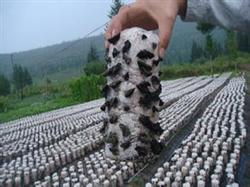
How to cultivate black fungus in leaf bags? Please advise
With the rapid development of bag-cultivated black fungus, traditional sawdust as a growing medium can no longer meet the demand in many places. The research group of the Edible and Medicinal Fungi Extension Center of the Science and Technology Association of Linkou County, Heilongjiang, succeeded in using leaves instead of sawdust to cultivate black fungus. The invention of this new technology will generate inestimable economic and social benefits. Its key technical points are described below.
1. Processing of broadleaf tree leaf raw material. Collect fallen leaves and small branches from forest areas, sun-dry them, and crush them. For every 30 kg of dry leaves crushed, also crush 10 kg of soybean straw and set aside.
2. Growing medium formula and preparation method. (1) Cultivation medium formula: leaf powder 71.7%, soybean straw powder 20%, corn flour 5%, soybean flour 2%, gypsum 0.6%, lime powder 0.7%, add water to adjust to a moisture content of 55%, pH 7-8.5. (2) Preparation method: Weigh out the required amount of dry leaf powder and spread it on a cement floor, sprinkle the soybean straw powder into the leaf powder (dry materials) and mix well. Sprinkle the corn flour and soybean flour on top of the leaf powder and mix well. Then dissolve the gypsum and white lime separately in warm water and sprinkle onto the wet-dry materials, mixing while sprinkling water. After the wet growing medium is mixed well, sieve it twice with a coarse wire sieve so that the medium is uniform in texture and the moisture content reaches 55%; that is, when you rub the medium with both hands, your palms feel moist but no water should remain.
3. Bagging, sterilization and inoculation. (1) Bagging: Put the growing medium into bags. Use qualified polyethylene bags measuring 17 cm x 33 cm x 4.5 silk (0.045 mm) thick. Fill the bags while pressing the medium down so that the medium in the bag is slightly tighter at the top and bottom, but do not burst the bag. Fill until 9 cm remains at the bag mouth, press the surface flat and firm, then use a round iron rod 2.5 cm in diameter to poke 1 deep hole in the middle of the medium bag, with a depth reaching 2 cm from the bag bottom. Pour out the loose material brought out when poking the hole to prevent loose material from blocking the hole opening. Then bring the bag mouth together and press down slightly (to expel the air inside the bag). Hold the gathered bag mouth and twist it one full turn clockwise, then press the twisted bag mouth with your fingers and place it upside down in a bottom-sealed iron basket or on a wooden steamer rack (each layer of iron basket or wooden rack can hold 2-3 layers of medium bags placed upside down). (2) Atmospheric-pressure sterilization: Load the medium bags into the pot and close the pot door tightly, heat with a strong fire, and quickly bring the steamer temperature to 100 degrees C. Maintain the heat and sterilize for 6-8 hours, then stop the fire. Continue to let it sit in the steamer overnight. Take it out the next morning. (If the atmospheric-pressure pot runs short of water midway, add boiling water above 90 degrees C; each time boiling water is added, extend sterilization by half an hour.) When taking out, loading and carrying the bags, hold the middle of each medium bag with both hands. (3) Inoculation: Make a round barrel slightly larger than an electric stove from thick iron sheet, with a barrel height of 35 cm, fit it over the electric stove, place a layer of very fine iron wire mesh on top of the barrel and fix it well (the wire mesh is used to prevent fungus blocks from falling into the stove during inoculation and producing smoke). When the temperature of the medium bags drops to 28 degrees C, inoculate in the sterile zone above the electric stove barrel while the temperature is favorable. During inoculation, operate lightly and quickly to prevent drafts from disturbing the heat above the barrel. Each bottle of stock spawn can inoculate 25-30 bags of cultivation spawn.
4. Treatment of the spawn-running room and mycelial culture. (1) Treatment of the spawn-running room: Clear away miscellaneous items in the room. The walls of the culture room should be smooth and flat. Whitewash the interior once and set up spawn-running racks with dry wooden poles. Raise the room temperature to 30 degrees C and maintain it for 24 hours to revive contaminating fungal spores in the room. Spray the walls and spawn racks indoors once with 0.2% carbendazim solution, and maintain indoor air humidity at 75%. Fumigate with 15 g of sulfur per cubic meter of space to kill the revived contaminating fungi, and finally heat and dry the indoor walls and spawn racks. (2) Mycelial culture: Immediately after the medium bags are inoculated with spawn, move them onto the racks in the culture room with the bag mouths facing up, keep the room dark, and do not place the bags too crowdedly. The first 5-10 days before spawn running are the period when the mycelium germinates and establishes itself, and the room temperature should be 28 degrees C. During this period, ventilation is not needed, and the temperature must not exceed 30 degrees C. When the mycelium has grown to 1/3, lower the indoor temperature to 24 degrees C. Check once a day, and immediately take out any medium bag found with contaminating fungi. Frequently scatter white lime on the floor to keep the room dry. In the middle and late stages of spawn running, the room temperature should be controlled at 18-22 degrees C. And ventilate frequently. In 35-40 days the mycelium can fill the entire bag. After that, use temperature difference stimulation, expose to light and continue culturing for 10 days, so that the mycelium thoroughly penetrates the medium.
5. Management of fruiting bodies in three-dimensional hanging bags in a greenhouse. Using a simple greenhouse for three-dimensional hanging bag cultivation of black fungus has the advantages of good heat retention, good moisture retention, convenient management, small floor area and a large cultivation quantity. First, build a simple fruiting greenhouse with thick wooden poles (2 m high, 6 m wide, 15 m long, able to hang 10,000 bags in three dimensions). Leave a 1 m wide cultivation management path in the middle of the fruiting greenhouse. Stretch a no. 10 iron wire every 25 cm on the greenhouse, fixing both ends well for tying the hanging bag strings. Surround all four sides and the top of the greenhouse frame with straw curtains or crop straw. First spray the ground thoroughly with 0.2% carbendazim solution, and after it dries slightly, scatter 1 layer of white lime for disinfection. After all spawn bags have fully fermented, move them into the cultivation greenhouse, wipe the surface of the spawn bags with 0.2% potassium permanganate solution, tie the spawn bags to the iron wires, and after hanging 1 string, cut openings with a sterilized blade. Cut 5 long vertical strip-type openings in each bag, and cut 2 small short openings at the bottom of the bag. After all spawn bags are hung and cut, during the fruiting period maintain the greenhouse temperature at 20 degrees C, spray water onto the ground 2-3 times a day, and frequently spray water on the straw curtains around the outside of the greenhouse to maintain the relative air humidity in the greenhouse at 85%, cultivating in still air. In 7-10 days, primordia form from the cut openings. When the fruiting body buds cover the cut openings, water can be sprayed directly on the bags (during this period the relative air humidity should be 90-95%). The temperature must not exceed 26 degrees C. Because there are many three-dimensional hanging bags in the greenhouse, when spraying water, spray more and more frequently on the upper bags, and spray less and lightly on the lower bags. The amount of water sprayed should be flexibly controlled, but water must not be sprayed when the midday temperature is high. The best standard is reached when the fruiting body pieces are flat and not curled at the edges, with a glossy and moist appearance.
In short, when the edges of the fruiting bodies are not curled, no water spraying is needed. In the middle and late stages of black fungus growth, the air in the greenhouse should be kept fresh and circulating; on cloudy days spray an appropriate small amount, and on rainy days spray little or no water. When the temperature is high and humidity is high, pay even more attention to strengthening ventilation, which is not only beneficial to the growth of black fungus but is also an effective measure to prevent contamination by miscellaneous fungi and to prevent flowing and rotting of the fruiting bodies. From cutting openings for fruiting to mature harvest takes 30 days. This growing medium can produce an average of 60-70 g of dry fungus per bag. After the fungus matures, pick it when there is plenty of sunlight. Spread the harvested fungus promptly on a ventilated gauze curtain, and turn the fungus once when it is half-dried in the sun; generally it can be sun-dried and stored in 2 days.
Click to get more fungus cultivation techniques
Click to get more edible mushroom cultivation techniques