How can high yields be achieved in bag-cultivated king oyster mushroom?
How can bag-cultivated king oyster mushroom achieve high yields? Please advise. The king oyster mushroom is a large fleshy agaric of excellent quality, belonging to the order Agaricales, species Pleurotus, genus Pleurotus. The fruiting bodies grow singly or in clusters, with thick flesh, slow cap opening, dense and compact stipe tissue, snow-white and thick, few spores, and a long shelf life. Unlike ordinary oyster mushrooms, it is delicious...
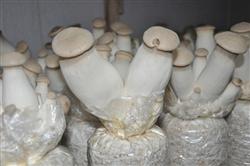
How can bag-cultivated king oyster mushroom achieve high yields? Please advise
The king oyster mushroom is a large fleshy agaric of excellent quality, belonging to the order Agaricales, species Pleurotus, genus Pleurotus. The fruiting bodies grow singly or in clusters, with thick flesh, slow cap opening, dense and compact stipe tissue, snow-white and thick, few spores, and a long shelf life. Unlike ordinary oyster mushrooms, it is delicious, high in sugar content, nutritious, and has an excellent texture. In recent years our farm has carried out trial, demonstration and production observations many times. It shows a short production cycle, broad market prospects, high benefits, and is easily accepted by farmers. The high-yield bag cultivation techniques for king oyster mushroom are introduced as follows:
1. Season: The optimum temperature for king oyster mushroom is 11-16°C. If the temperature is too low or too high, it is difficult for fruiting bodies to form. Therefore, the cultivation season must be arranged according to the climate conditions of each region and the temperature required for fruiting. Locally, late autumn and early winter are suitable.
2. Raw materials and formulas: There are many suitable growth substrates for king oyster mushroom. Mixed wood sawdust, cottonseed hulls, bagasse, corncobs, bean stalks, waste cotton, etc. can all be used as cultivation raw materials. Two culture formulas are introduced here for use.
(1) Sawdust 30%, cottonseed hulls 50%, wheat bran 20%;
(2) Sawdust 15%, cottonseed hulls 70%, wheat bran 15%.
To each of the above formulas, add 2% light calcium carbonate or 1.5% quicklime. Growers in various regions can combine different raw materials according to local conditions.
3. Mixing and bagging: Weigh the culture material according to the proportions, control the moisture content at about 60%-65%, mix evenly and then bag. Use 14×55 cm bags and a bagging machine for bagging. Each bag weighs about 3.2-3.4 jin.
4. Sterilization and inoculation: After bagging, immediately put into the stove for normal-pressure sterilization at 100°C for 20-25 hours, or high-pressure sterilization at 1.5 pressure for 2-3 hours. After the culture medium is sterilized, wait for the material temperature to drop to room temperature before disinfecting and inoculating. Inoculation personnel must strictly carry out all disinfection work. After inoculation, keep the room temperature at about 25°C for mycelial growth. If the temperature is low, the mycelium runs slowly; if the humidity is too high, contaminating microorganisms will appear. When the mycelium has spread to the size of a bowl mouth, it can be moved into a clean, disinfected mushroom house for management.
5. Cultivation management: When the king oyster mushroom mycelium has filled the entire bag, suitable temperature and humidity can be used to promote fruiting. Keep the cultivation room temperature at 12-18°C and the humidity at 90-95%. Some water can be sprayed into the air and onto the ground. Generally, mushroom buds appear after 10-15 days. During this period, it is better to open the bags when the primordia have formed and small mushroom buds appear. The speed of bud appearance is greatly related to temperature. Fruiting is faster at 12-16°C. Opening the bags too early will affect the yield and quality of fruiting. It is best to choose the time when the mycelium has not yet knotted. To extend the shelf life of the fruiting bodies, 2-3 days before harvest it is better to control the humidity at about 80-85%. During management, be careful not to spray water onto the fruiting bodies, especially when the temperature is high, as this will cause the fruiting bodies to turn yellow and lead to bacterial contamination. If the fruiting bodies are relatively large, opening the bag will cause deformities, and in serious cases shrinkage and rot. Therefore, when cultivating king oyster mushroom, it is better to open the bags when primordia have formed and small mushroom buds are present. (1) Temperature control: The temperature of the mushroom house directly affects primordium formation and fruiting body growth. When the temperature is below 8°C, primordia are difficult to form. When the temperature rises to 12°C, the existing growing fruiting bodies grow rapidly and quality declines, while small mushroom buds stop growing and begin to shrink, and primordia stop differentiating. When the temperature continues above 21°C, the existing fruiting bodies will soften, shrink and rot, and the tissue on the surface of the culture medium will also shrink and rot. Throughout cultivation management, the optimal temperature of the mushroom house should be controlled at 12-18°C. (2) Humidity control: The humidity of the mushroom house should be kept at 85-95%. If the humidity is too low, the fruiting bodies will shrink and stop growing, while the primordia will dry, crack and not differentiate. When watering, be careful not to spray directly onto the fruiting bodies, otherwise the fruiting bodies will turn yellow, affecting quality, and in serious cases causing rot. (3) Air regulation: During the fruiting body development stage, fresh air is needed. The mushroom house should be ventilated frequently. With poor ventilation, the fruiting bodies are difficult to develop normally, small fruiting bodies shrink and stop growing, and some fruiting bodies become shriveled, then on the already shriveled fruiting bodies, deformed small mushrooms differentiate again into a tree-branch shape and cannot develop into normal fruiting bodies. If this is combined with high temperature and high humidity, it will cause the fruiting bodies to rot. Therefore, the mushroom house must maintain good ventilation conditions.
Harvesting and processing: The suitable harvest time is when the mushroom cap opens flat and smooth and the spores have not yet been discharged. Harvest standard: for export requirements, the cap should be small and the stipe thick and large. The first flush yield per bag is 70-80%. About 15 days after harvest, the first flush can be harvested.
Click to get more king oyster mushroom cultivation techniques
Click to get more edible mushroom cultivation techniques