How to cultivate king oyster mushroom? Detailed explanation of key cultivation techniques
How to cultivate king oyster mushroom? Please give a detailed introduction to the method. The following cultivation methods can be used for reference when cultivating king oyster mushroom: (1) Whether the cultivation raw materials are suitable. There are many substrate materials suitable for the growth of king oyster mushroom, such as miscellaneous wood sawdust, cottonseed hulls, corncobs, sugarcane bagasse, bean straw, etc., all of which can be used as the main material. To prevent puncturing the cultivation bags and to facilitate mixing and bagging (bottling)...
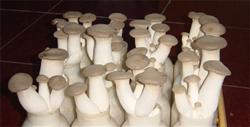
How to cultivate king oyster mushroom? Please give a detailed introduction to the method
The following cultivation methods can be used for reference when cultivating king oyster mushroom:
(1) Cultivation raw materials. There are many substrate materials suitable for the growth of king oyster mushroom, such as miscellaneous wood sawdust, cottonseed hulls, corncobs, sugarcane bagasse, bean straw, etc., all of which can be used as the main material. To prevent puncturing the cultivation bags and to facilitate mixing and bagging (bottling), sawdust must be sieved, and straw-type materials must be crushed. Supplementary materials can include wheat bran, rice bran, cornmeal, cottonseed cake powder, calcium carbonate, white sugar, gypsum powder, etc. According to domestic and foreign experimental data, when rice straw is used as the main material, even if cottonseed hulls are added, fruiting is relatively late, the fruiting rate is low, and the yield is also low. Rice straw resources are abundant in southern China, and growers can conduct cultivation trials using rice straw as the main material to explore the reasons.
(2) Cultivation season. Under natural conditions, according to the suitable growth temperature of king oyster mushroom, cultivation is generally suitable in autumn-winter and winter-spring. However, in areas where winter temperatures are relatively high, it is better to arrange fruiting from December to February, because if the temperature is too high or too low, it is difficult to form primordia, which is unfavorable for the growth and development of fruiting bodies. Therefore, whether in the north or the south, the appropriate fruiting period should be arranged according to the suitable temperature for fruiting. Generally, it is advisable to prepare cultivation bags 50 days in advance when the temperature drops to 18°C. If conditions permit, cold storage can also be used in summer to lower the temperature for off-season cultivation, giving relatively high economic benefits.
(3) Cultivation methods. Due to differences in the cultivation containers used, king oyster mushroom cultivation includes bottle cultivation, box cultivation, and bag cultivation. Among these, bag cultivation is the most convenient and practical, so it is highlighted here.
1. Flat rack vertical bag type. This method aims to use the original rack beds in cold storage to reduce investment costs. The bed racks in cold storage are generally 6 layers, with a layer spacing of 60 cm and a bed width of 120 cm. The practical cultivation area is calculated as:
Mushroom house area x 60% x number of rack layers. For example, if the floor area of the mushroom house is 100 sq m x 60% x 6 layers of racks = 360 sq m, using single-end fruiting mushroom bags 20 cm wide and 32 cm long, each bag filled with 1.2 kg of wet material, and each 1 sq m of rack can hold 80 bags, then this mushroom house can cultivate about 28,000 bags, averaging 280 bags per 1 sq m of mushroom house. Three renovations must be carried out in a cold storage mushroom house:
(1) Add exhaust windows near the ground and install reversible fans with louvers, so as to promptly remove the relatively heavy CO2 gas.
(2) Suitable light is a necessary condition for normal fruiting of king oyster mushroom, so fluorescent lamps should be added to each mushroom bed layer, with intensity reaching 300-500 Lx at the darkest point.
(3) High-pressure water pipes should be added inside the mushroom house to facilitate the installation of spray devices and increase air humidity.
In addition, it is best to have floor drains for drainage, so as to remove sewage and keep the environment clean.
2. Vertical rack horizontal bag type. This is suitable for greenhouses. The advantages of using vertical racks and horizontal bags are as follows:
(1) It is convenient to install lighting, and angle steel materials can be used, with no need for rack boards, saving investment.
(2) It is convenient for passage, and operations and management such as placing bags, opening bags, and harvesting mushrooms are intuitive and convenient.
(3) On average, each 1 sq m of mushroom house can hold 178 bags. The data are as follows:
The mushroom house is 15 m long and 9 m wide, with a floor area of 135 sq m. Eight rows of angle steel racks measuring 2.5 m high x 12 m long = 30 sq m are set up, and the total bag placement area is about 240 sq m.
The rack width is 0.2 m, horizontal steel beams are set every 0.7 m in height, one vertical steel bar is set every 1 m in width, and the spacing between racks is 0.9 m.
Using double-end fruiting mushroom bags, 17 cm wide and 34 cm long, each bag filled with 1.2 kg of wet material, and each 1 sq m of rack holding 100 bags, this mushroom house can cultivate about 24,000 bags, averaging 178 bags per 1 sq m of mushroom house.
(3) Stock spawn preparation. Culture medium formula: sawdust 73%, wheat bran 25%, sugar 1%, calcium carbonate 1%. Grains such as wheat, barley, corn, and sorghum can also be used as culture medium. Prepare ingredients, process, bottle (bag), sterilize, inoculate, and culture according to conventional methods. With the first culture medium, it generally takes 30-35 days for mycelium to fill the bottle (bag). With the latter grain culture media, mycelium fills the bag (bottle) faster, about 20 days.
(4) Cultivation formulas. Materials can be selected and prepared according to local conditions. Five formulas are listed below for selection:
1. Miscellaneous wood sawdust 36%, cottonseed hulls 38%, wheat bran 24%, white sugar 1%, calcium carbonate 1%.
2. Miscellaneous wood sawdust 23%, cottonseed hulls 23%, wheat bran 19%, cornmeal 5%, bean straw powder 28%, calcium carbonate 1%, white sugar 1%.
3. Miscellaneous wood sawdust 23%, cottonseed hulls 38%, bean straw powder 15%, wheat bran 17%, cornmeal 5%, calcium carbonate 1%, white sugar 1%.
4. Miscellaneous wood sawdust 37%, cottonseed hulls 37%, wheat bran 18%, cornmeal 5%, calcium carbonate 1%, white sugar 1%, lime powder 0.5%.
5. Sugarcane bagasse 70%, rice bran 20%, cornmeal 7%, white sugar 1%, gypsum powder 1%, lime powder 1%.
(5) Making cultivation bags. The making of king oyster mushroom cultivation bags is similar to that of enoki mushroom cultivation bags. For early autumn cultivation, polypropylene bags can be selected. The advantages of this bag are good transparency, and after high-temperature sterilization the material bag shrinks tightly, with no gaps between the film and material, making it less likely to produce interlayer mushrooms. The disadvantage is that it is easily broken at low temperatures in winter, so high-density low-pressure polyethylene bags should be selected.
After weighing the culture material according to the formula ratio, mix it evenly, adjust the water content to about 68%, and fill the material. Using single-end fruiting mushroom bags, each bag is filled with 1.2 kg of wet material. It is best to use rings plus cotton plugs, for good ventilation and fast mycelial growth. Sterilize with steam under pressure of 1.5 kg/cm2 for 2 hours, or sterilize with atmospheric steam at 100°C for 16 hours. Inoculate with cottonseed hull spawn; 1 bottle of spawn can inoculate 30 bags. After inoculation, place them upright on the racks in the spawn-running room and culture in the dark, maintaining the temperature at about 25°C.
Using double-end fruiting mushroom bags, each bag is filled with 1.2 kg of wet material. Folding the bag opening or tying with string are both acceptable. After the material temperature drops to room temperature, inoculate according to aseptic operating procedures in an inoculation box (room). Inoculate with cottonseed hull spawn; 1 bag of spawn inoculates 15-20 bags. Because the bags are tied closed without cotton plugs, when mycelial growth reaches more than 1/2 of the material, the bag openings should be loosened appropriately to increase oxygen and promote mycelial growth.
(6) Fruiting management. After the mycelium fills the bags, fruiting management begins. Single-end fruiting mushroom bags can be placed upright on the racks, and double-end fruiting mushroom bags can be stacked horizontally on the racks. The key technical points are as follows:
1. Opening the bags. If the bags are opened before the mycelium has knotted, it is difficult to form primordia or primordia form very slowly, fruiting is uneven, and the economic traits of the mushrooms are poor. If the bags are opened when primordia have formed or small mushroom buds appear, primordium differentiation and small mushroom development are normal, fruiting is uniform, and the economic traits of the mushrooms are good. If the bags are opened when the fruiting bodies have already grown large, deformed mushrooms will appear inside the bags, and in severe cases the mushrooms that grow out will shrink and rot. Therefore, the bag-opening time for bag-cultivated king oyster mushroom should be controlled for when the mycelium knots to form primordia and small mushroom buds have appeared. Untie the bag opening and roll the bag film outward and fold it down to 2 cm above the material surface.
2. Temperature control. The temperature of the mushroom house directly affects the formation of primordia and the growth and development of fruiting bodies.
When the temperature is below 8°C, primordia are difficult to form, and even mushroom bodies that have already grown will stop growing, shrink, turn yellow, and eventually die.
When the temperature remains above 18°C, differentiated fruiting bodies suddenly grow rapidly, and quality declines.
When the temperature is above 20°C, the mycelium turns back to vegetative growth, the effect of low-temperature stimulation disappears, primordia stop developing, nutrients in the mushroom buds flow back and they wilt, and young mushrooms that have already formed also shrink and die. Therefore, during the fruiting period, the temperature of the mushroom house should be controlled at 13-15°C, so that fruiting is fast, there are many mushroom buds, fruiting is uniform, and harvesting can be done in about 15 days.
3. Moisture retention. The air humidity of the mushroom house should be maintained at 85%-95%. If the humidity is too low, the fruiting bodies
will shrink, and the primordia will dry and crack and cannot differentiate. To increase air humidity, it is best to use a sprayer with the nozzle pointing upward to spray water. Do not spray water onto the mushroom bodies, otherwise the fruiting bodies will turn yellow and quality will be affected, and in severe cases rot will occur.
4. Ventilation. During the primordium formation stage, sufficient oxygen is needed, and the CO2 concentration should be reduced to about 0.5%. Otherwise, the primordia will not differentiate and will swell into spherical shapes. During the growth and development period of the mushroom bodies, fresh air is also needed, and the CO2 concentration should preferably be no higher than 0.4%.
If ventilation is poor during the fruiting period, deformed mushrooms will appear due to excessively high CO2 concentration, and if this is combined with high-temperature and high-humidity weather, it will also cause the fruiting bodies to rot. Therefore, during the fruiting period, good ventilation and air exchange conditions must be maintained in the mushroom house. In particular, when mushroom buds appear in large numbers, promptly straighten the plastic film at the bag openings to avoid deformed buds caused by oxygen deficiency.
5. Light. During the formation of primordia and the growth and development period of fruiting bodies, a certain amount of scattered light is needed, and the suitable light intensity is 300-500 Lx. Note that each layer or each row of racks should have suitable light, with no dead corners.
(7) Harvesting and yield. Generally, harvesting can be done about 15 days after budding. The suitable harvest time is when the mushroom body is bowling-pin shaped, the cap has not expanded, and spores have not yet been discharged. The harvest standard should be determined according to market needs: mushrooms for foreign trade export require a cap diameter of 4-6 cm and a stipe length of 6-8 cm; the domestic trade market is not very strict about the mushroom body.
After harvesting the first flush, culturing for about another 2 weeks allows a second flush to be harvested. Second-flush mushrooms are smaller in shape, have short stipes, and lower yield. Under normal conditions, the first flush yields about 100-150 grams per bag, and the general total biological efficiency is 40-60%. If supplemental water is added to the material bags or soil casing cultivation is carried out later, the mushroom yield can reach 100% of the weight of the dry material invested.
(8) Soil casing cultivation. According to reports by Wang Shufang et al., the biological conversion rate was highest when bags were removed before fruiting and bed-style soil casing was used (99.34%), followed by removing bags after three flushes and then applying bed-style soil casing (78.10%), while the biological conversion rate was lowest without removing bags and without soil casing (59.76%). This indicates that soil casing cultivation of king oyster mushroom gives higher yield than cultivation without soil casing, and early soil casing gives higher yield than late soil casing.
Bed-style soil casing can significantly increase the biological conversion rate. The reasons include the following aspects:
1. Bed-style soil casing has the effect of retaining water and fertilizer. Water can permeate through the soil and exactly
reach the humidity required by the fruiting bodies.
2. Soil casing is conducive to supplemental water and topdressing. Nutrients from the nutrient soil continuously
supplement the cultivation material through water permeation, increasing the staying power for fruiting.
3. The soil itself contains large amounts of organic matter and mineral elements, and these substances can also supplement nutrients to the material through the leaching effect of the soil.
4. The soil also has a protective effect, avoiding complete exposure of the cultivation material and reducing the occurrence of pests and diseases, which is also an important factor in increasing the conversion rate.
(9) Processing and sales. Fresh mushrooms can be sold directly on the market, or placed in plastic boxes covered with cling film for supermarkets. The shelf life of king oyster mushroom is somewhat longer than that of general mushrooms. Placed open in a 4°C refrigerator for 10 days, it will not deteriorate; at a temperature of 10°C it can be stored for 5-6 days, and at 15°C it can also be kept for 2-3 days without deteriorating.
King oyster mushroom can be processed into dried products. After soaking and rehydrating the dried product, it is good for eating, with a crisp texture and fresh taste. Because its flesh is thick, it is difficult to dehydrate a whole mushroom into a dried product of acceptable shape, so it needs to be sliced before dehydration and dried according to process requirements. The dried product is white to cream colored and has a good appearance.
King oyster mushroom can also be made into canned products. After boiling in water, king oyster mushroom does not easily become mushy or broken like oyster mushroom. After slicing, it can be made into cans and still retains its crisp and tender characteristics, with excellent flavor.
Click to get more king oyster mushroom cultivation techniques
Click to get more edible mushroom cultivation techniques