Detailed Explanation of White Fungus (Tremella) Cultivation Methods and Technical Points
How is white fungus (Tremella) cultivated? What cultivation methods are there? White fungus is a premium tonic, with functions such as strengthening vitality, tonifying the kidneys, moistening the lungs, and promoting fluid production, and it can promote human metabolism, make the skin tender, and help maintain a fit figure. Growth conditions: White fungus growth requires certain conditions of temperature, humidity, light, air, pH...
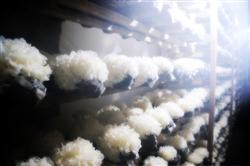
How is white fungus (Tremella) cultivated? What cultivation methods are there?
White fungus is a premium tonic, with functions such as strengthening vitality, tonifying the kidneys, moistening the lungs, and promoting fluid production, and it can promote human metabolism, make the skin tender, and help maintain a fit figure. Growth conditions: White fungus growth requires six conditions: temperature, humidity, light, air, pH, and nutrients.
1. Temperature: White fungus is a medium-temperature fungus. The mycelium can grow at 6~32°C, with the optimum at 22~25°C; the fruiting body grows at 15~30°C, but the optimum is 22~27°C; spore germination occurs at 15~32°C, with the optimum at 22~25°C.
2. Humidity: White fungus growth and development require water, but different growth stages require different amounts of water. During the vegetative growth stage, a substrate moisture content of 55~65% is suitable; during the reproductive growth stage, a relative air humidity of 85~95% is required. Below or above this range is unfavorable for white fungus growth.
3. Light: Although white fungus cannot perform photosynthesis during growth, dim light can promote the formation of fruiting bodies. Complete darkness and direct strong light are both unfavorable for the differentiation and growth of white fungus, and the most suitable is the kind of scattered light found indoors.
4. Air: White fungus is an aerobic fungus, especially during the fruiting body growth stage, continuously respiring, releasing carbon dioxide and taking in fresh oxygen. Under conditions of insufficient oxygen, the fruiting body primordia are not easily able to develop into sheets, growth is weak, and it is easily infected by contaminating microorganisms, causing rot of the fungus.
5. pH: Spore germination and mycelial growth of white fungus are suitable between pH 5.0~6.5. Below pH 4.5 or above 7.2 is unsuitable for spore germination and mycelial growth. 6. Nutrients: White fungus is a saprophytic fungus and can mainly only decompose and digest ready-made organic matter. It mainly absorbs carbon nutrition, followed by nitrogen nutrition and inorganic salt nutrition. White fungus mainly utilizes lignin and cellulose, so in substitute substrate cultivation of white fungus, a single raw material cannot be used alone; using a combination of multiple raw materials gives better results.Cultivation Techniques :
1. Bottle cultivation or bag cultivation Raw material formulas for bottle cultivation or bag cultivation: A. Sawdust 75%, wheat bran 20%, soybean powder 1.5%, white sugar 1%, gypsum 2%, magnesium sulfate 0.25%, potassium dihydrogen phosphate 0.25%, water 1.2:1, natural pH. B. Cottonseed hulls 70%, wheat bran 25%, white sugar 1%, gypsum 2%, soybean powder 1.5%, magnesium sulfate 0.5%, water 1.3:1, natural pH. C. Rice straw powder 50%, wheat straw powder 20%, wheat bran 20%, superphosphate 5%, white sugar 1%, gypsum 2%, soybean powder 2%, water 1.2:1, natural pH. After fully mixing the raw materials, fill them into wide-mouth bottles or plastic bags. The filling should be neither loose nor tight, the surface of the bottle should be slightly flattened, and the culture material adhering to the inside and outside of the bottle wall should be washed clean. After the plastic bag is filled, tie both ends tightly with string to seal, then use a wooden board to slightly flatten the bag, and use a tool with a tin cylinder diameter of about 8.5 to punch 3~4 holes on it, with a depth of 1.5 cm being suitable. Stick medicinal adhesive tape over the holes and carry out high-temperature sterilization.
Sterilization method: For the traditional earthen steamer method, generally keep the steamer at a rolling boil for 6~8 hours. For autoclaving at 1.5 kg/cm, that is 127°C, keep for 1 hour, then inoculate after cooling. The inoculation room or inoculation box is disinfected with a mixture of formalin and potassium permanganate. For each cubic meter of space, 6~10 mL of formalin and 5~10 g of potassium permanganate are needed. Begin inoculation half an hour after disinfection.
Inoculation method: First scrape off a 1 cm thick layer from the surface of the stock culture, then stir the spawn evenly and inoculate it into the holes in the bottles or plastic bags. Each bottle of stock culture can inoculate 80 bottles or 40 bags. After inoculation, culture at a constant temperature of 22~28°C. During the culturing process, observe at any time for contamination by foreign microorganisms; if found, handle it promptly to prevent spread. After about one month, small fungus buds will appear. At about 28 days, the adhesive tape should be torn open to promote earlier formation of fruiting bodies. After the fungus emerges, maintain a certain temperature and ventilation, and after about 7 days a batch can be harvested.
2. Log cultivation In places with resources, the log cultivation method can be used, which is simpler and produces quicker results. There is a wide range of trees suitable for cultivating white fungus, including oak, alder, eucalyptus, willow, elm, pagoda tree, parasol tree, plum, apricot, pear, peach, mulberry, Chinese wingnut, and others. The size of the trees is generally best at a diameter of 5~15 cm. The cultivation time should be based on natural temperature, and the most suitable period is between March and April. The logs should be cut 1~2 months in advance, and inoculation should begin when the xylem has naturally lost 20~30% of its water. Log inoculation method: Use a hatching axe or hole-punching machine to punch holes in the fungus logs, one hole every 3 cun, with a depth of 2 cm. Large logs should have 5~6 rows and small logs 2~4 rows; they should not be too sparse or too dense. After the holes are punched, insert one piece of spawn into each hole and knock it in with a mallet. Be sure to insert it tightly to prevent it from falling out. It is best to punch holes, inoculate, and stack for sweating at the same time, so as to avoid drying of the spawn and contamination by foreign microorganisms. After inoculation, the fungus logs should be promptly stacked for sweating. Stack the fungus logs in a "well" shape, about 4 chi high, surround and cover them with plastic film, and cover the top with green tree branches or straw mats. This both keeps warm and provides ventilation, which is favorable for the development of white fungus mycelium. During the sweating stage, the logs must be turned about every 10 days, adjusting the upper and lower, inner and outer positions mutually. According to the dryness of the fungus logs, an appropriate amount of water may be sprinkled. After turning, cover them well again. After about one month of sweating management, small white fungi will gradually appear. At this time, humidity and ventilation should be increased to allow the white fungus to grow healthily. If 30% of the white fungus has appeared, the stack should be removed and the logs arranged. Whether indoors or outdoors, each fungus log should preferably be 5 cun apart. To save cultivation space, the vertical space area can also be used with multi-layer shelf cultivation methods, which can both retain moisture and facilitate centralized management. During the growth process of white fungus, it is mainly afraid of wind. Indoors, less water is used, sprinkling once a day, increasing or decreasing water according to moisture retention. Outdoors, sprinkle water 2~3 times a day. In short, it is suitable to maintain a relative air humidity of 85~95%. Harvesting: After white fungus matures, it should be harvested promptly, otherwise it will rot. The harvesting standard is generally to pick the large ones and leave the small ones, harvesting when the fungus sheets are fully expanded and soft. Harvesting method:Use a small knife to cut off the base of the white fungus, leaving the fungus foot so that it can sprout and grow again. Bag-cultivated white fungus generally yields 3~4 batches, with a cycle of about 3 months. For every 100 jin of raw material, about 10~20 jin of dried white fungus can be produced on the right. Log cultivation can harvest 3~4 batches in the same year, and can still harvest 2~3 batches in the second year. For every 100 jin of logs, 5~10 jin of white fungus can be harvested. After harvesting, white fungus should be sun-dried or oven-dried promptly. Under the sun, it generally takes 2~3 days to dry; when drying with a charcoal fire, it should be kept at about 60°C and takes half a day to dry. After drying, store it moisture-proof.
Click to get more white fungus cultivation techniques
Click to get more edible mushroom cultivation techniques