What are the growing environment requirements for cultivating white fungus?
What are the growing environment requirements for white fungus? Please give an introduction. White fungus cannot carry out photosynthesis like plants and use chlorophyll to make its own nutrients; instead, it relies on organic matter in other organisms as its nutrients, absorbing ready-made carbohydrates, nitrogen-containing substances and a small amount of minerals. Various substitute materials...
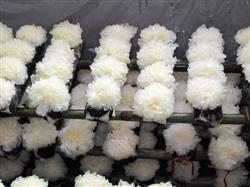
What are the growing environment requirements for white fungus? Please give an introduction.
White fungus cannot carry out photosynthesis like plants and use chlorophyll to make its own nutrients; instead, it relies on organic matter in other organisms as its nutrients, absorbing ready-made carbohydrates, nitrogen-containing substances and a small amount of minerals. Various substitute-material culture media are nutrient-rich places for white fungus to grow. In addition, during its growth process it has certain requirements for nutrition, temperature, relative air humidity, air (oxygen), light and pH. Therefore, during cultivation, various measures must be taken to match the growth and development characteristics of white fungus and meet its requirements, so as to achieve the goal of stable and high yields. The growing conditions are described separately below.
1. Nutrition
Nutrition is the material basis for the growth of white fungus, and the synthesis ratio of the substitute-material culture medium should maximize the satisfaction of white fungus's requirements for various nutrients. White fungus mycelium can directly use simple carbohydrates such as monosaccharides (glucose) and disaccharides (sucrose). Because white fungus mycelium has a very low ability to decompose lignin and cellulose, it cannot directly use cellulose and lignin; only after the mycelium of Xianghui fungus decomposes lignin and cellulose under the action of enzymes can white fungus mycelium use them. The culture material should also contain sufficient nitrogen, vitamins, phosphorus, calcium and other mineral elements as well as trace elements to facilitate the growth of the fruiting body.
2. Humidity
Water is the primary condition for the life activities of white fungus, and white fungus's water requirements are two moderate and one high. That is, spores germinate into mycelium under moderately humid conditions (relative humidity 70%-80%), and the mycelium also colonizes and spreads and grows under moderately humid conditions. And at a certain developmental stage it differentiates and produces fruiting body primordia. The fruiting body develops rapidly in a humid environment (relative humidity 80%-90%), producing plump, tender, white and jade-like ear pieces. Under overly humid conditions, it is not easy for it to germinate into mycelium, but instead it appears in the form of budding. Under moderately humid conditions, the mycelium can colonize and grow vigorously. The mycelium is thick, short and in bundles, and fruiting body differentiation is normal. In an overly humid environment, the mycelium grows weak, thin and sparse, and fruiting body differentiation is poor or it gelatinizes into a mass. Therefore, appropriate moisture should be provided according to the different humidity requirements of white fungus at each growth stage.
3. Temperature
Temperature is an important factor in the intensity of life activities and the speed of growth and development of white fungus. White fungus is a mesophilic fungus, and the mycelium (including white fungus budding spores and Xianghui fungus mycelium) can grow within 16°C-30°C, among which 20°C-28°C is normal growth, 23°C-25°C is the best growth, and below 20°C or above 28°C the mycelium is weak. The temperature for fruiting body differentiation is between 16°C-28°C; below 16°C growth is slow, and above 28°C differentiation is poor, and the most ideal temperature should be 22°C-25°C. White fungus has strong cold resistance; spores at 0°C for 2 hours will not lose their germination ability.
4. Air (Oxygen)
White fungus is an aerobic fungus. The oxygen requirement for mycelial germination increases with the increase in mycelial mass. The oxygen requirement for fruiting body differentiation should also be controlled: large ears need more oxygen, small ears need less oxygen. In an environment with suitable temperature and high humidity, with sufficient oxygen, fruiting body differentiation is rapid; under oxygen-deficient conditions, mycelial growth is slow and fruiting body differentiation is delayed, so during cultivation, proper ventilation and air exchange are necessary.
5. Light
Strong direct light is unfavorable for white fungus mycelial germination and fruiting body differentiation. Scattered light can promote spore germination and fruiting body differentiation. Different light levels have a clear relationship with the color of the white fungus fruiting body: under dark light the ear is yellow and fruiting body differentiation is delayed; with appropriate scattered light, the ear is white and of high quality.
6. pH
White fungus is a weakly acid-loving fungus, and the pH value should be between 5.2 and 5.8; being too acidic or too alkaline has a certain effect on white fungus. The above factors do not exist in isolation, and management must be strengthened. Find every way to meet the growth requirements of white fungus, thereby achieving high yield and high quality.
Click to get more white fungus cultivation techniques
Click to get more edible mushroom cultivation techniques